The Client Who Pays Last Is the One Who Calls Most.
A pattern every chamber knows. And what the engagement terms could have settled before it started.

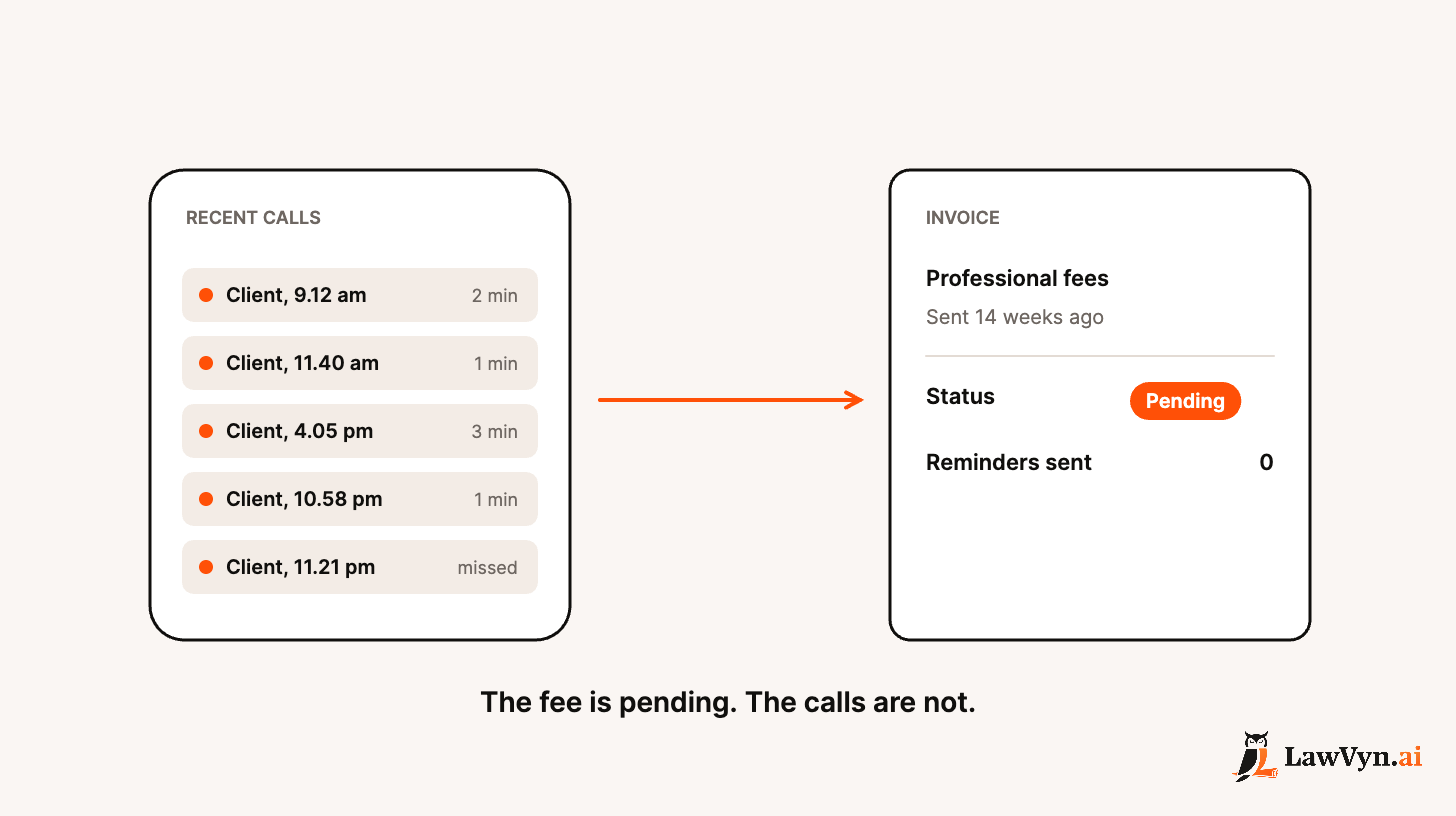
Every chamber has this client. The fee is pending. The calls are not.
Say it plainly, because it is rarely said out loud: this is not a recovery problem. It is a clarity problem that happens to show up at the bank.
Where the pattern actually begins
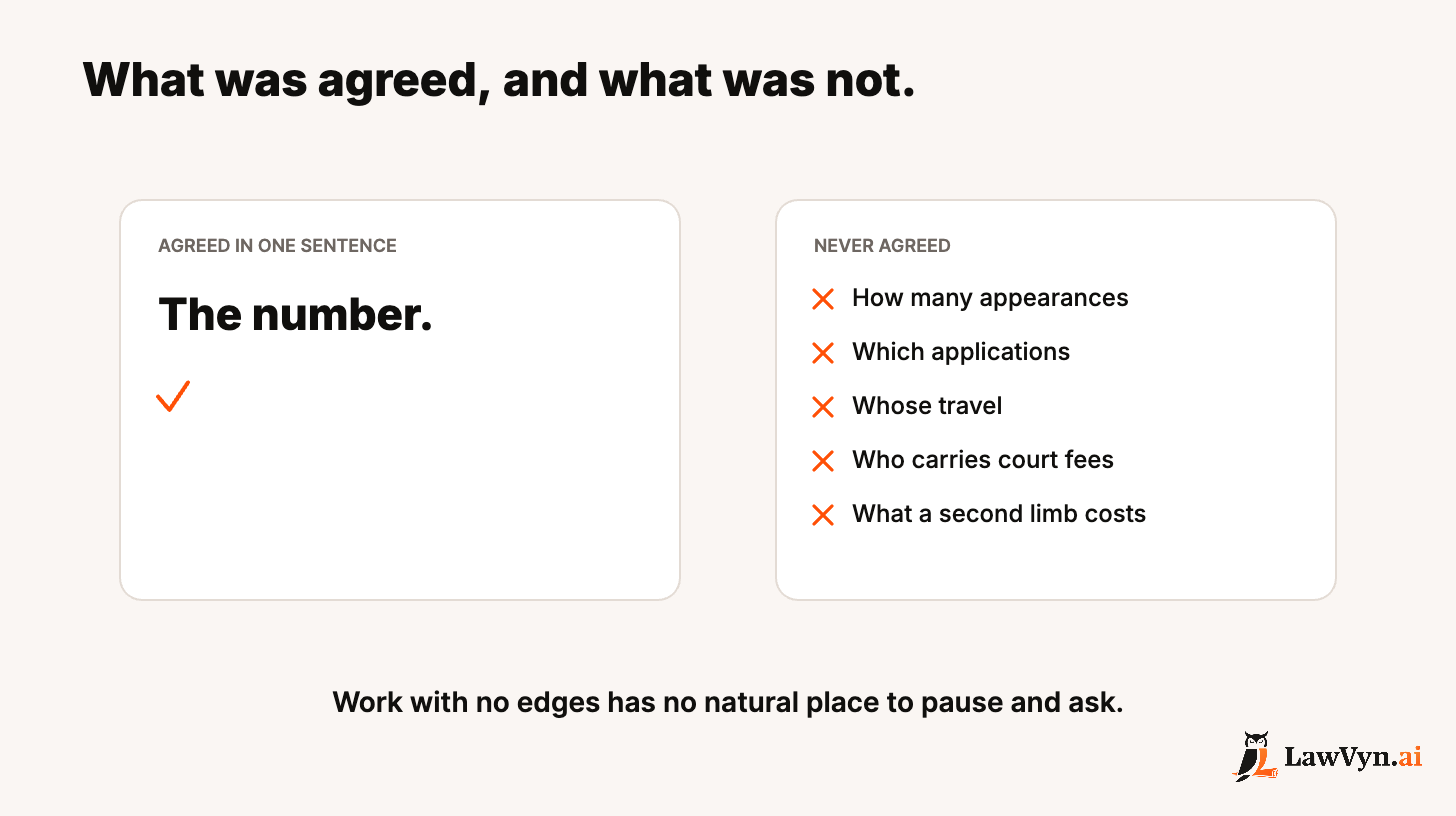
The fee conversation usually happens once, early, in a corridor or on a phone call, in about one sentence. Both sides leave satisfied. Neither side writes anything down.
What was agreed in that sentence was a number. What was never agreed was the shape of the work: how many appearances, which applications, whose travel, who carries the court fees until recovery, and what happens if the matter grows a second limb.
Work with no edges has no natural place to stop and ask for payment. The client is not being difficult. He has no map either. He is waiting for a moment that was never built into the arrangement.
There is a second reason the page stays unwritten, and it has nothing to do with oversight. Most matters arrive through a relative, a former client, a colleague at the Bar. Writing terms in that moment can feel like doubting the person who sent them. So the terms stay spoken, out of courtesy, and the courtesy is what gets tested nine months later.
The calls are asking for a date, not a discount
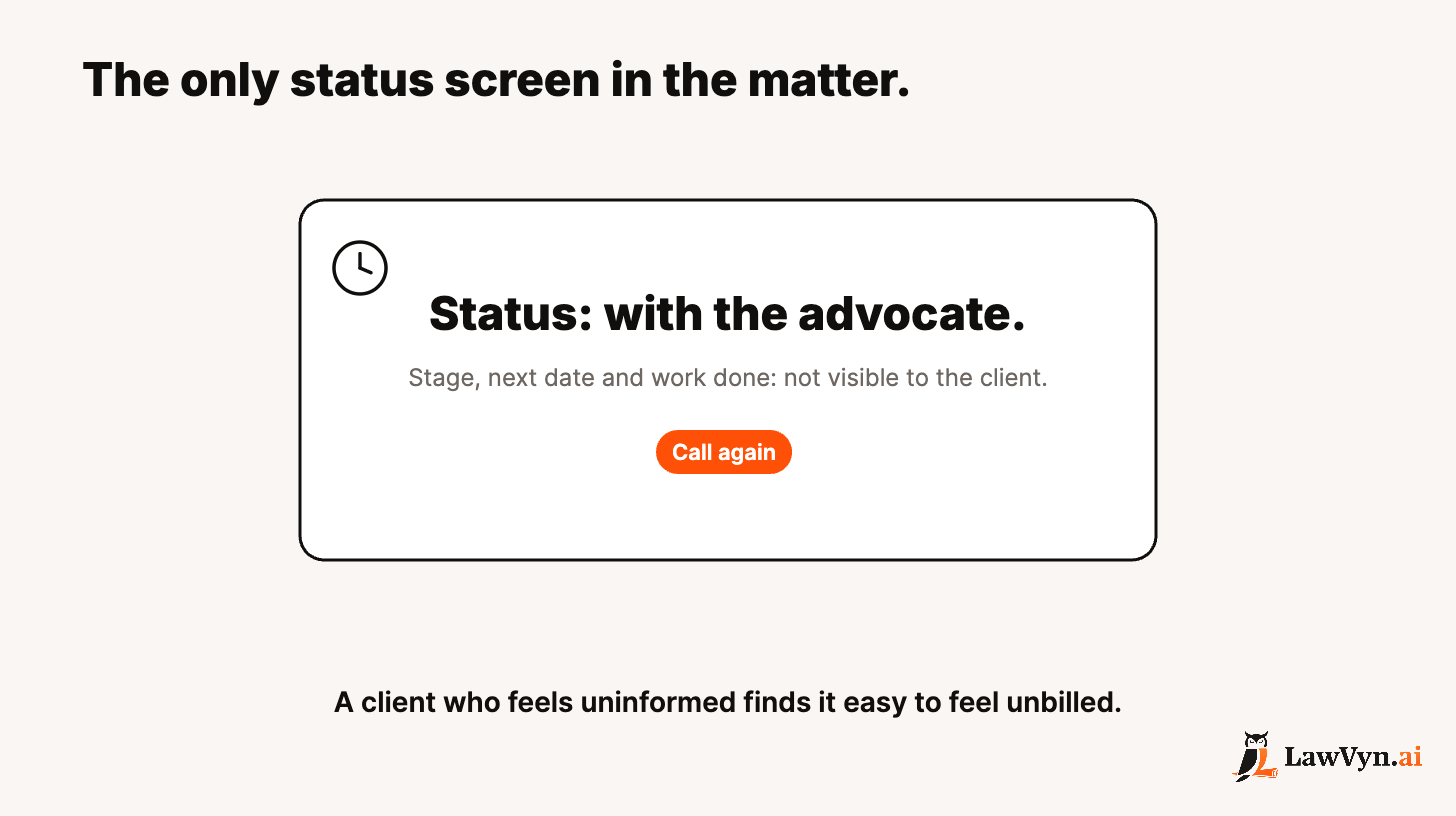
Here is the kinder reading of the frequent caller.
In most matters, the only live status screen is the advocate’s own memory. The client cannot see the stage, the next date, or what has already been done for him. So he does the only thing available. He calls.
And a client who feels uninformed finds it very easy to feel unbilled. Those two feelings travel together. The invoice arrives against a blank screen, and a blank screen makes any number look like a question.
The chambers with the fewest fee arguments are rarely the cheapest. They are the ones where the client already knew where the matter stood before the invoice reached him.
What the engagement terms could have settled
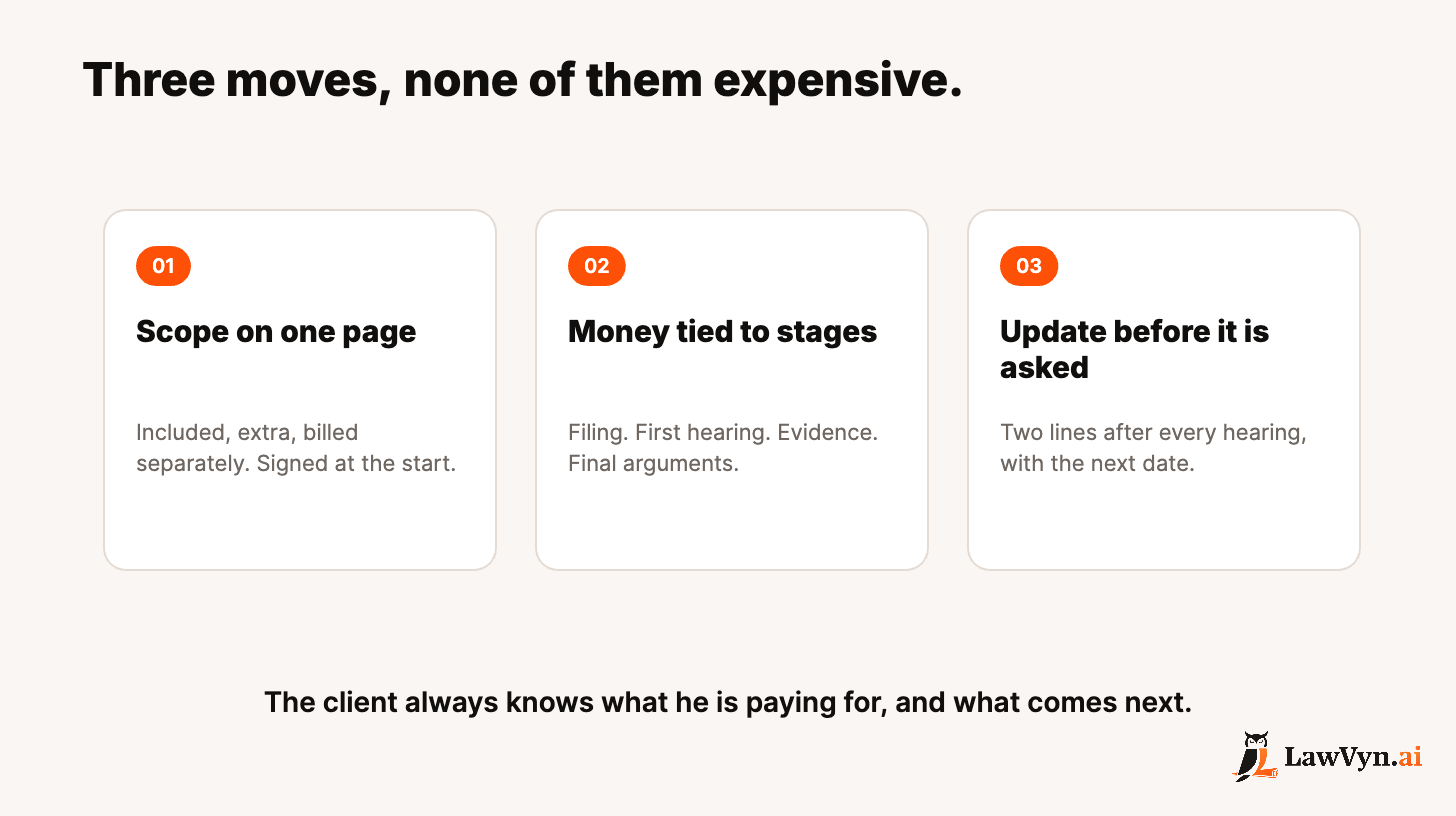
Three moves, none of them expensive.
Put the scope on one page. What is included, what is extra, what is billed separately. Appeals, interlocutory applications, travel and court fees named by name. One page, signed, at the start, when goodwill is at its highest. It reads as professionalism, not suspicion, and clients who have dealt with any other professional already expect it.
Tie the money to stages, not to months. Filing, first effective hearing, evidence, final arguments. A stage is a visible event. The client can see it happen, so the request that follows it feels like a receipt rather than a reminder.
Give the update before it is asked for. Two lines after every hearing: what happened, in plain words, and what happens next, with the date. It costs a minute and it removes the reason for most of the calls. It also builds, quietly, a record of everything done in the matter, which is the only honest answer to the question of what the fee was for.
The signature below makes my interest plain, so I will say it. LawVyn keeps the scope, the current stage and the last update on the matter itself, which is exactly where those three lines come from.
The point
The aim is not a client who pays faster out of embarrassment. It is a client who always knows what he is paying for and what comes next.
When both are visible, two things change in the same month. The calls get shorter. And the fee stops being a conversation, because it was already an agreement.
Ravi Daparthi
CEO of LawVyn
AI enabled practice management and document drafting software for advocates and law firms.
https://www.ravidaparthi.com/ ·
https://www.linkedin.com/in/ravidaparthi ·
Follow LawVyn on LinkedIn

Get each new article by email. It is free, and you can unsubscribe at any time.
Subscribe by email
Ravi Daparthi
Entrepreneur, AI product leader, CEO of LawVyn.ai. Co-founder of Signitives and Oorwin.
More from Ravi
Essay
Introducing GILD : Great Indian Legal Diaries (Legal Podcast)
Episode 01 is live: The Hidden Dangers of AI for Lawyers, with Dr. Siva Pardhiva. Watch it here.
16 November 2026 · 2 min read
Essay
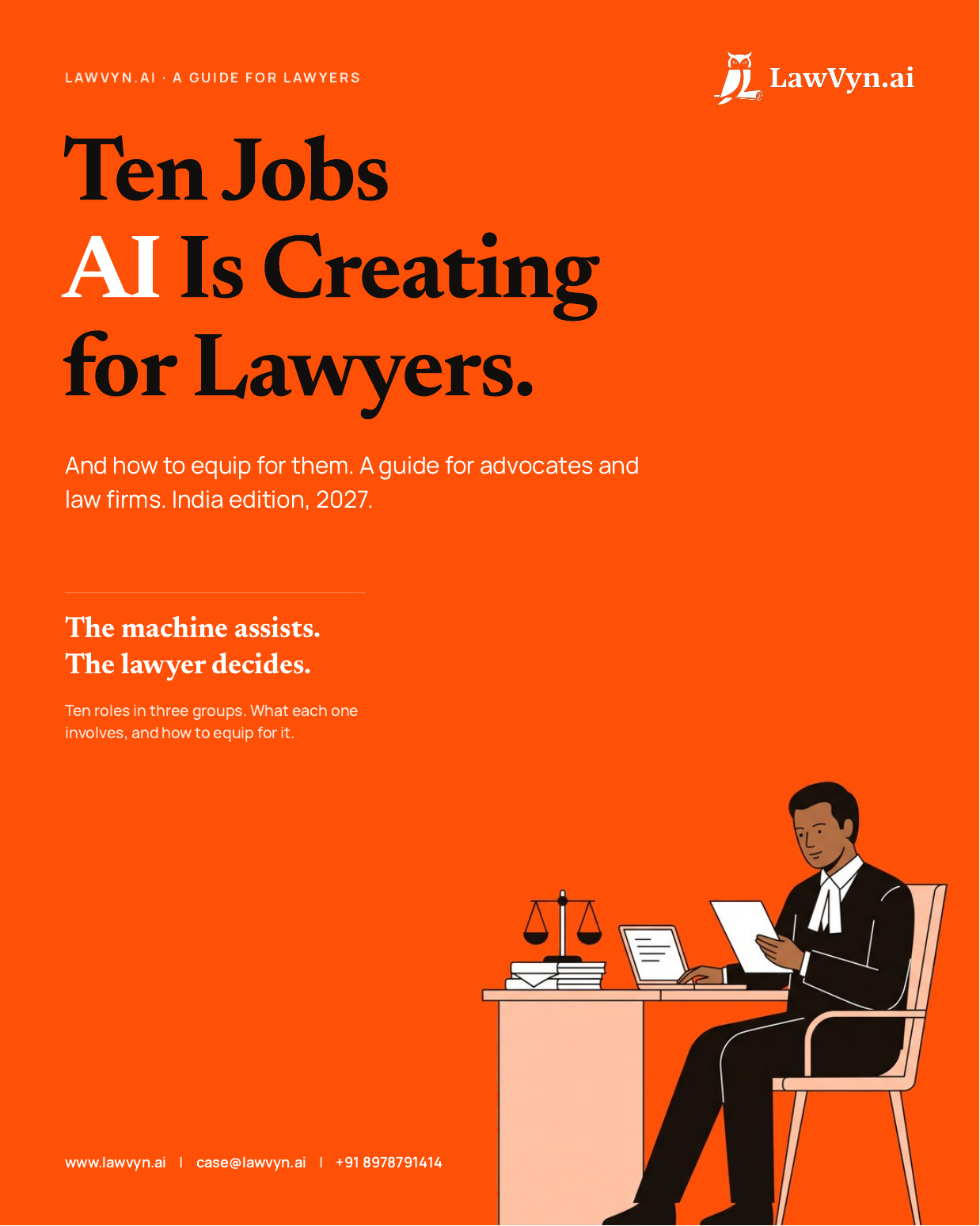
Ten Jobs AI Is Creating for Lawyers. The Free Guide.
Sixteen pages for advocates and law firms: ten roles, three groups, and how to equip for each. India edition, 2027. Subscribe to download.
13 November 2026 · 1 min read
Essay
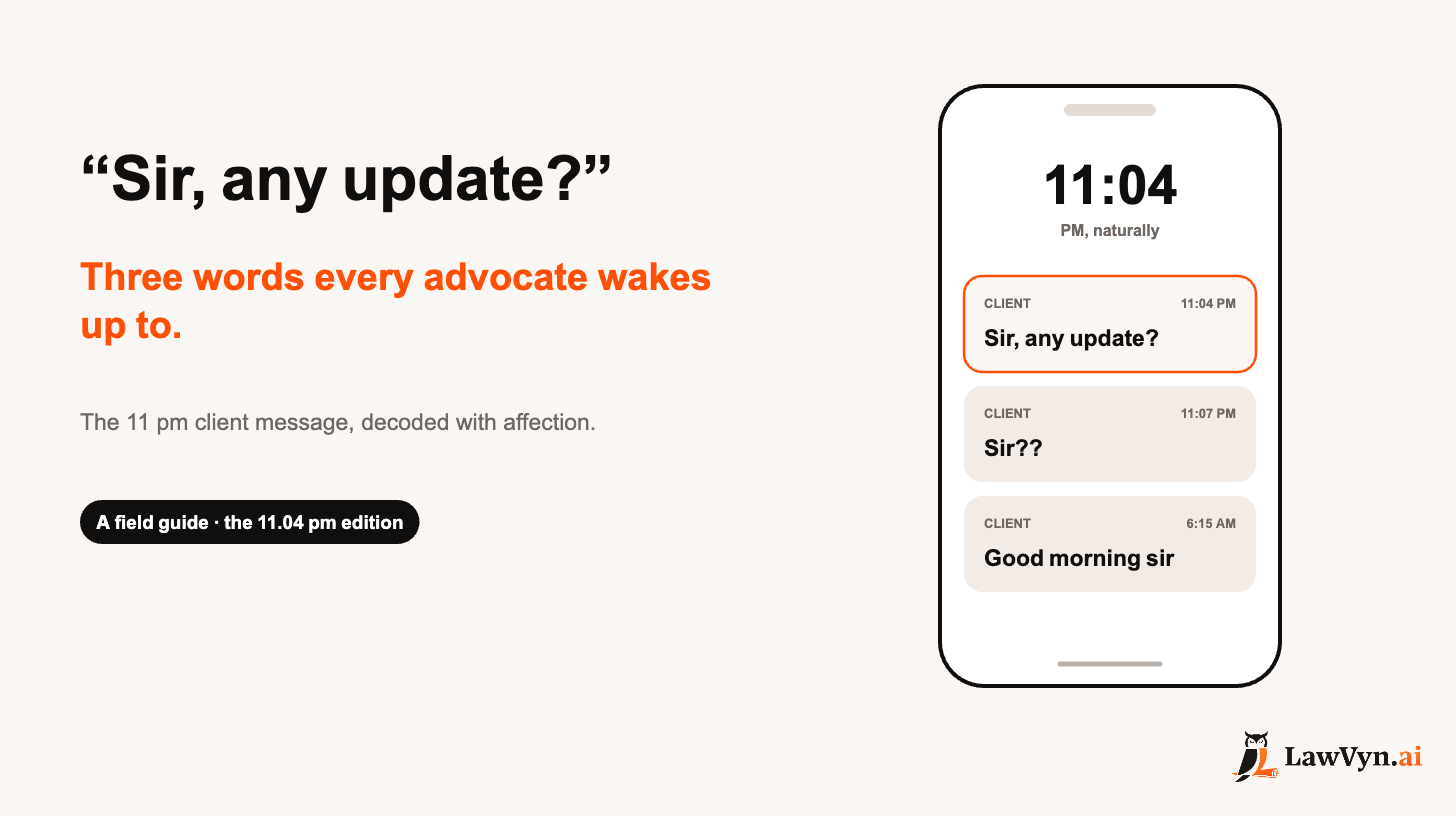
“Sir, Any Update?” Three Words Every Advocate Wakes Up To.
The 11 pm client message, decoded with affection. And a simple way to answer it before it is sent.
11 November 2026 · 2 min read