Why Every Advocate Has Three Phones and Still Misses the Call.
A smile first, then the real point: being reachable and being available are two different things, and the client cannot tell them apart.

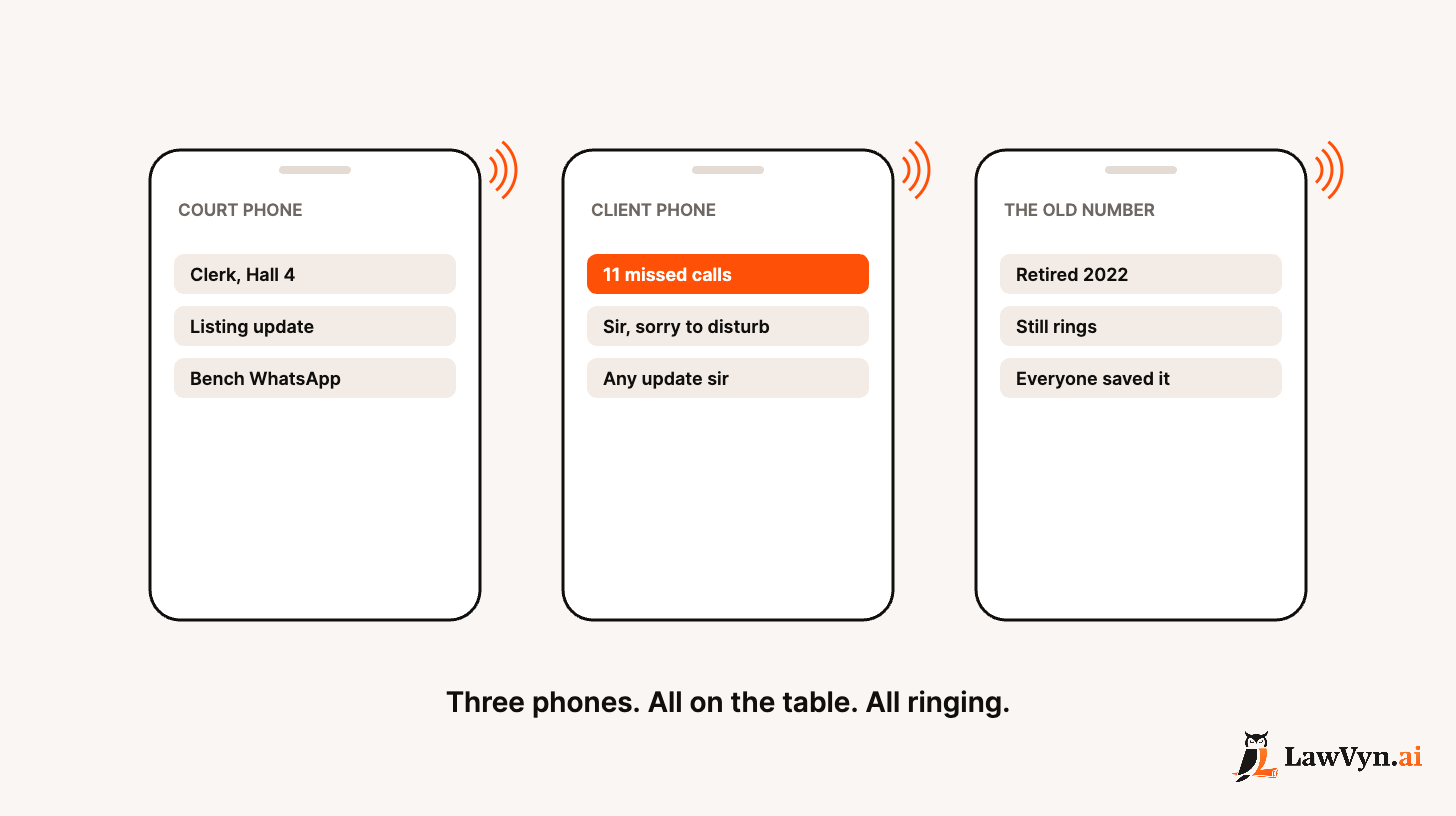
Walk into any chamber at ten in the morning and count the phones on the table. Not the people. The phones.
There will be three. One is on silent, one is on charge, and one is face down for reasons nobody discusses. All three are ringing.
The three phones, explained
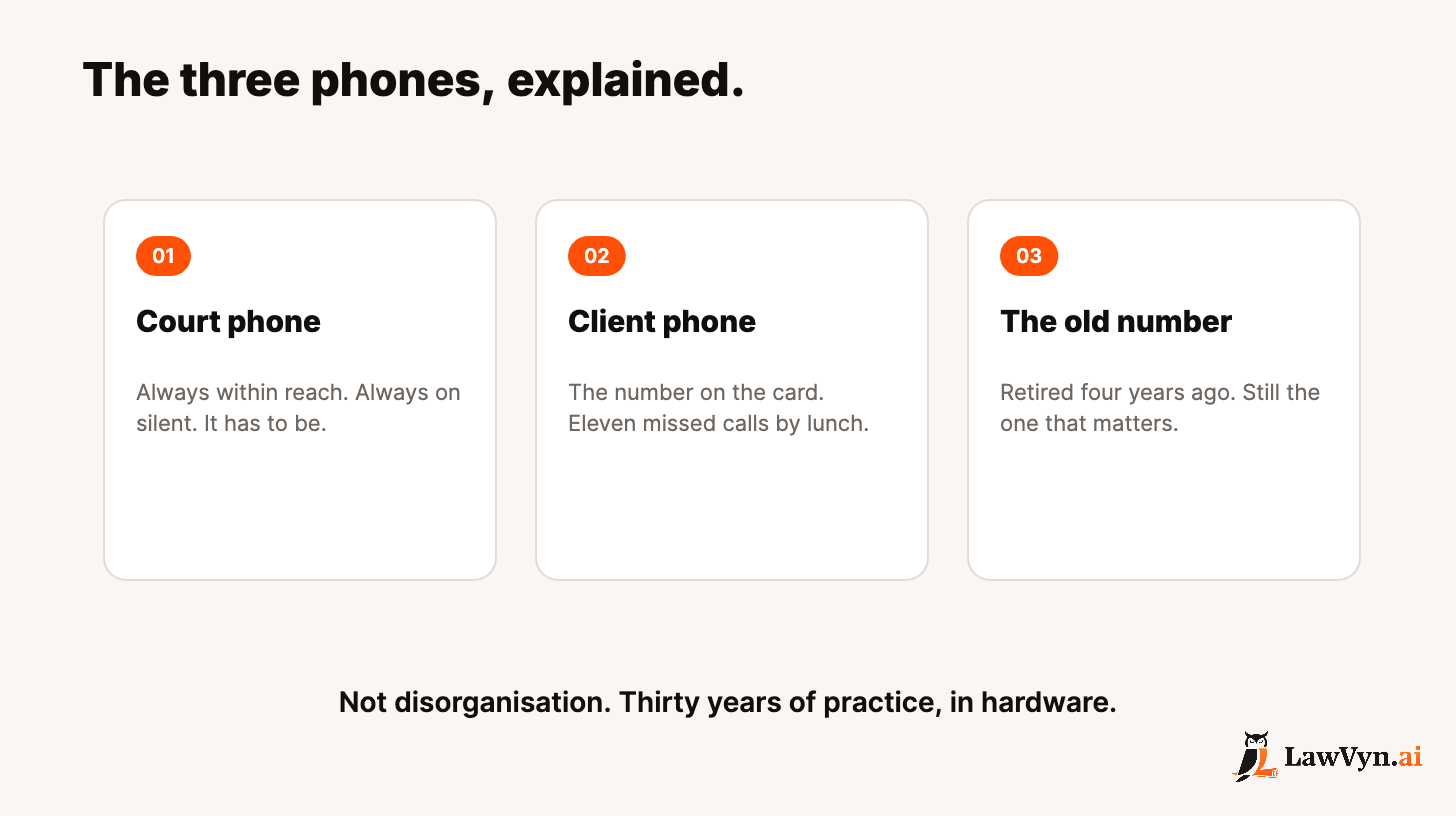
The first phone is the court phone. It has every clerk, every listing update and a group for each bench that has ever adjourned anything. It is never more than an arm’s length away and it is always on silent, because it has to be.
The second is the client phone. It is the number on the visiting card. It has eleven missed calls by lunch, most from the same two people, and a voice note that begins with "Sir, sorry to disturb."
The third is the old number. The one from the first office. It was retired four years ago and it still gets calls from the people who matter most, because they saved it once and have never needed to save it again.
None of this is disorganisation. It is what thirty years of practice looks like in hardware.
Reachable is not the same as available
Here is the part that is not a joke.
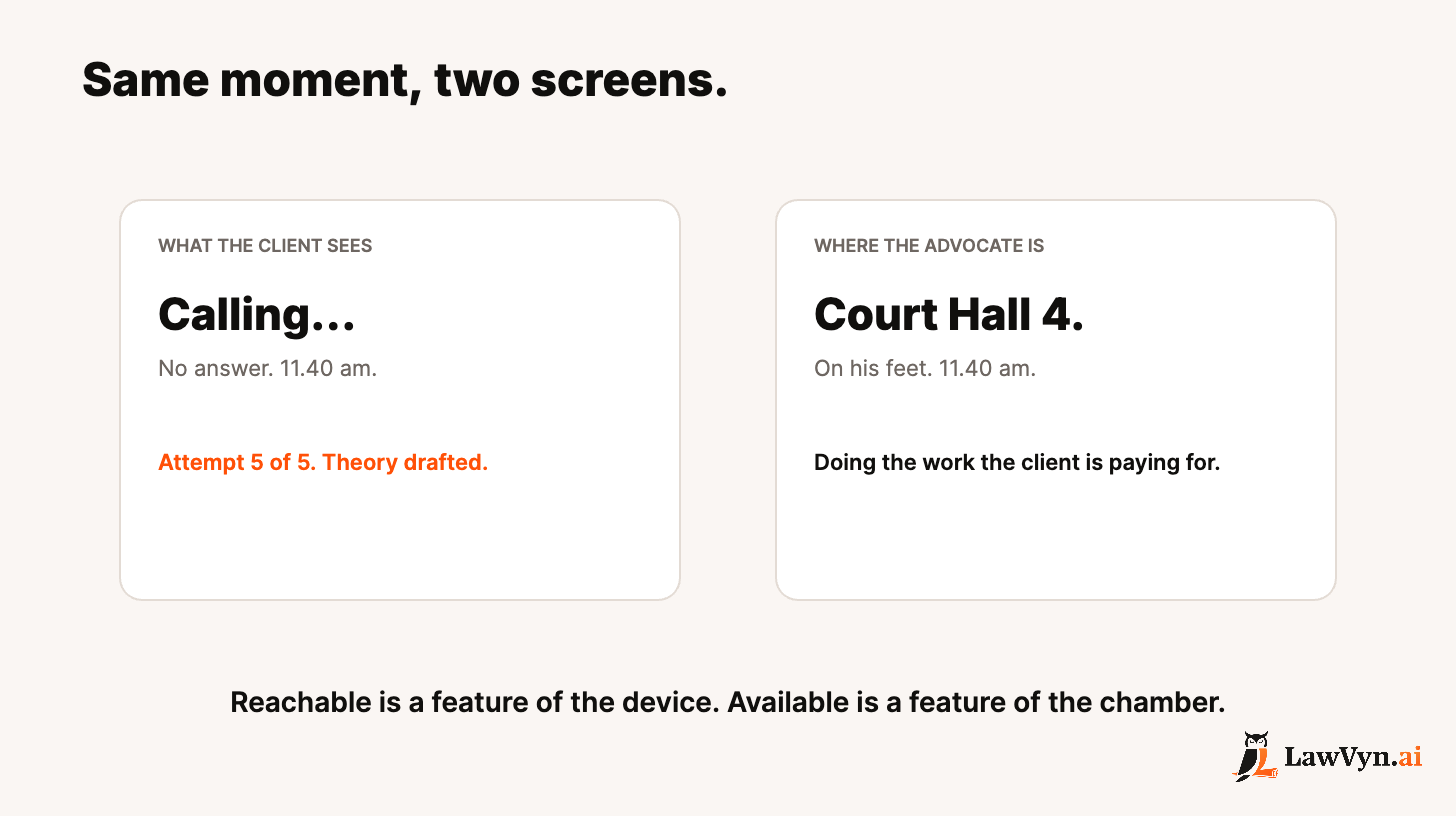
When the client phone rings at 11.40 and nobody answers, the advocate is on his feet in Court Hall 4, doing the exact work the client is paying for. The client cannot see that. What the client sees is a phone that rang, a call that was not taken, and a silence that lasts until the evening.
Silence invites interpretation. By the third attempt the client has drafted a theory. By the fifth he has shared it with his brother-in-law.
Three phones make an advocate reachable from every direction. They do nothing to make him available, and the client only ever feels the second one. Reachability is a feature of the device. Availability is a feature of the chamber.
The number of phones is not the problem. The problem is that the only person who can answer the question is also the only person who cannot answer the phone.
What a chamber can do about it
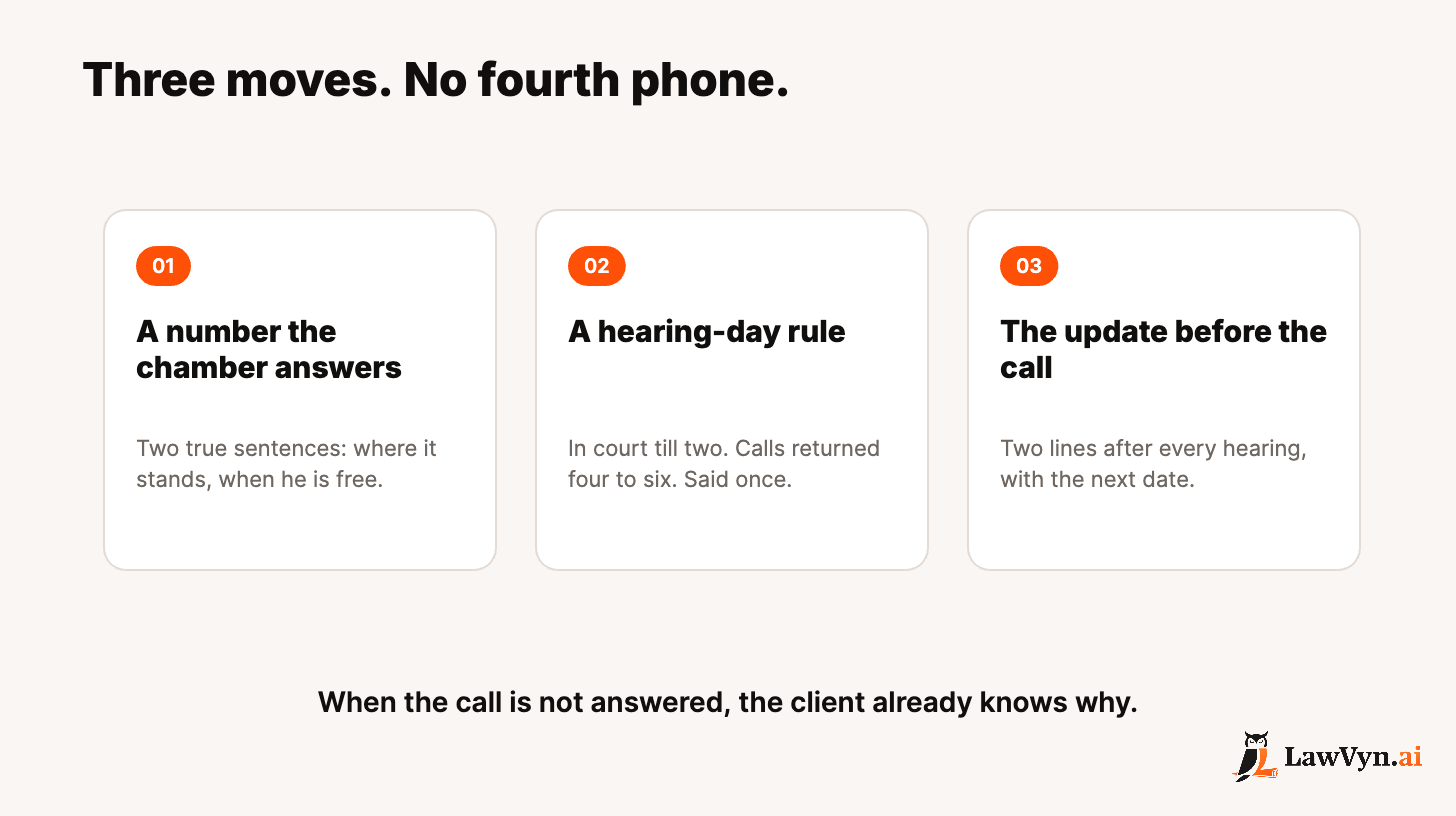
Three moves, and none of them involves a fourth phone.
Give the chamber a number that the chamber answers. Not the advocate. A junior, a clerk, a shared line, anyone who can look at the matter and say two true sentences: where it stands, and when the advocate will be free. Most calls want exactly that and nothing more.
Set a hearing-day rule and tell clients about it once. In court till two. Calls returned between four and six. Say it on the visiting card, say it in the first meeting, and the missed call stops being a mystery and becomes a schedule.
Send the update before the call. Two lines after every hearing, the same day, with the next date. The client who already knows what happened does not need to ring to find out. The phone goes quiet for the best possible reason.
The signature below makes my interest plain, so I will say it. LawVyn keeps each matter’s last step and next date where anyone in the chamber can see them, which is what lets someone other than the advocate pick up the phone and give a real answer.
The point
The advocate was never unreachable. He was in court, which is where the client wanted him.
The aim is not to answer every call. It is to make sure that when the call is not answered, the client already knows why, already knows when, and already knows what happened last. Do that, and three phones become a quirk of the trade rather than a reason to worry. Most clients will stop at the second missed call and simply wait, because waiting now means something.
Ravi Daparthi
CEO of LawVyn
AI enabled practice management and document drafting software for advocates and law firms.
https://www.ravidaparthi.com/ ·
https://www.linkedin.com/in/ravidaparthi ·
Follow LawVyn on LinkedIn

Get each new article by email. It is free, and you can unsubscribe at any time.
Subscribe by email
Ravi Daparthi
Entrepreneur, AI product leader, CEO of LawVyn.ai. Co-founder of Signitives and Oorwin.
More from Ravi
Essay
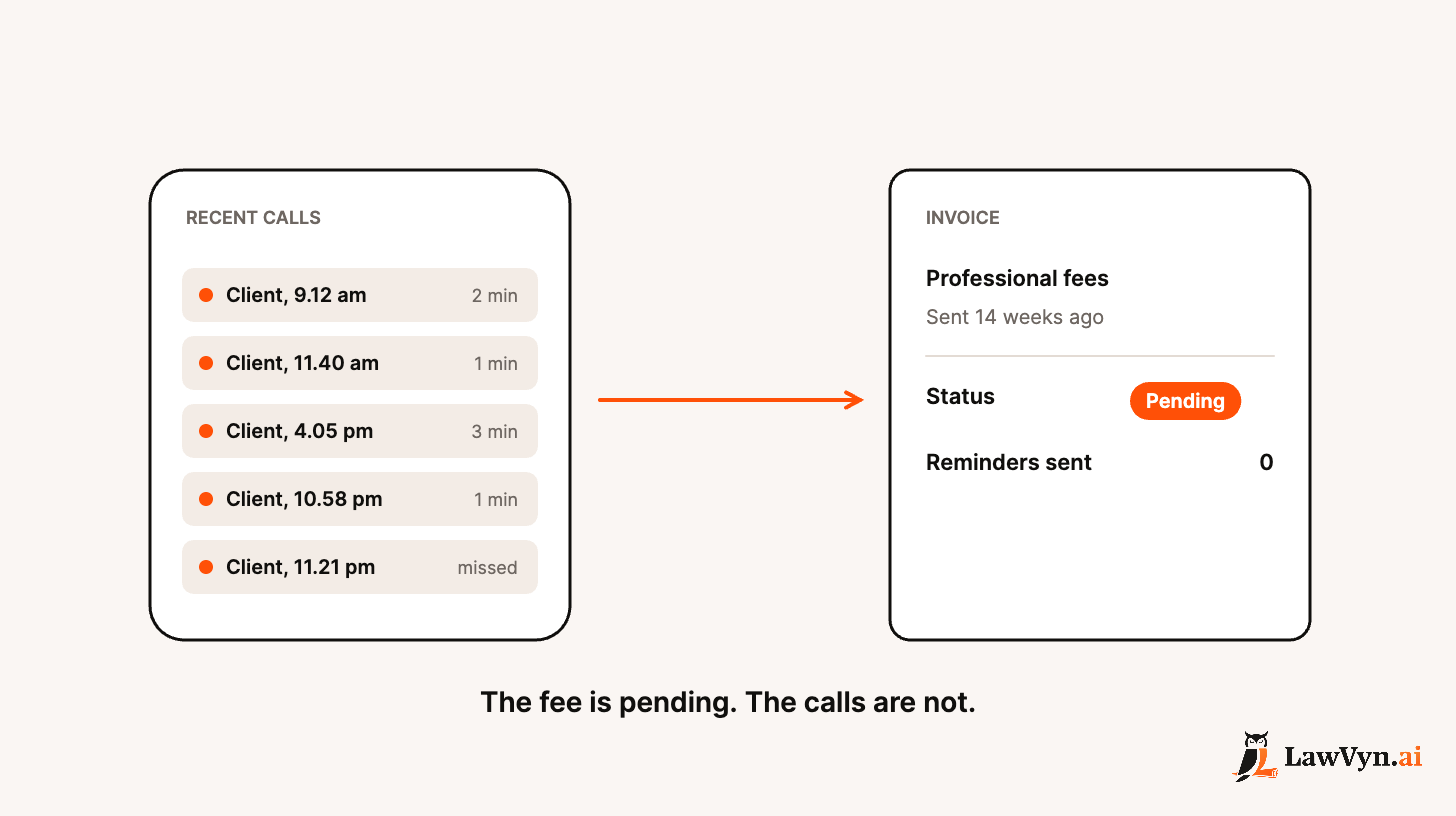
The Client Who Pays Last Is the One Who Calls Most.
A pattern every chamber knows. And what the engagement terms could have settled before it started.
23 November 2026 · 3 min read
Essay
Introducing GILD : Great Indian Legal Diaries (Legal Podcast)
Episode 01 is live: The Hidden Dangers of AI for Lawyers, with Dr. Siva Pardhiva. Watch it here.
16 November 2026 · 2 min read
Essay
Ten Jobs AI Is Creating for Lawyers. The Free Guide.
Sixteen pages for advocates and law firms: ten roles, three groups, and how to equip for each. India edition, 2027. Subscribe to download.
13 November 2026 · 1 min read