Essay · 22 September 2026 · 5 min read
Who Becomes a Senior Advocate in 2040?
AI is quietly eating the work that turned freshers into seniors. Everyone in the profession, from first-year junior to designated senior, has a stake in what replaces it.
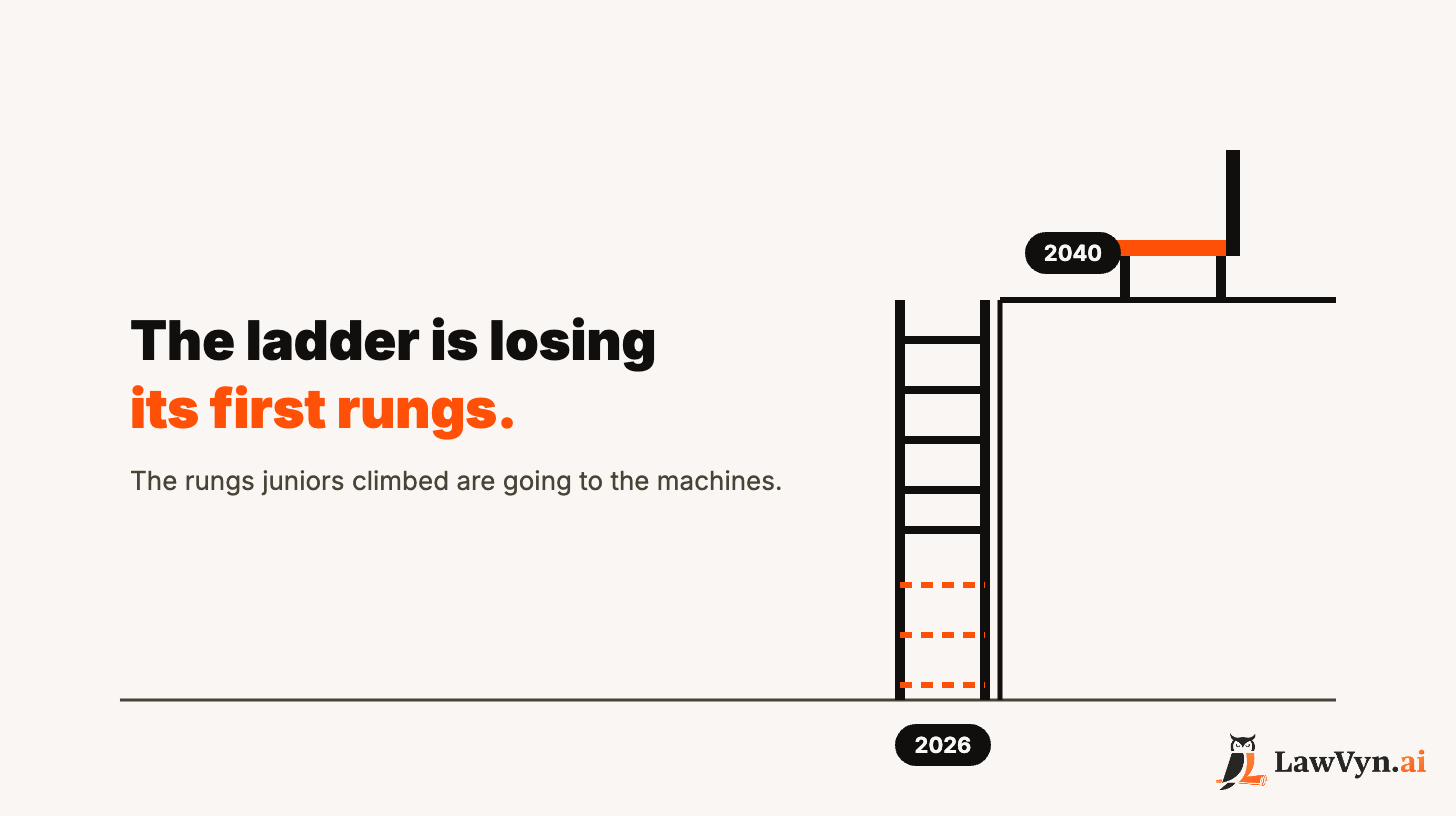
Imagine a junior in a senior’s chamber, somewhere in Hyderabad, about twenty years ago.
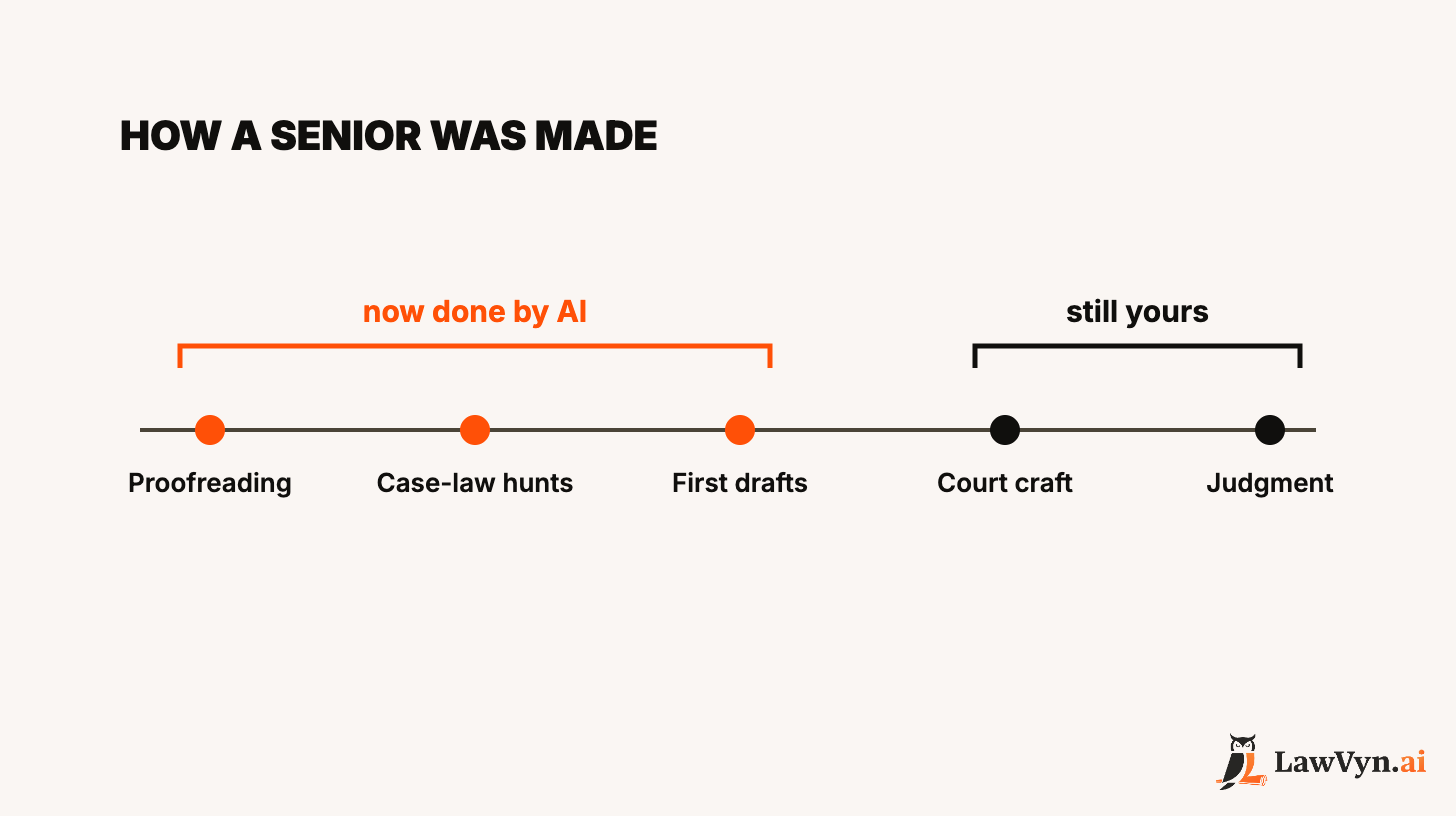
It is close to midnight. He is on his third cup of chai, proofreading a synopsis his senior will glance at for ninety seconds tomorrow. Before this, he spent four hours in the digests hunting for one judgment. Before that, he carried files to court, waited through sixteen matters, and watched his senior demolish a witness in eleven minutes.
Ask him what he is learning and he will tell you: nothing. I am a glorified photocopier.
He is wrong. That drudgery was the syllabus. The proofreading taught him that one wrong comma can shift a contract. The digest hunting taught him how judges think, because he read forty judgments to find the one. The waiting in court taught him more about advocacy than any classroom ever did.
We called it grunt work. It was an apprenticeship wearing a disguise.
The question everyone is typing
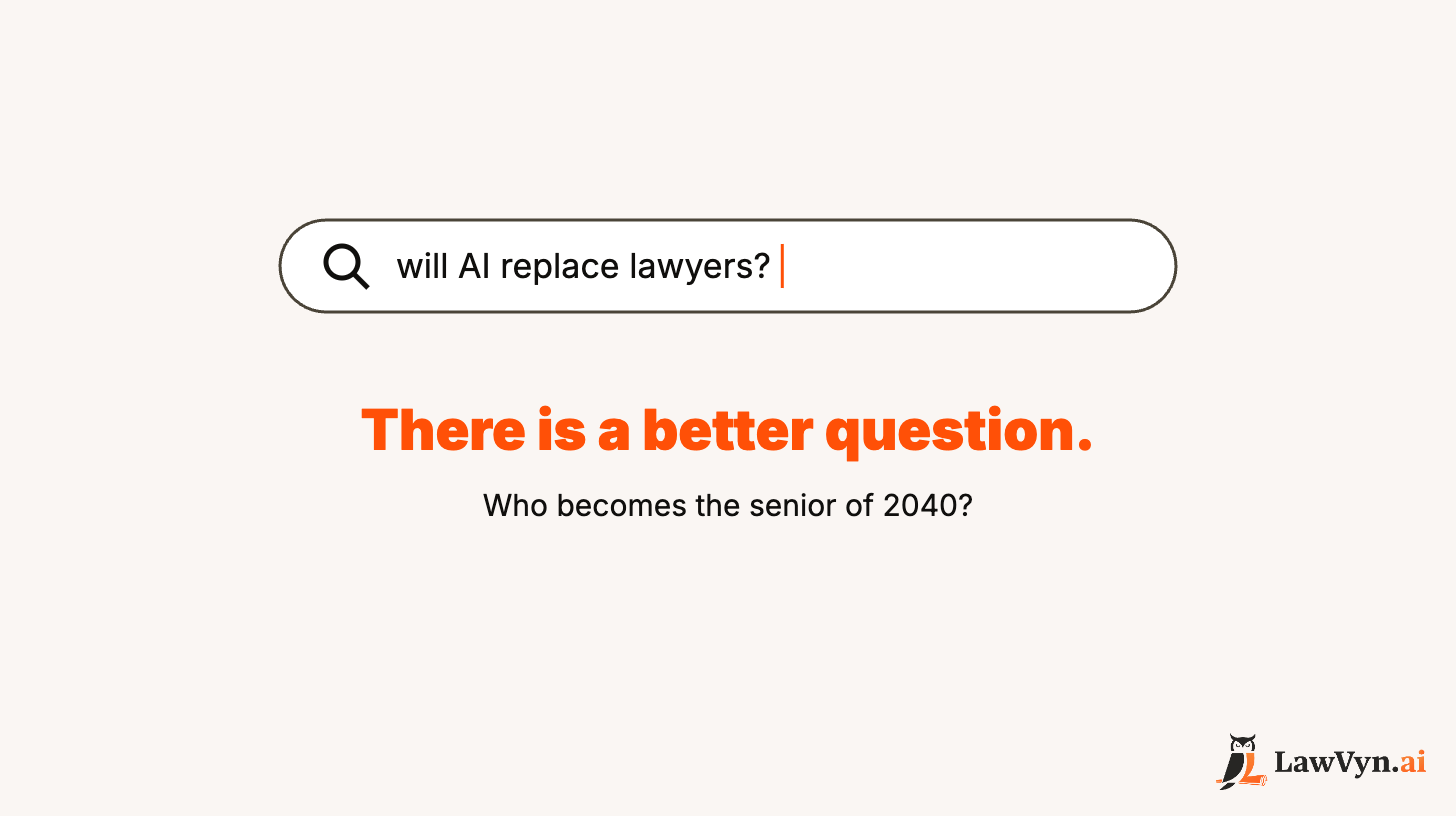
One of the most searched legal questions this year, in India and everywhere else, is some version of “will AI replace lawyers”.
I understand the search. The honest answer, for what it is worth, is boring: no, not the way people fear. Arguments will still be made by humans, and judgment will still be delivered by humans.
The more interesting question is hiding underneath it. AI is not replacing lawyers. It is replacing the work that used to make lawyers.
The first draft. The case-law hunt. The due diligence binder. The document review. Across the world, and now inside India’s biggest firms too, that layer of work is moving to machines. Thomson Reuters estimates AI can hand a lawyer back roughly 200 hours a year. And no client wants to pay a junior to do slowly what software does in minutes.
The early consequences are visible if you look sideways. Stanford’s Digital Economy Lab has been tracking employment since ChatGPT arrived, and its latest update found that young workers in the jobs most exposed to AI have fallen about 19 percent behind older workers in the same jobs. In the UK, big accounting firms have trimmed graduate hiring by as much as a third. Law moves slower than accounting. It does not move never.
Nobody is the villain here
Here is the uncomfortable part. Everyone’s incentives point the same way, and none of them point at training.
The client does not want to fund a junior’s education by the billable hour. The partner wants the drafting done tonight, not on Thursday. And the junior, quite sensibly, would rather prompt his way out of the digest room. I would be too.
So nobody is cutting the ladder on purpose. It is simply not being rebuilt.
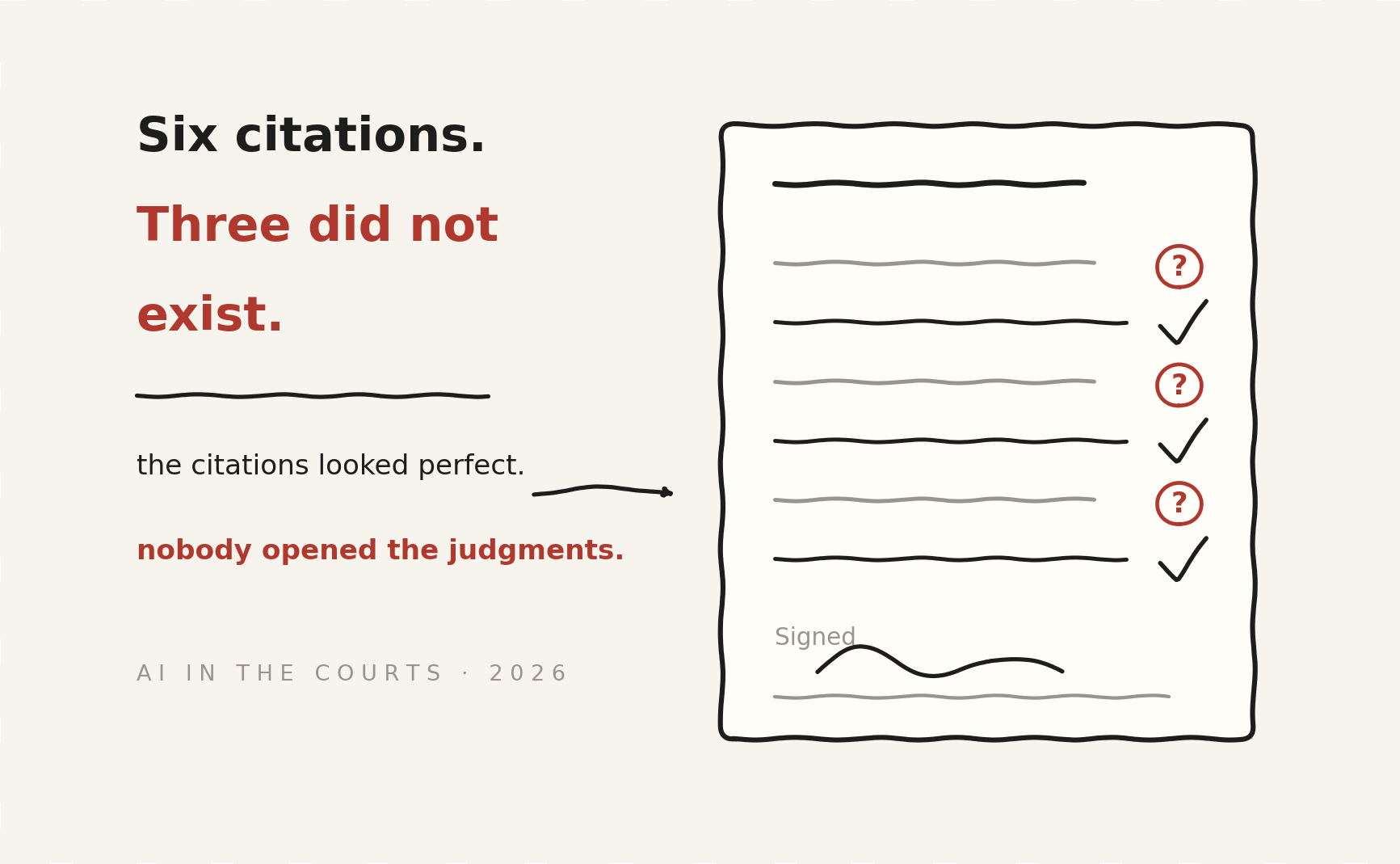
But a profession that runs on judgment has a problem, because judgment does not come from prompts. It comes from reps. From doing the research the slow way a hundred times, so that on the hundred and first, something smells wrong within thirty seconds. Last week I wrote about AI-invented citations reaching court filings. That is not a story about careless lawyers. It is a story about how convincing the machine has become, and how much practice it takes to hear the false note in a confident voice.
Three chairs in the same room
If you are in your first five years: use the tools, and then betray them a little. Redo some research by hand. Read the full judgment, not the summary, and not only the paragraphs the machine highlighted. Sit in court on days you have no matter. Your seniors got their reps whether they wanted them or not; the work left them no choice. You will have to seek yours out on purpose. The junior who can catch the machine lying will be the most sought-after lawyer of the next decade.
If you are mid-level: you are the bridge. The last generation trained the old way, and the first to supervise the new one. When a junior brings you an AI draft, hand back questions before corrections. Let them walk you through it, clause by clause, the way your senior once did with you. Teaching judgment is now part of your job, whether or not it appears in any appraisal.
If you are senior: your experience just became the scarcest asset in the profession, and succession has quietly become something to design rather than assume. The pipeline that produced you could count on ten years of drudgery to filter and forge your successors. That filter is dissolving. The chambers that thrive will rebuild apprenticeship deliberately: simulated matters, moots argued over lunch, juniors in the room when strategy is decided, not only when files need carrying.
The India stakes
Every year, tens of thousands of fresh graduates enrol with our bar councils, dreaming of the black gown. Meanwhile our courts are drowning, with crores of matters waiting in the queue. India does not need fewer lawyers. It needs more good ones than we have ever produced, working faster than we have ever worked.
I build legal software for a living, so discount my optimism suitably. But the arithmetic is hard to argue with: AI may be the only realistic way to speed up Indian justice. And a country of a billion and a half will need lawyers who understand these tools deeply enough to question them. Which brings us back, one more time, to training.
A Senior Advocate is not created by a designation ceremony. They are created by ten thousand corrections in the margin, a hundred hard mornings in court, years of watching and being watched. The gown of 2040 is being stitched right now, in whatever we decide our juniors should do with their evenings in 2026.
So no, I am not asking whether AI will replace lawyers.
I am asking who will train the person who will one day overrule the machine.
Ravi Daparthi
CEO of LawVyn
A Practice management software for Indian advocates and law firms.
https://www.ravidaparthi.com/ ·
https://www.linkedin.com/in/ravidaparthi ·
Follow LawVyn on LinkedIn

This essay first appeared on my Substack. New pieces land there first.
Subscribe on Substack
Ravi Daparthi
Entrepreneur, AI product leader, CEO of LawVyn.ai. Co-founder of Signitives and Oorwin.
More from Ravi
Essay
AI in Your Pleadings Is Now a Disciplinary Question
A draft regulation in June, a Supreme Court judgment in July, and one clause that says you cannot blame the machine. Here is what changed, and what it asks of the advocate who signs.
20 September 2026 · 7 min read
Essay
Legal AI : The Intern Who Never Says “I Don’t Know”
Legal AI drafts fast, reads faster, and will invent a judgment with a straight face. Here is how to pick one you can trust with a client file.
17 September 2026 · 5 min read

Essay
What Exactly Did You Agree To?
India's data law is now live, machines are making decisions about you, and the box you tick without reading has quietly started to matter.
16 September 2026 · 8 min read