Essay · 24 October 2026 · 4 min read
OpenAI (ChatGPT) Just Beat ANI in Delhi. What ANI Can Still Plead.
Interim relief was refused on 24 July 2026. Storing the articles to train still engaged the reproduction right, and fair dealing answered it. The appeal is listed on 8 December.
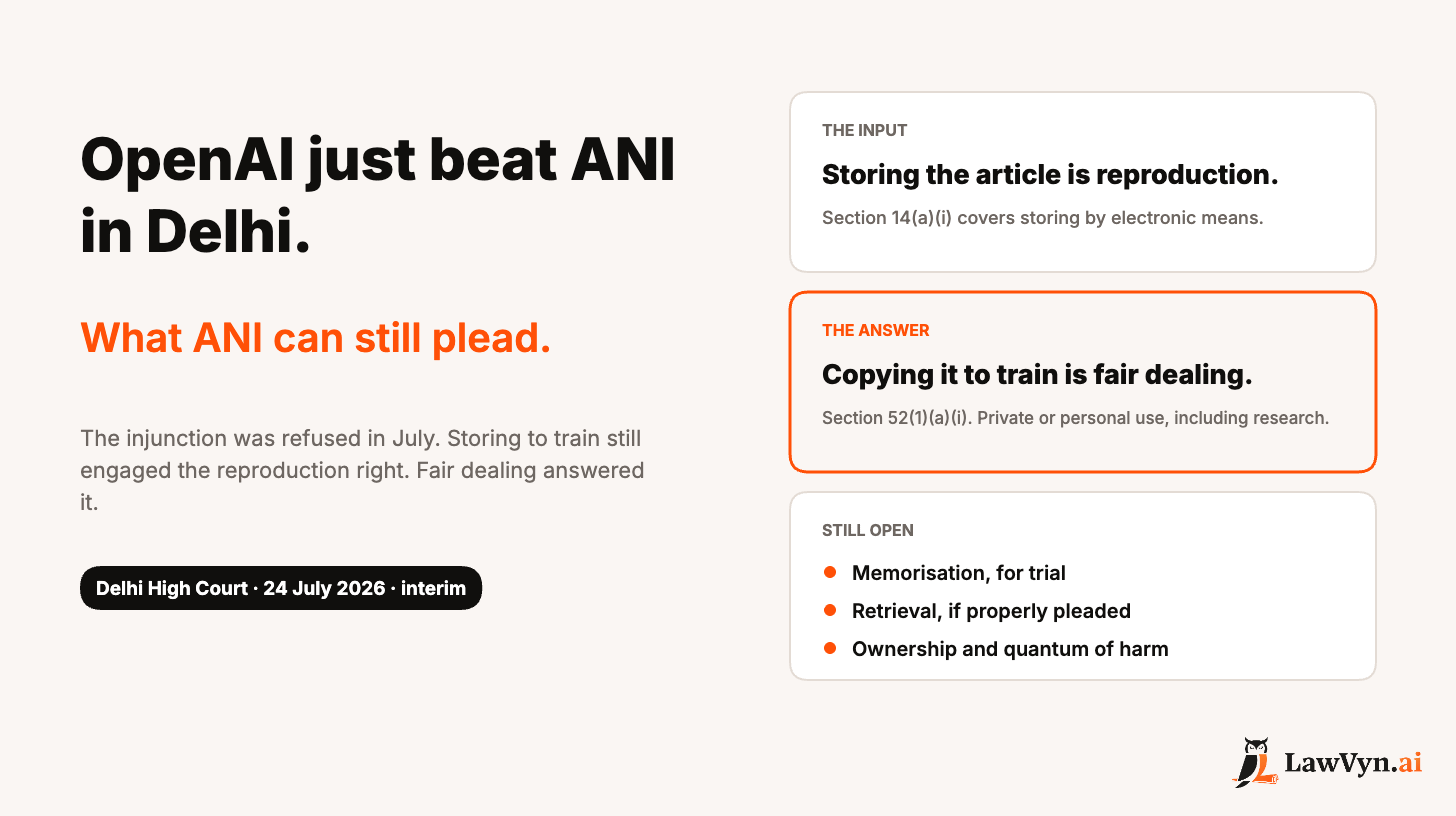
At a glance. Storing ANI’s articles to train the models engages the reproduction right, but falls within fair dealing under Section 52(1)(a)(i), and the outputs are not substantially similar to ANI’s works. All of it is interim, and will not bind the trial.
ANI did not lose because nothing was copied. The Court found that something was.
What the Court actually decided
On 24 July 2026, Justice Amit Bansal refused ANI’s interim injunction (I.A. 45300/2024 in CS(COMM) 1028/2024). Read the judgment before trusting any summary of it, including this one.
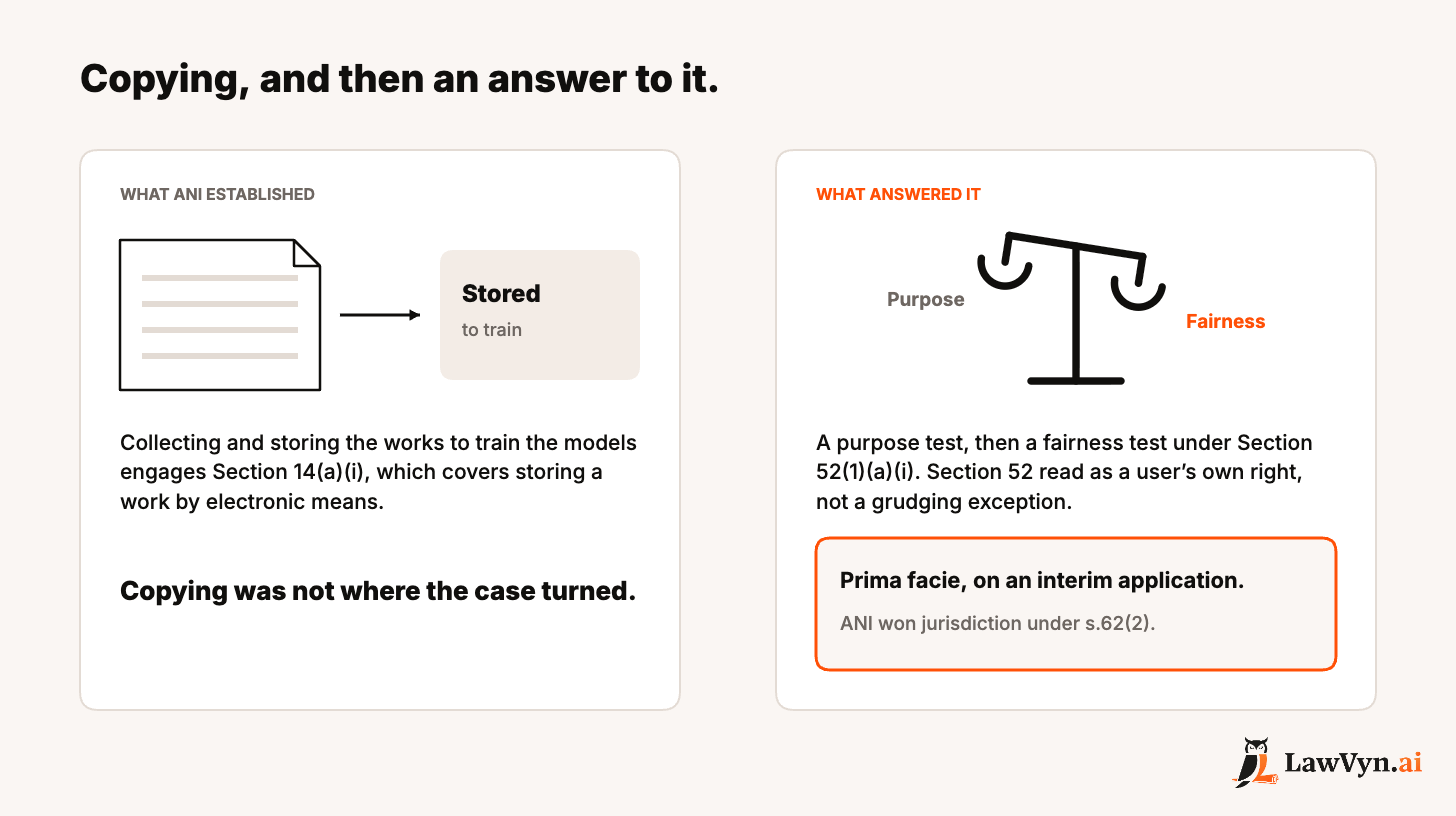
ANI won the threshold point. Its registered office in Delhi answered Section 62(2) of the Copyright Act, and storage on United States servers was treated as a terminal step in the chain of events, not an answer to jurisdiction.
On the input, collecting and storing the works to train the models engages the reproduction right, which under Section 14(a)(i) covers storing a work by electronic means. What answered it was fair dealing, on a purpose test and then a fairness test.
Then discretion did the rest. ANI’s own offer to license for USD 7.5 million showed the loss could be priced, an injunction could not be undone the same way, and the opt-out was never used.
Two ordinary words did the work
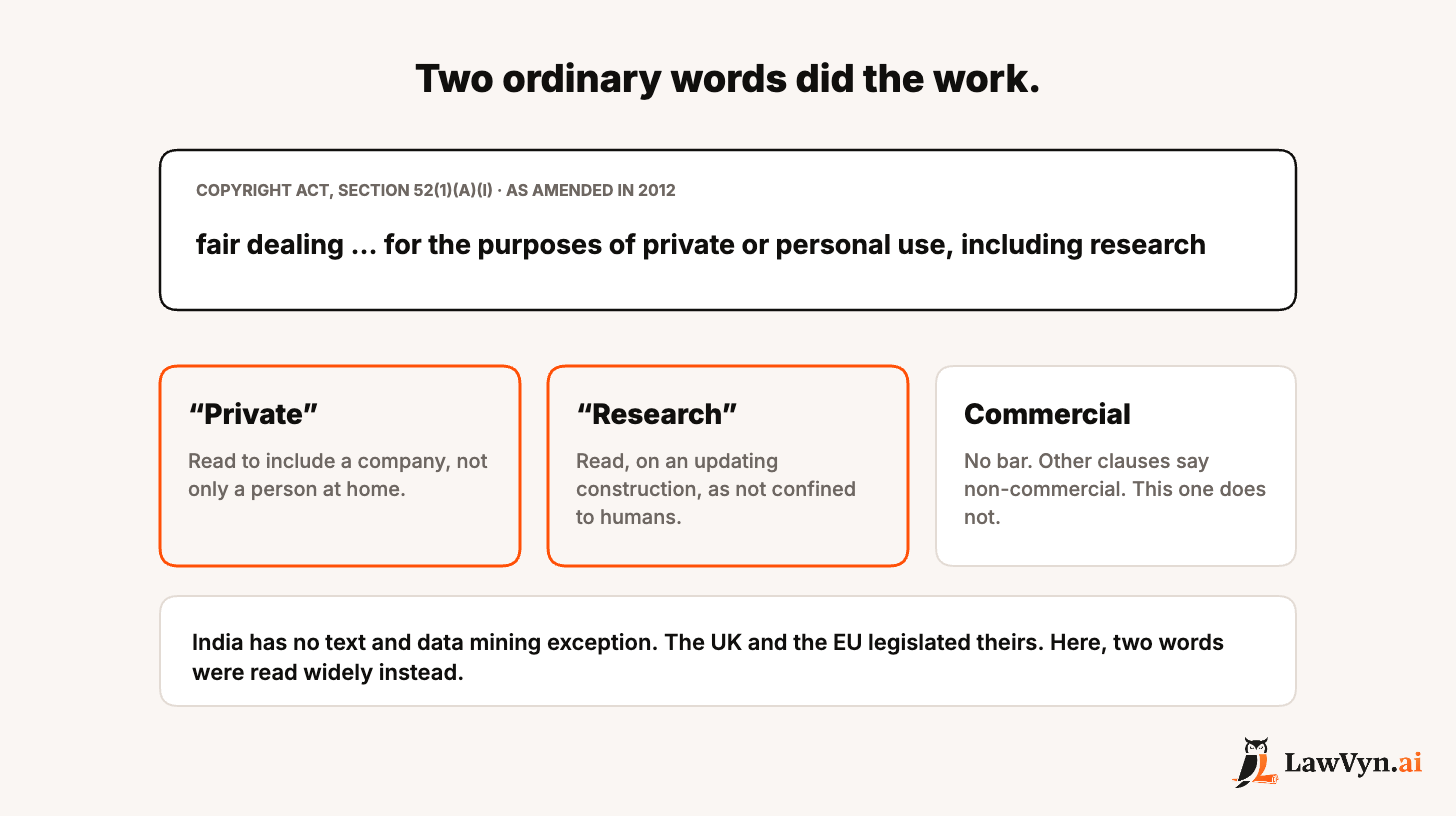
Section 52(1)(a)(i) allows fair dealing for “private or personal use, including research”. That wording, and the Explanation on electronic storage, come from the 2012 amendment.
Both halves had to stretch. “Private” was read to include a company, a reading the amicus Professor Arul George Scaria differed on. “Research” was read as not confined to human beings. Commercial motive was no bar: Parliament limited other clauses of Section 52(1) to non-commercial use and did not limit this one.
India has no text and data mining exception. The UK’s Section 29A allows computational analysis only “for the sole purpose of research for a non-commercial purpose”. This reading is the wider one, and it is now before the Division Bench.
The screenshots that came too late
The output side turned on evidence, not law.
ANI produced responses it said reproduced its articles. The Court found the titles substantially different [para 114], no substantial similarity reading the works as a whole [para 115], and no substantial reproduction [para 125], as LiveLaw reports.
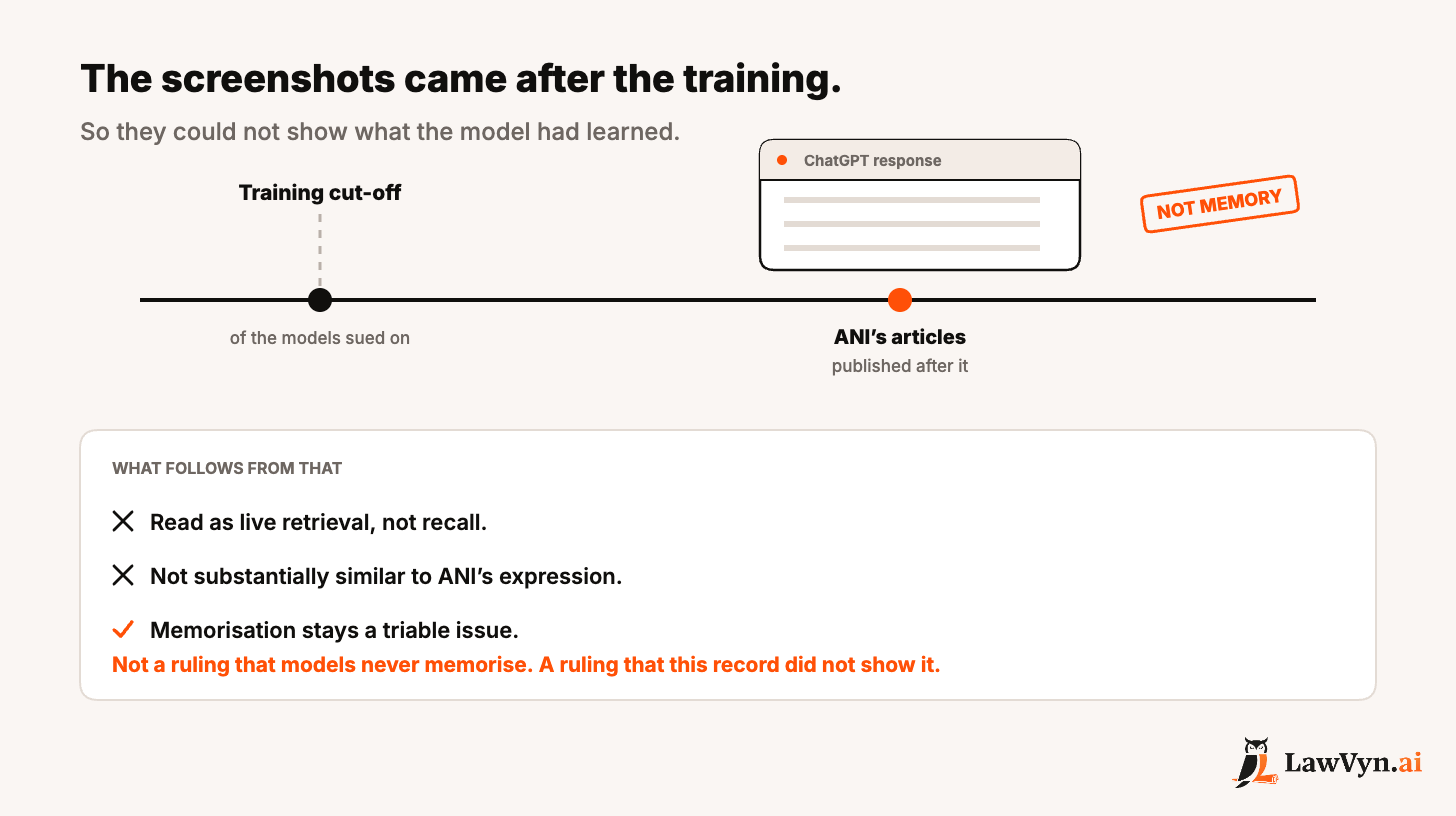
Then the arithmetic. Training ended in April 2022 for GPT-4 and April 2024 for GPT-4o, while the articles relied on were published between 9 August and 30 September 2024 [para 82], so they could not have come from training [para 83]. The Court declined to treat ANI’s repeated prompts, one asking for what was said “exactly”, as non-adversarial [para 119].
Less a lapse than a sign of how little was understood in late 2024. Memorisation remains for trial.
What ANI can still plead
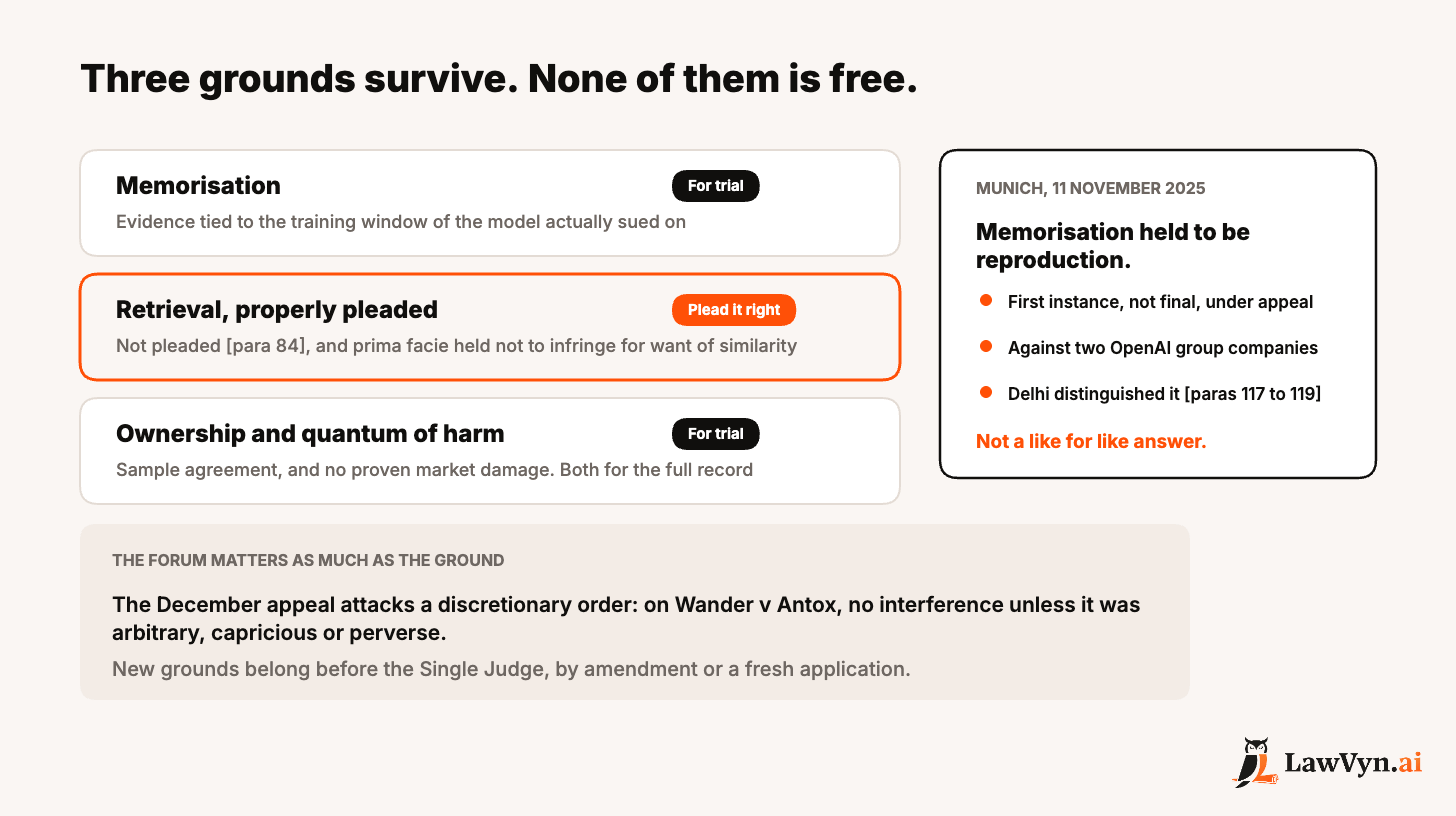
Retrieval was not simply left open. Paragraph 84 records that whether RAG-based outputs infringe “has not been pleaded in the plaint”, and the amicus Adarsh Ramanujan flagged it for trial. But the Court went on to hold, prima facie, that those outputs do not infringe for want of substantial similarity. ANI did plead communication to the public within its memorisation theory [para 74]; the right is Section 14(a)(iii), Section 2(ff) being the definition.
So a properly pleaded retrieval case survives, and it is no free hit: it must show a substantial part was taken, it will meet Section 52(1)(c), and news facts are not protected in themselves. Alongside it sit memorisation, evidenced against the model’s own training window, and ownership and harm.
Forum matters as much as ground. The appeal attacks a discretionary order, which on Wander v Antox is not disturbed unless it was arbitrary, capricious or perverse. New grounds belong before the Single Judge.
Germany went the other way on memorisation (42 O 14139/24), but that is first instance, not final, and Delhi expressly distinguished it [paras 117 to 119].
What a chamber takes from this
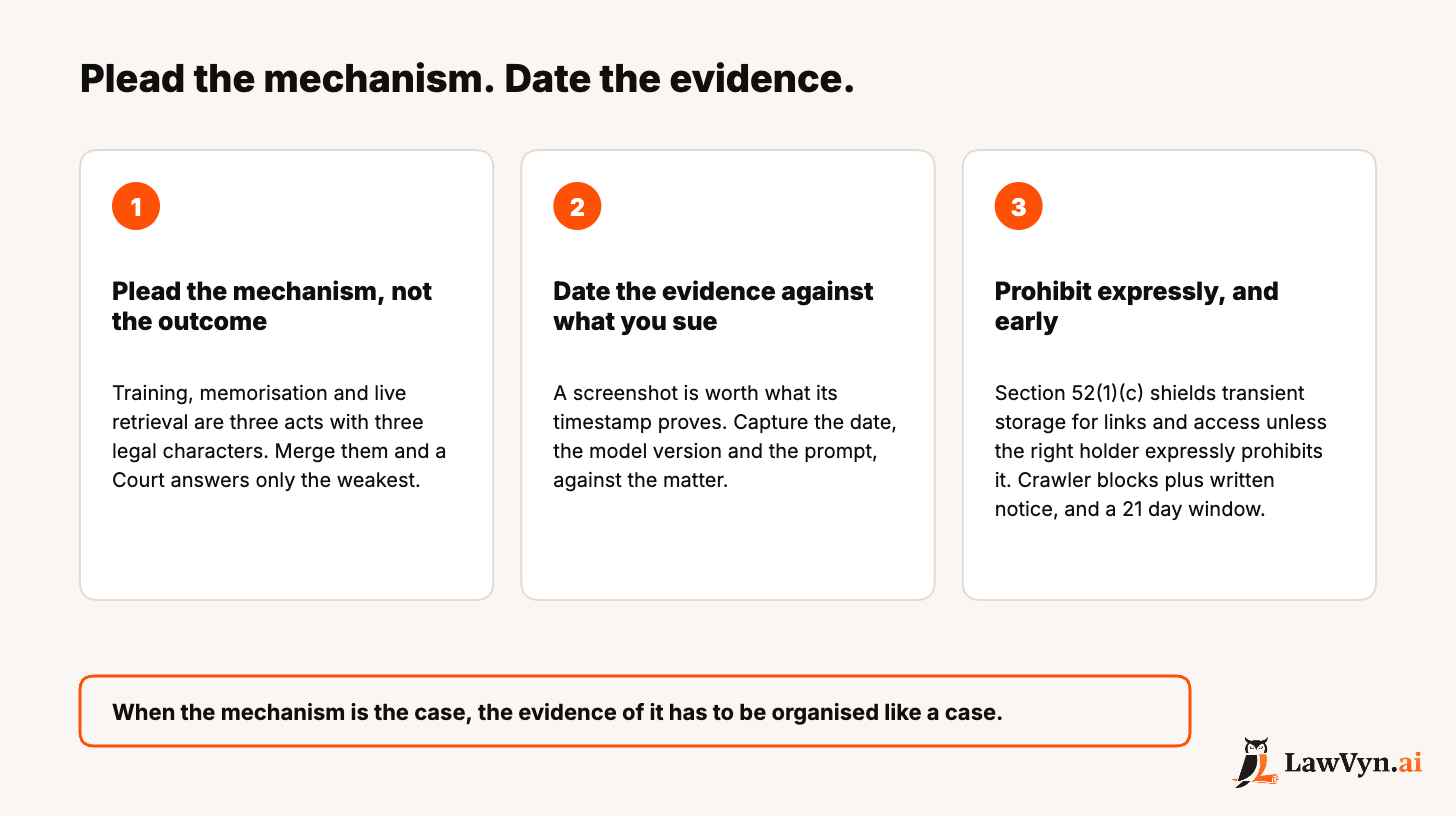
Plead the mechanism, not the outcome. Training, memorisation and live retrieval are three acts with three legal characters, and a plaint that merges them invites an answer on only the weakest.
Date the evidence against the thing you are suing. A screenshot is worth what its timestamp proves: capture the date, the model version and the prompt.
Prohibit expressly, and early. Section 52(1)(c) shields transient storage for links and access unless the right holder expressly prohibits it. Crawler blocks plus written notice are cheap.
None of this replaces judgment. What to plead, and where, is still the advocate’s call. The signature below makes my interest obvious, so I will say it: LawVyn exists so this material sits against the matter by default, dated and searchable.
And for everyone else
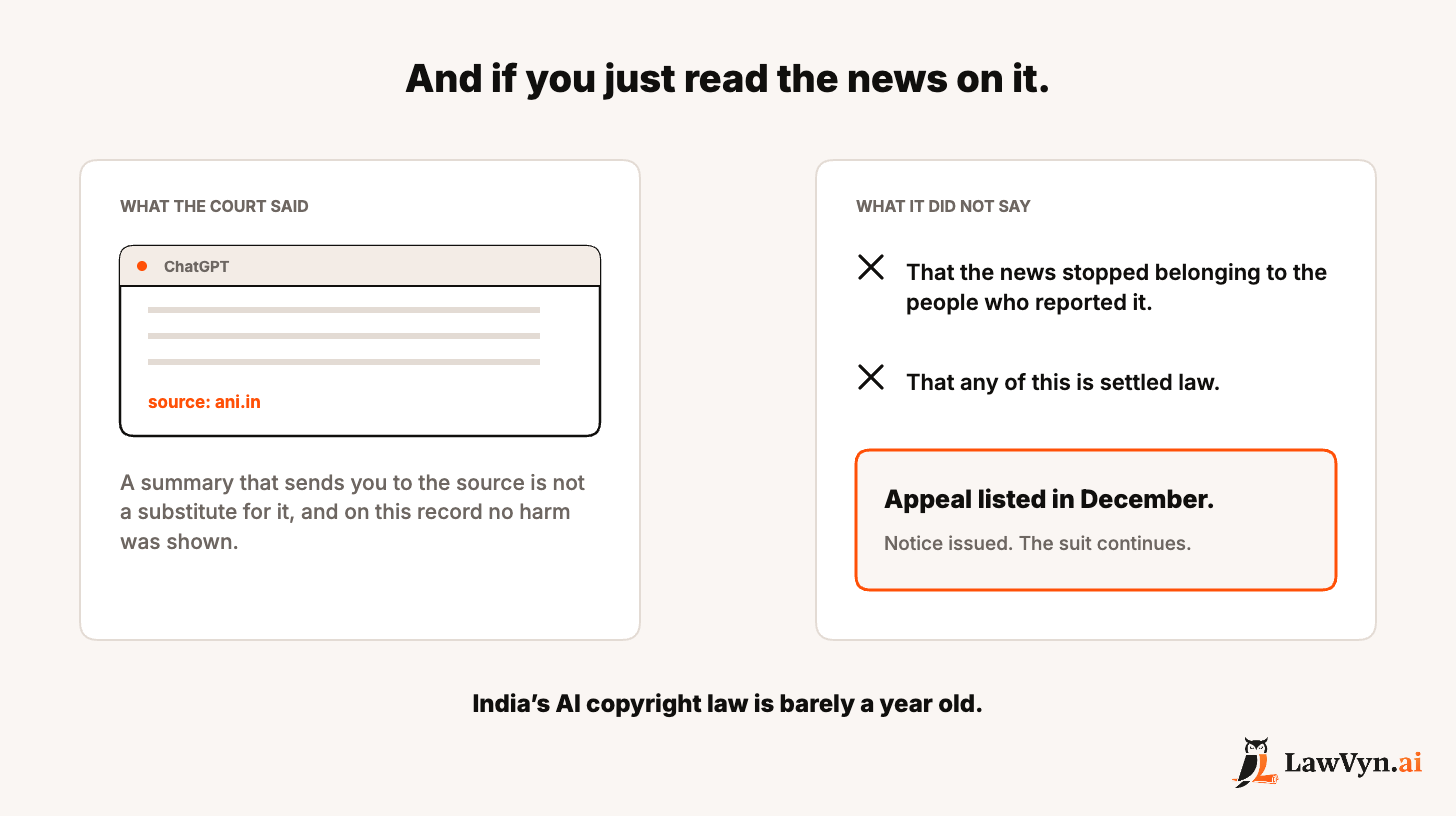
Nothing here says the news stopped belonging to the people who reported it. The Court’s point was narrower: a summary that sends you to the source is not a substitute for it, and no harm was shown on this record.
That is a prima facie view in a suit still being fought. India’s position rests on one interim ruling, and the next round is on the board.
Commentary on an interim order in a pending matter, based on the judgment dated 24 July 2026. Not legal advice.
Ravi Daparthi
CEO of LawVyn
A Practice management software for Indian advocates and law firms.
https://www.ravidaparthi.com/ ·
https://www.linkedin.com/in/ravidaparthi ·
Follow LawVyn on LinkedIn

This essay first appeared on my Substack. New pieces land there first.
Subscribe on Substack
Ravi Daparthi
Entrepreneur, AI product leader, CEO of LawVyn.ai. Co-founder of Signitives and Oorwin.
More from Ravi
Essay
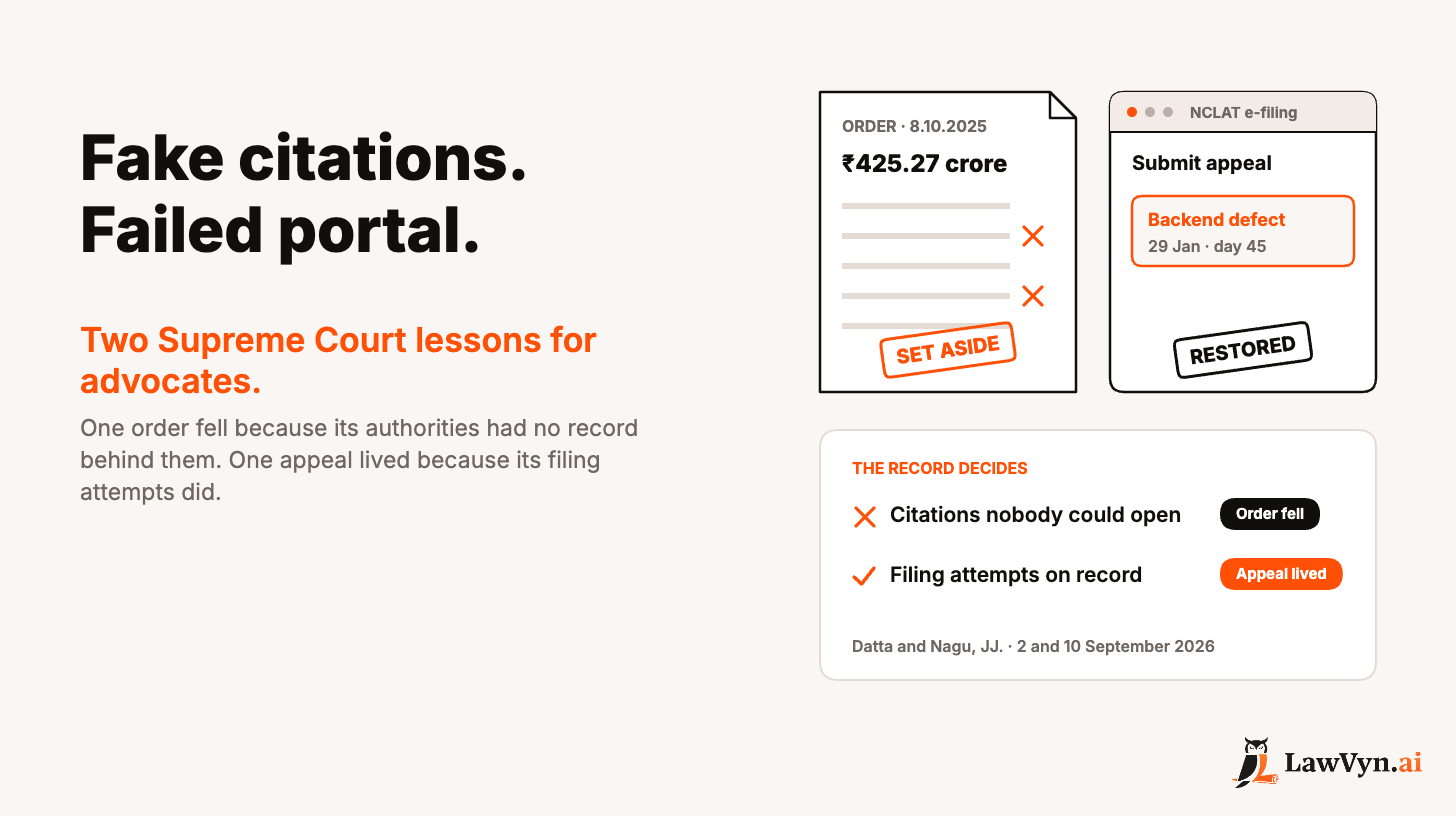
Fake Citations, Failed Portal: Two Supreme Court Lessons for Advocates.
The same bench set aside a 425 crore order built on judgments that did not exist, then restored an appeal filed a day late because the tribunal's portal failed. Read together, they are one rule.
22 October 2026 · 5 min read
Essay
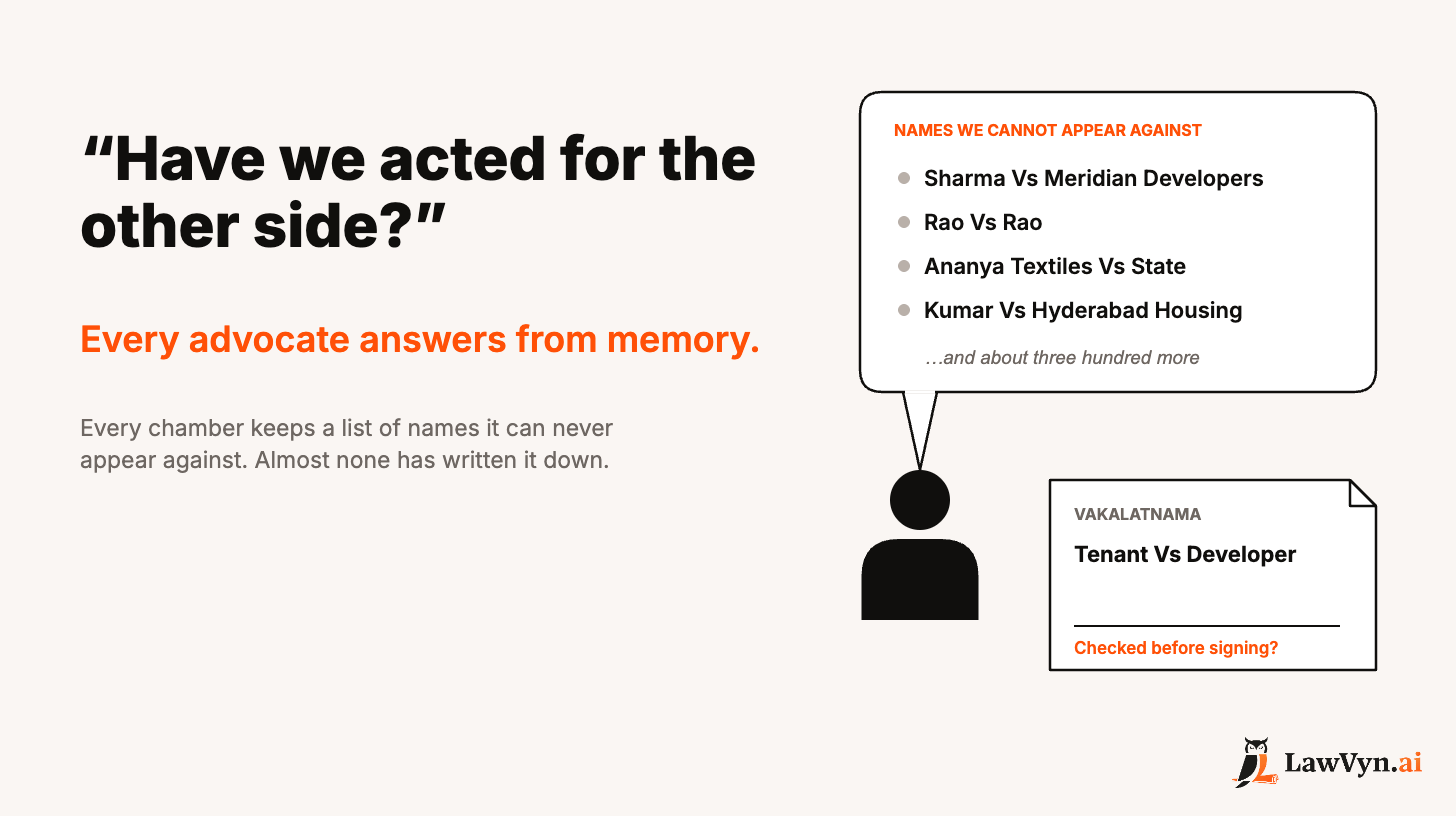
“Have We Acted for the Other Side?” Every Advocate Answers From Memory.
Rule 33, a 1983 suspension and a 2026 Supreme Court judgment say what an advocate owes a former client. The check that enforces it still runs on one person's memory.
20 October 2026 · 5 min read
Essay
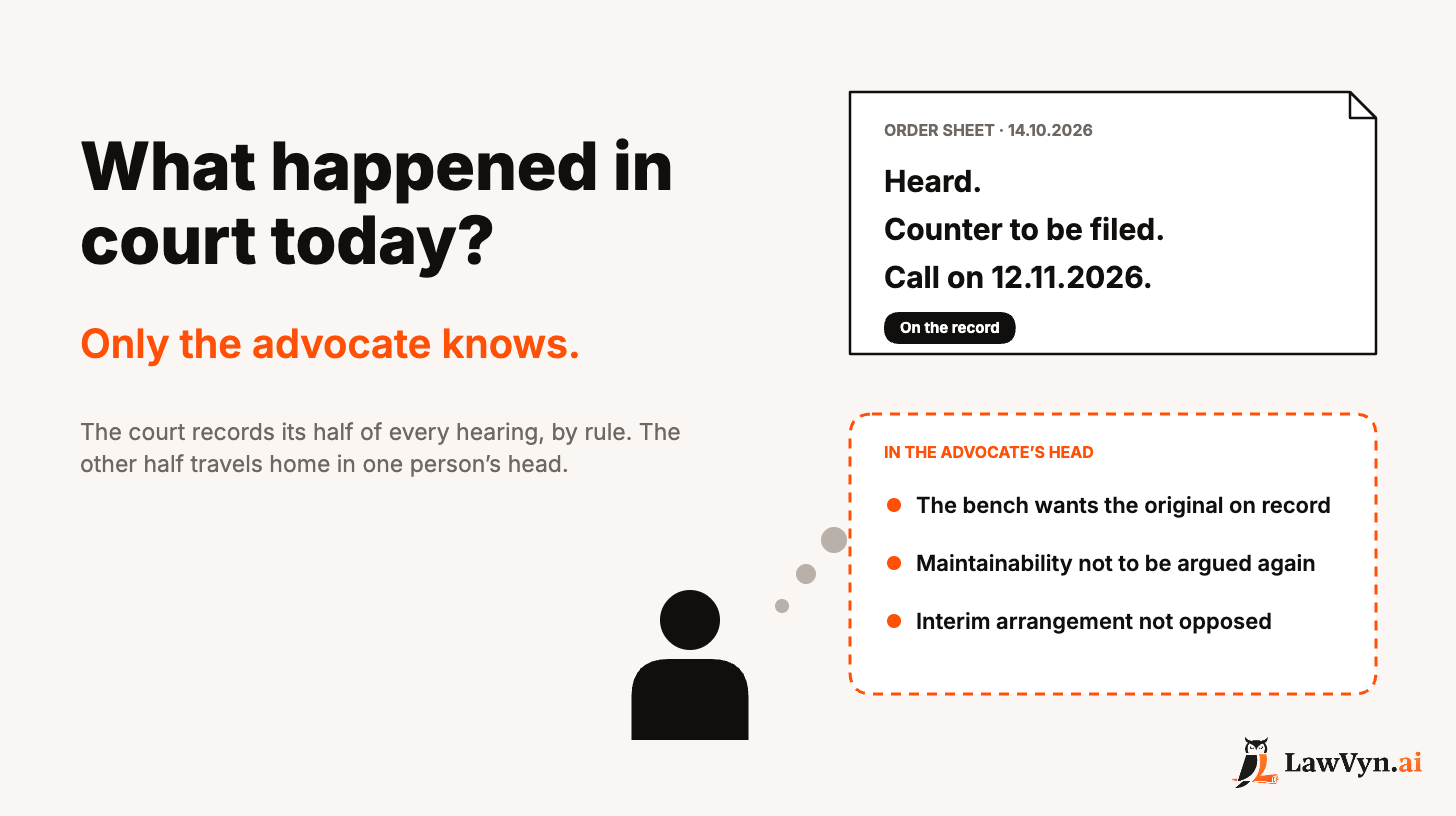
What Happened in Court Today? Only the Advocate Knows.
The court writes down its half of every hearing, by rule. The advocate's half, what the bench said and what comes next, still travels home in one person's head.
14 October 2026 · 5 min read