Essay · 22 October 2026 · 5 min read
Fake Citations, Failed Portal: Two Supreme Court Lessons for Advocates.
The same bench set aside a 425 crore order built on judgments that did not exist, then restored an appeal filed a day late because the tribunal's portal failed. Read together, they are one rule.
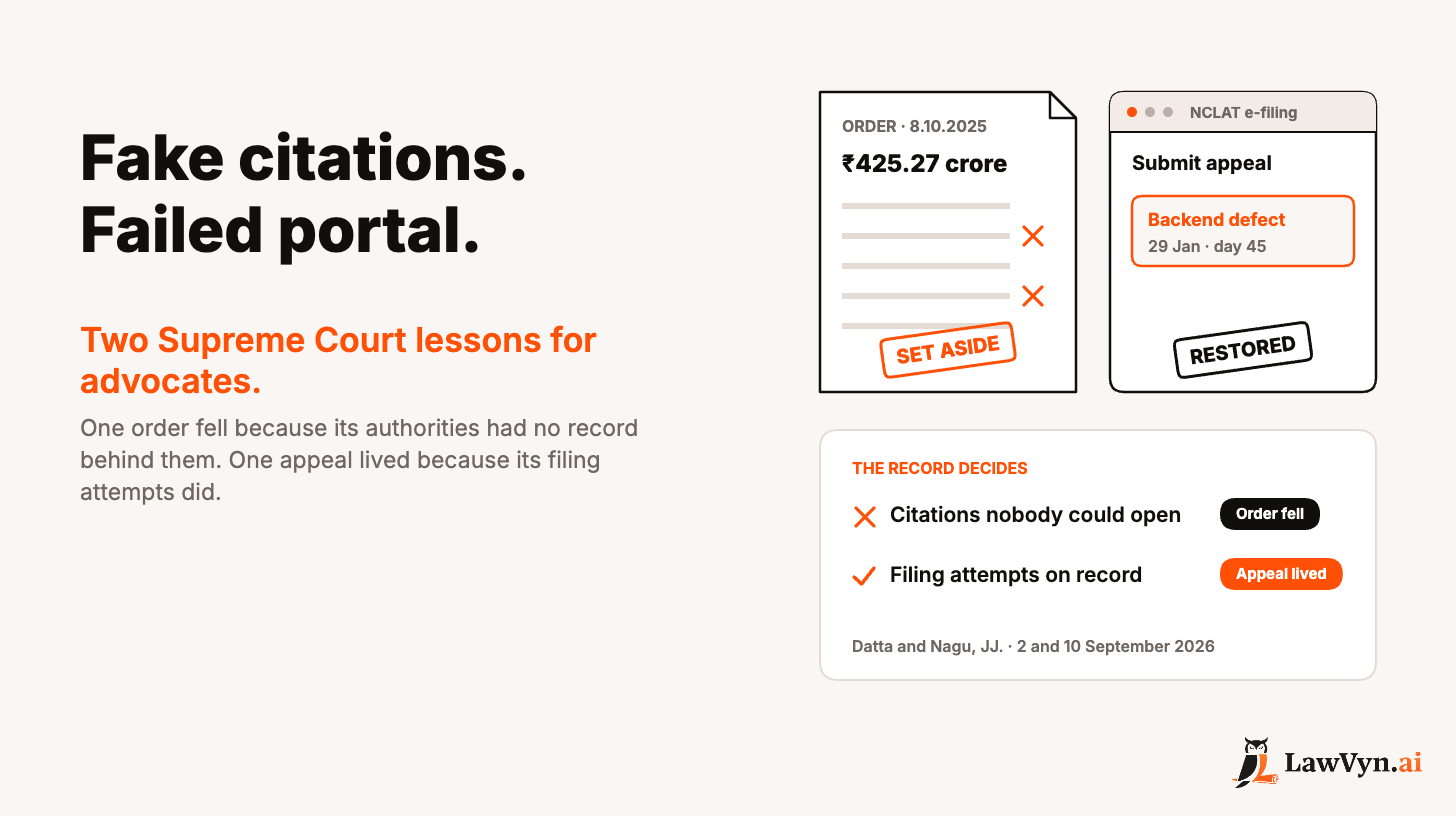
Two judgments. The same two judges. Eight days apart.
On 2 September the Supreme Court set aside a penalty of 425 crore rupees because the order imposing it relied on judgments that did not exist. On 10 September the same bench restored an appeal filed one day after a deadline the law does not allow anyone to extend, because the tribunal’s own e-filing portal had failed.
One order fell because its authorities had no record behind them. One appeal lived because its filing attempts did.
That is the whole lesson, told twice. The record decides. Not what was intended, not what was argued. What can be shown.
A 425 crore order with no cases behind it
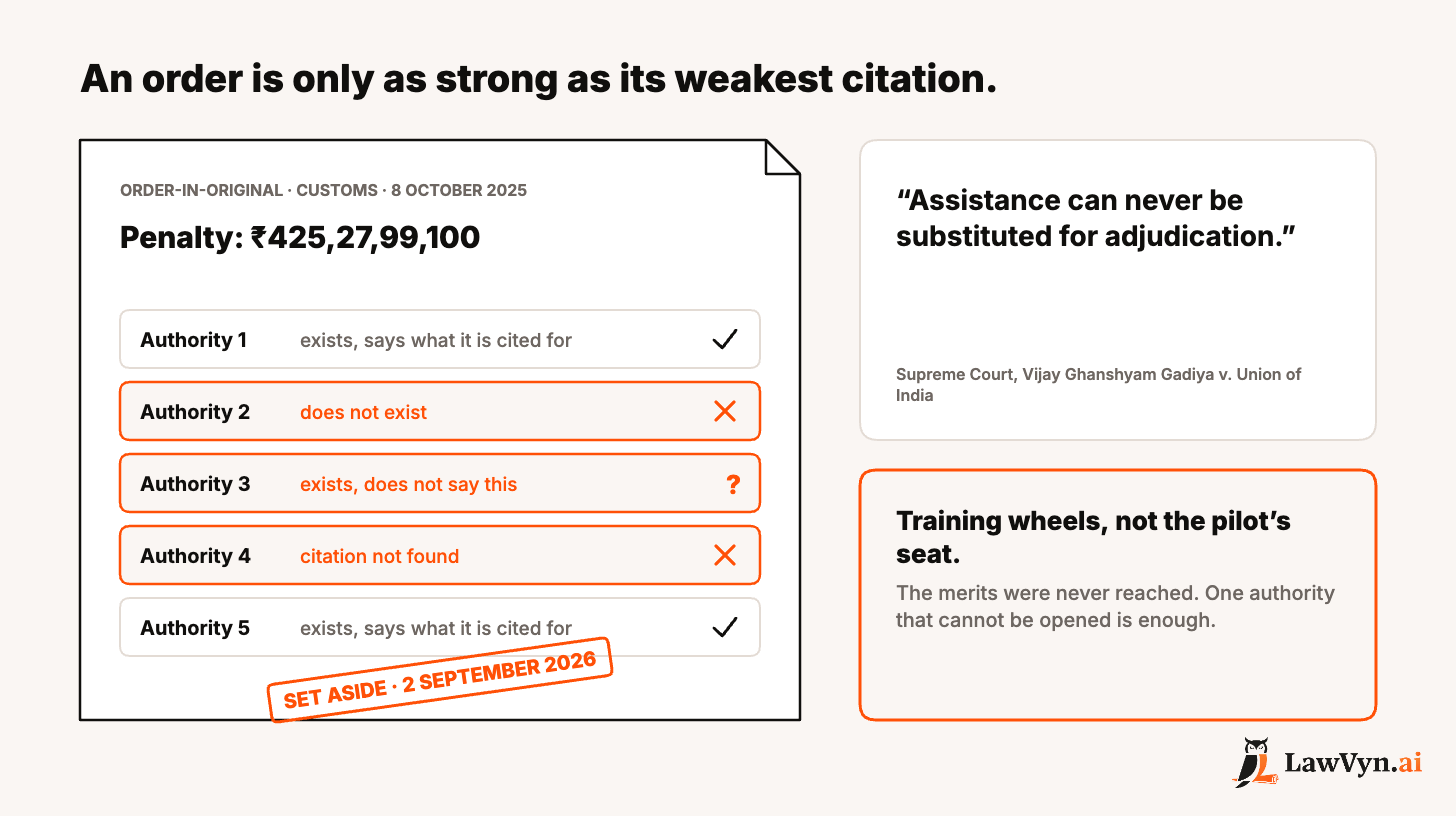
The order came from an adjudicating authority under the Customs Act, in October 2025, over diamonds declared as lab-grown. The Gujarat High Court upheld it in January. Before the Supreme Court, the appellant said the judgments cited in the order had been generated by AI.
The Court checked every authority itself. Some did not exist. Some existed but did not say what they were cited for. It did not go into the merits of the diamonds at all.
Assistance can never be substituted for adjudication, the Court said. AI may well serve as training wheels, but entrusting it with the pilot’s seat would be both imprudent and dangerous.
The order and the High Court’s approval were set aside. The matter goes back for fresh adjudication, before a different officer. The merits were never reached. An order resting on even one authority that cannot be opened does not get that far.
A citation nobody has opened is a rumour with a page number.
A one-day delay the record rescued
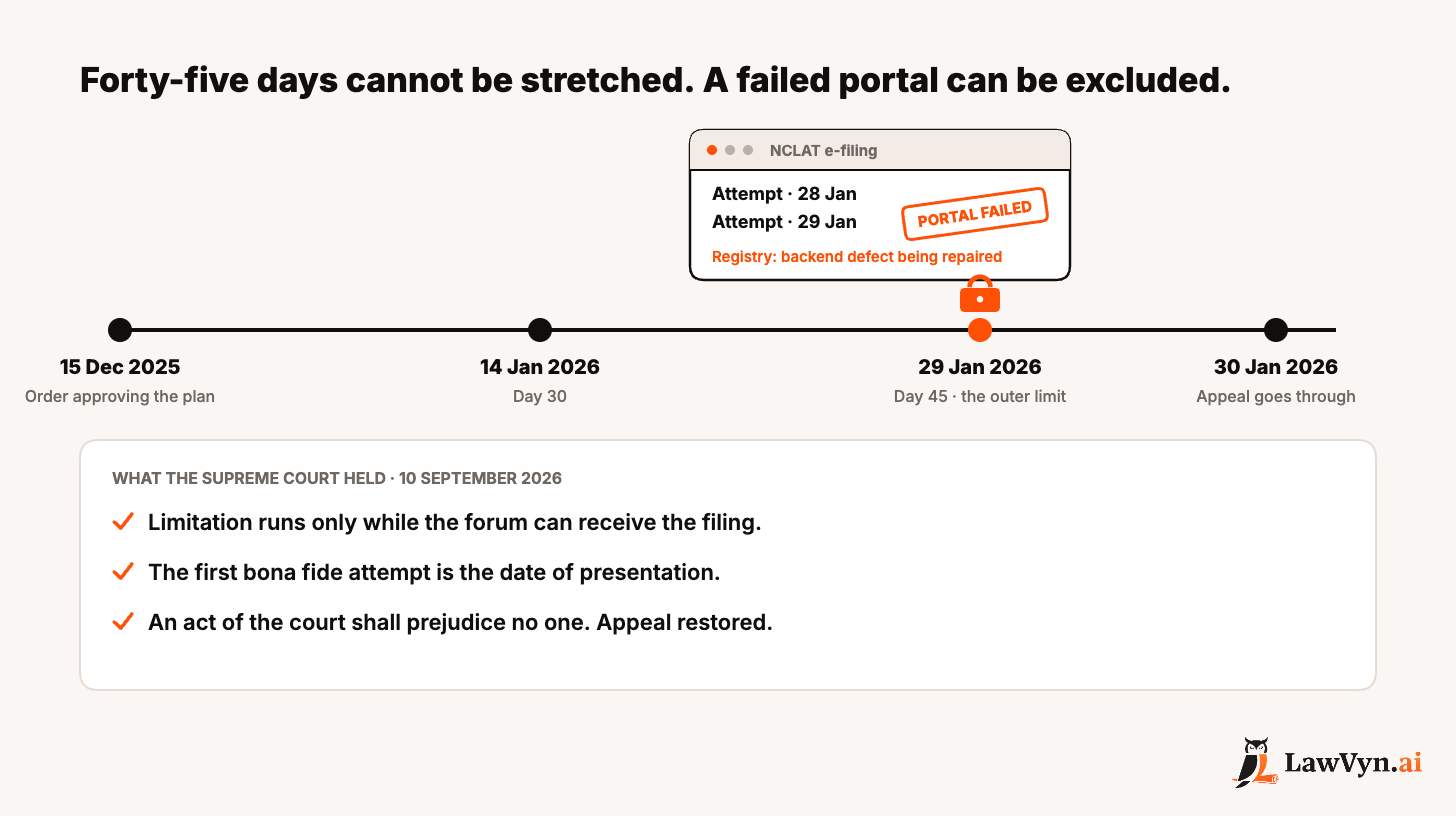
The second case was an appeal under the Insolvency and Bankruptcy Code. Section 61 allows thirty days, then fifteen more for sufficient cause, and nothing after that. The forty-five days ended on 29 January 2026.
The appellant tried to e-file on 28 January. The portal failed. It tried again on 29 January. The portal failed again, and the Registry’s own reply said a backend defect was being repaired. The appeal went through on 30 January, one day outside a limit no tribunal can extend. The NCLAT dismissed it as time-barred.
The Supreme Court did not extend the limit. It held that limitation runs against a litigant only while the forum is able to receive the filing, treated the first bona fide attempt as the date of presentation, and sent the appeal back to the tribunal. The principle is old: an act of the court shall prejudice no one.
Forty-five days cannot be stretched. A failed portal can be excluded. The difference between the two is a record of the attempt.
The same lesson, told twice
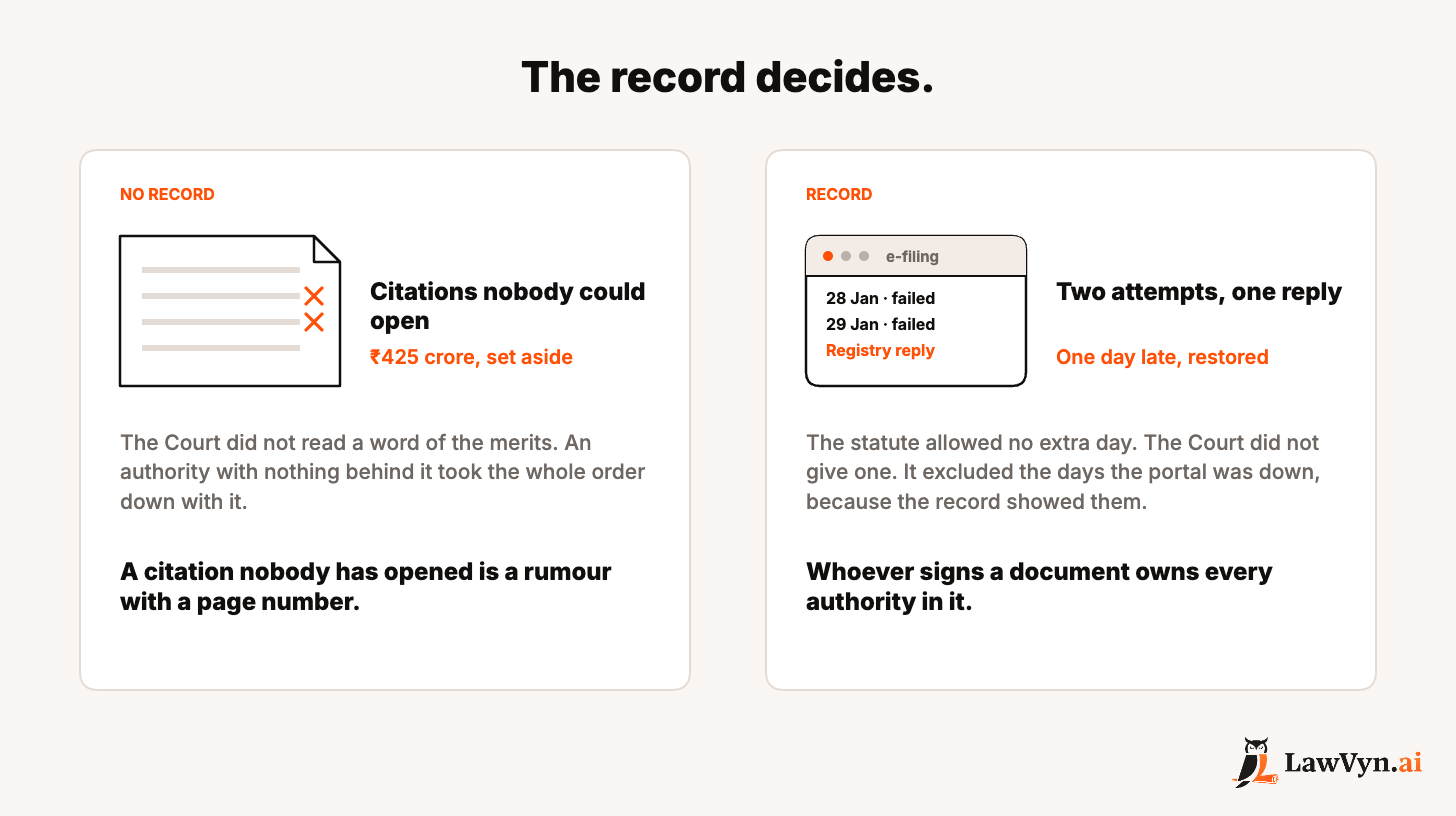
Put the two side by side.
In the first, an order carried citations nobody could stand behind, and 425 crore fell without the Court reading a word of the merits. In the second, a litigant produced proof of two failed attempts and a Registry reply, and kept an appeal the statute said was dead.
The Court was not grading anyone. It asked, both times, what the record showed.
This time the fake citations sat in an order, not a pleading. So did July’s, when the Court set its zero-tolerance line over a tribunal’s order built on fabricated precedents and directed the Bar Council to frame guidelines, with disciplinary measures, for advocates who misuse AI. The draft Regulations for AI in courts say the AI character of material is no defence. The standard does not change with the letterhead. Whoever signs a document owns every authority in it.
And the clock lesson cuts both ways. The same strictness that refuses a forty-sixth day is what makes the record of a failed forty-fifth worth so much.
What a chamber can do about it
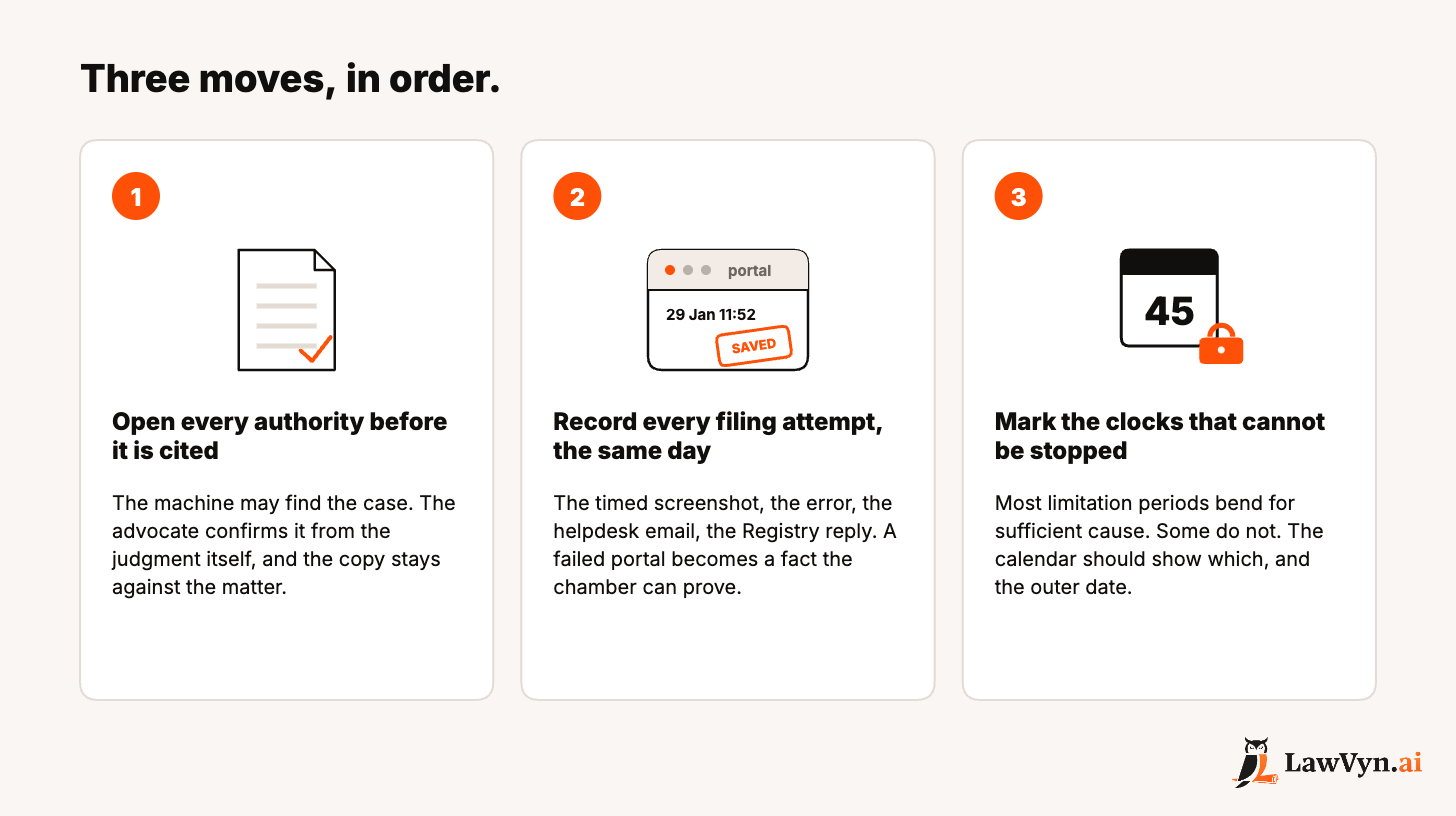
Three moves, in order.
Open every authority before it is cited. The machine may find the case. The advocate confirms it, from the judgment itself, and the chamber keeps that copy against the matter. A draft becomes a pleading only when every citation in it has been read by the person who signs it.
Record every filing attempt, the same day. The timed screenshot, the acknowledgement or error, the helpdesk email, the Registry’s reply, all against the matter. A failed portal is then a fact the chamber can prove, not an account it has to give.
Mark the clocks that cannot be stopped. Most limitation periods bend for sufficient cause. Some, like this one, do not. The calendar should show the difference, and the outer date, before anyone files.
None of this replaces judgment. Which authority to rely on and which ground to take is still the advocate’s call. What changes is that every citation and every filing leaves something the chamber can produce when a court asks.
The signature below makes my interest obvious, so I will say it: LawVyn is built so the record exists by default. Every matter carries its deadlines, its filings and its documents, and drafting starts from what the chamber has actually read. When the court asks what you relied on and when you filed, can the office show it?
Before the next filing
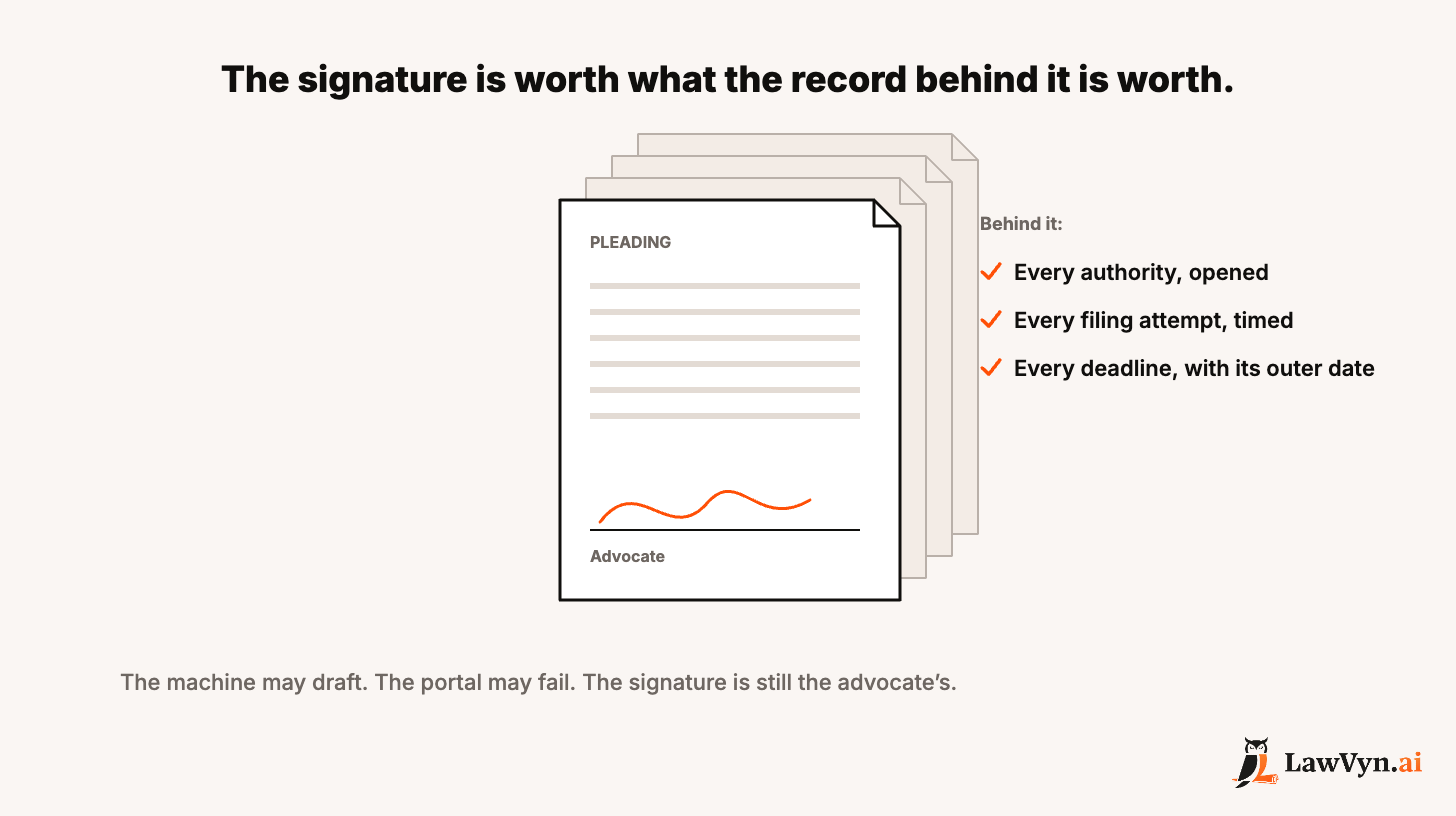
The Court did not punish anyone for a machine’s mistake, and it did not punish anyone for a portal’s. It looked, both times, for what could be shown.
The machine may draft. The portal may fail. The signature is still the advocate’s, and the signature is worth exactly what the record behind it is worth.
Ravi Daparthi
CEO of LawVyn
A Practice management software for Indian advocates and law firms.
https://www.ravidaparthi.com/ ·
https://www.linkedin.com/in/ravidaparthi ·
Follow LawVyn on LinkedIn

This essay first appeared on my Substack. New pieces land there first.
Subscribe on Substack
Ravi Daparthi
Entrepreneur, AI product leader, CEO of LawVyn.ai. Co-founder of Signitives and Oorwin.
More from Ravi
Essay
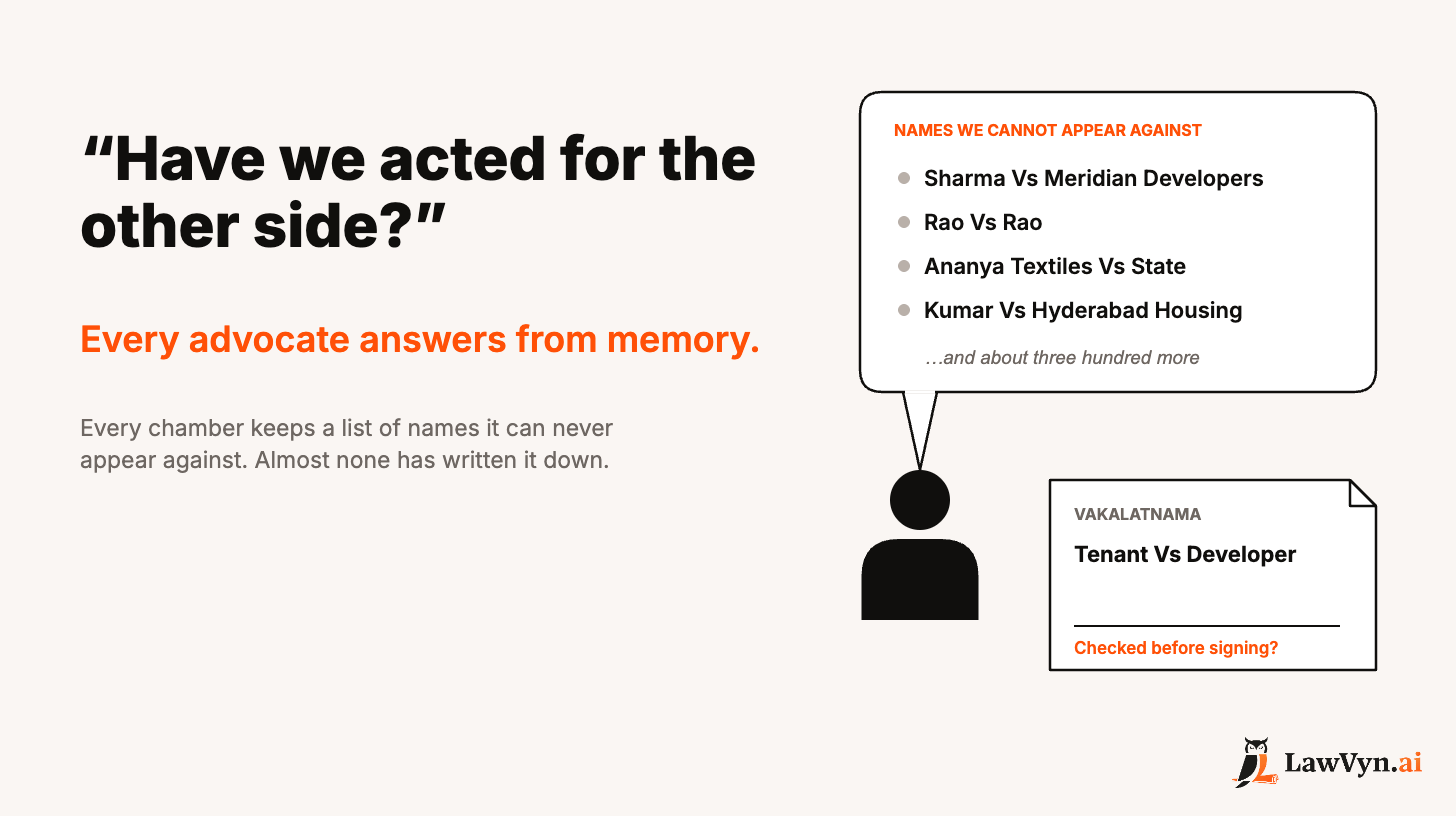
“Have We Acted for the Other Side?” Every Advocate Answers From Memory.
Rule 33, a 1983 suspension and a 2026 Supreme Court judgment say what an advocate owes a former client. The check that enforces it still runs on one person's memory.
20 October 2026 · 5 min read
Essay
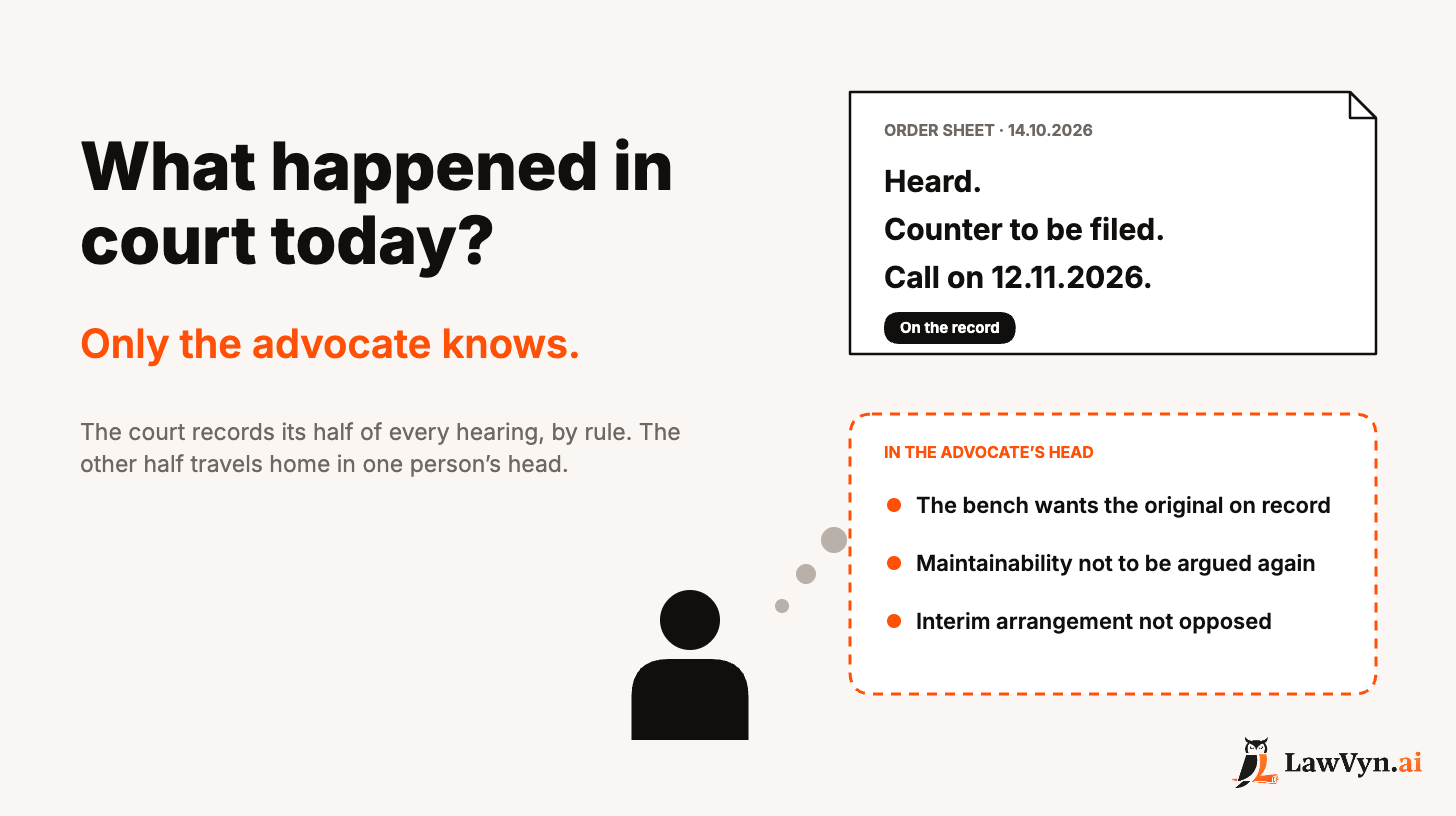
What Happened in Court Today? Only the Advocate Knows.
The court writes down its half of every hearing, by rule. The advocate's half, what the bench said and what comes next, still travels home in one person's head.
14 October 2026 · 5 min read
Essay
Two Things Every Lawyer Checks Before Sleeping: the Date and the File.
The court moved its calendar and its records online. The advocate’s evening still runs on a paper diary and an almirah. On the two questions that decide tomorrow.
12 October 2026 · 5 min read