Essay · 1 October 2026 · 4 min read
Your Client Asked ChatGPT First. The Lawyer Is the Second Opinion.
Clients now arrive with an answer in hand. What that changes about trust, fees and what an advocate is really paid for.
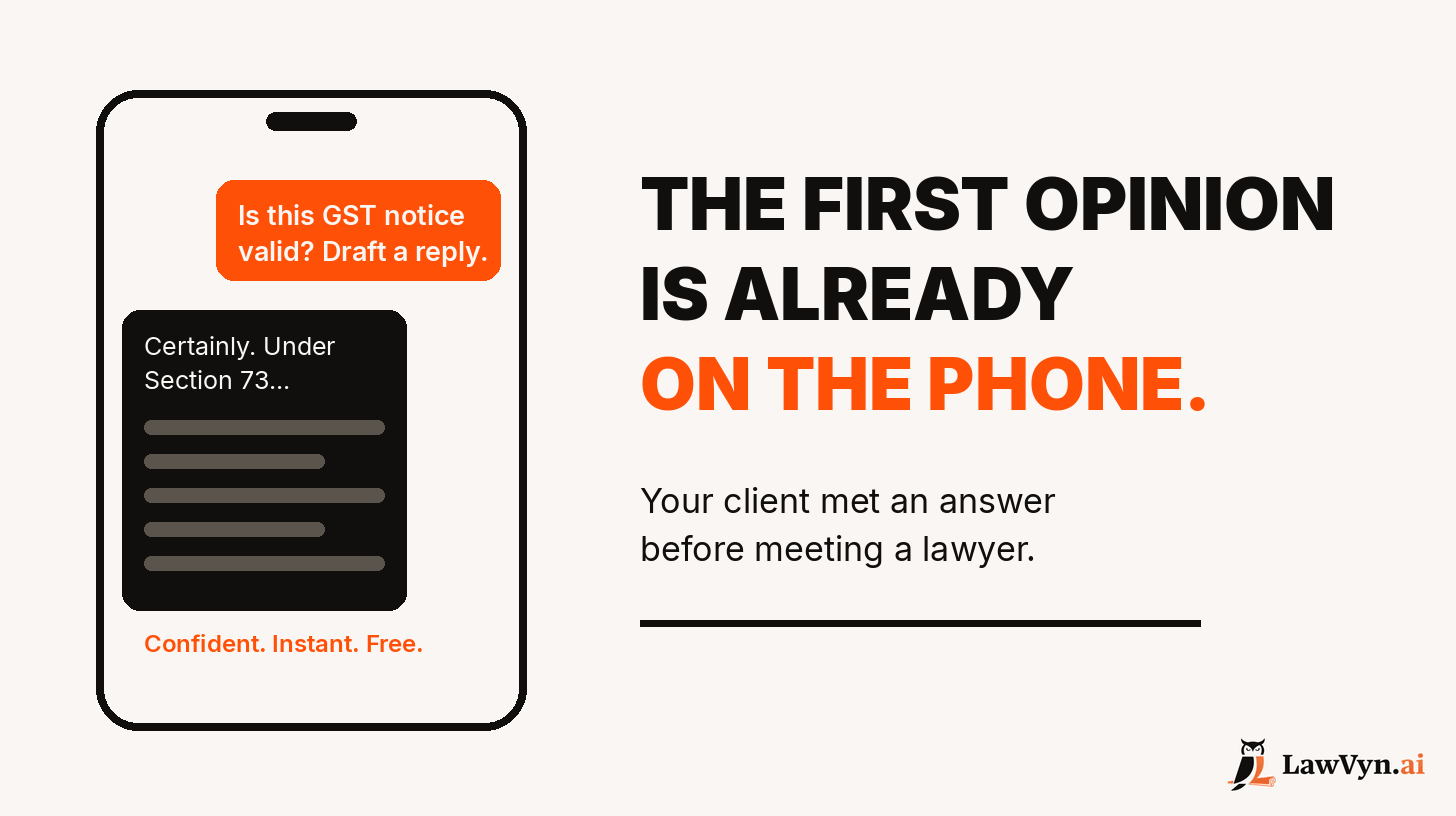
Imagine a Tuesday morning. A client walks into your office with a GST notice and a folder of printouts. Not documents. Printouts of a conversation. He spent last night with a chatbot, asked it whether the notice is valid, got a confident answer quoting Section 73, and had it draft a reply. He slides it across the table and says the sentence lawyers everywhere are starting to hear: "I just need you to check this."
Five years ago, that client would have arrived with a question. Now he arrives with an answer, and what he wants from you is the verdict on it.
Nothing about this is rude, and none of it is going away. It is simply the new default. The queue outside your chamber has not shrunk. It has started arriving pre-briefed.
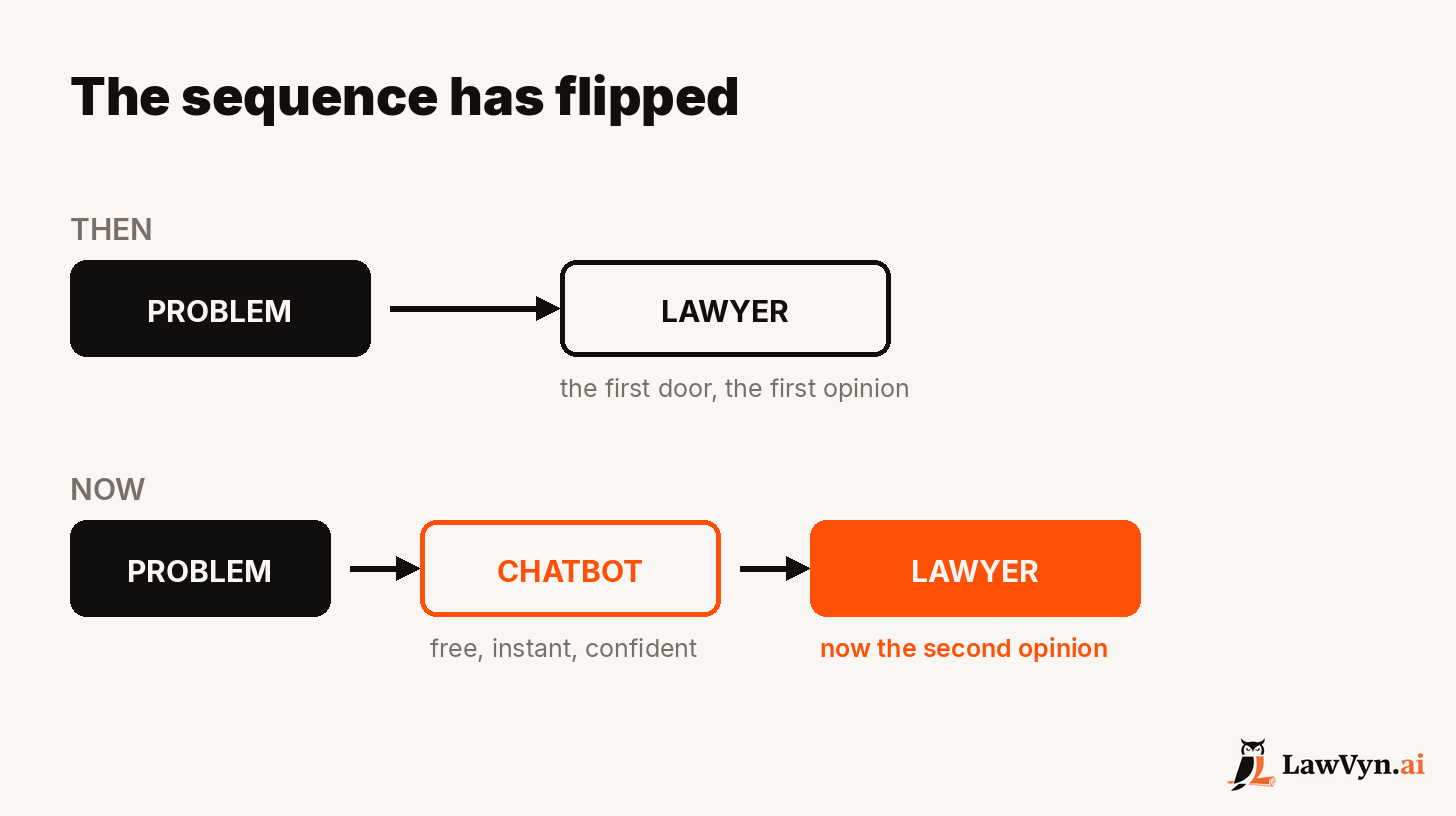
The sequence has flipped
For a century, the sequence was fixed: problem, panic, lawyer. The advocate was the first door a worried person knocked on, and the first opinion they heard.
The new sequence has one more step in front: problem, phone, a long conversation with a machine, and then the lawyer. The first opinion is now free, instant and available at two in the morning.
Notice what did not happen. The lawyer was not replaced. The lawyer was re-ordered.
What arrives at your table
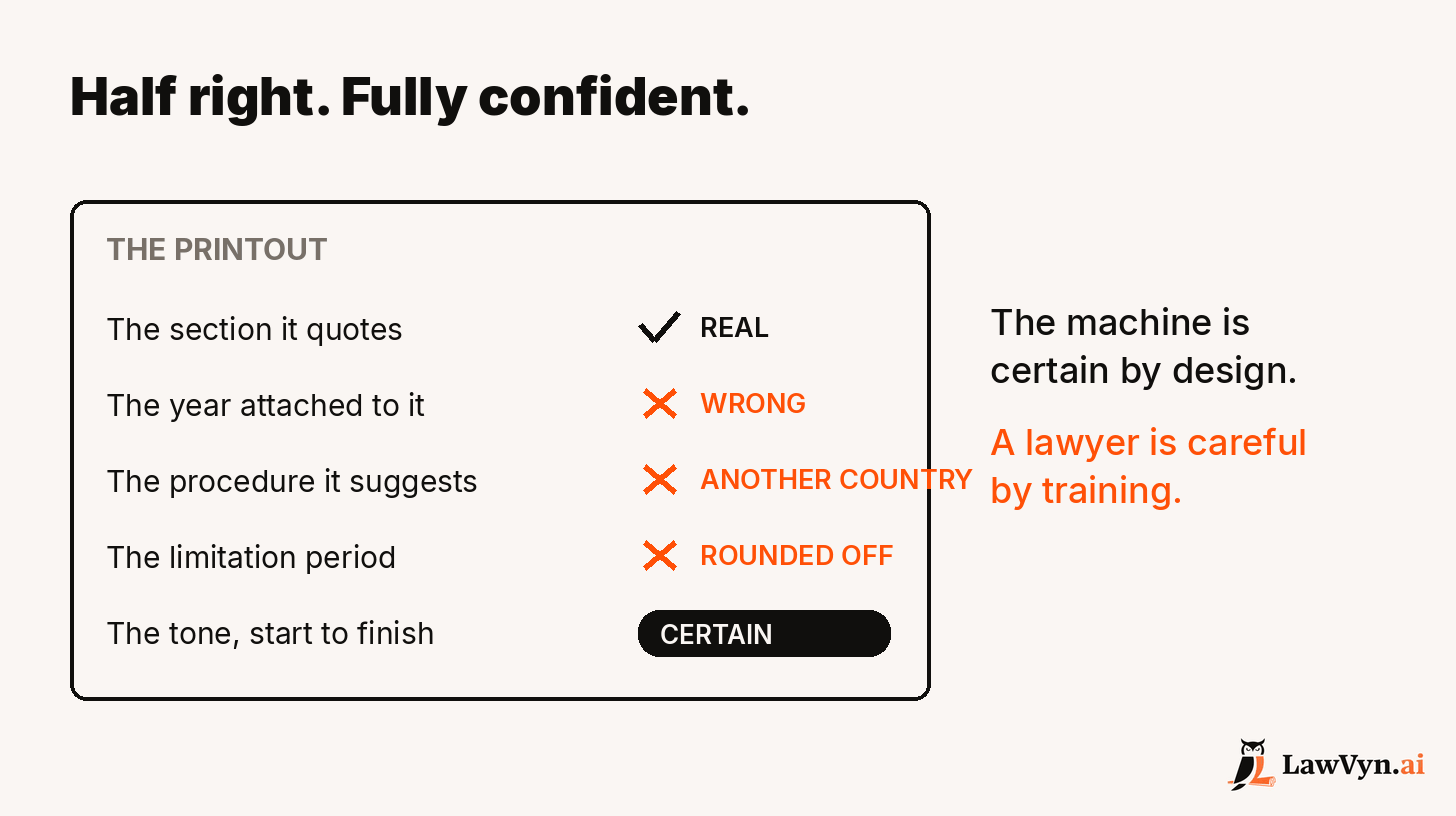
What the client brings is usually half right. Real sections with wrong years attached. Procedure borrowed from another country's law. Limitation periods rounded off to something tidier. And one thing in uniform supply: confidence. A general-purpose machine sounds exactly as sure when it is wrong as when it is right.
That is not the client's failing, and it is certainly not yours. It is simply what these systems are built to do: fluent first, accurate second, accountable never.
The machine is certain by design. A lawyer is careful by training. Clients are about to discover the difference, and they will discover it in your chamber.
What this changes at the table
If you are in your early years, this is oddly good news. The machine quotes sections faster than any human ever will. Let it. Quoting was never the job. Reading this client, this fact, this forum, and knowing what will actually move the officer on the other side: that was always the job, and no printout has ever done it.
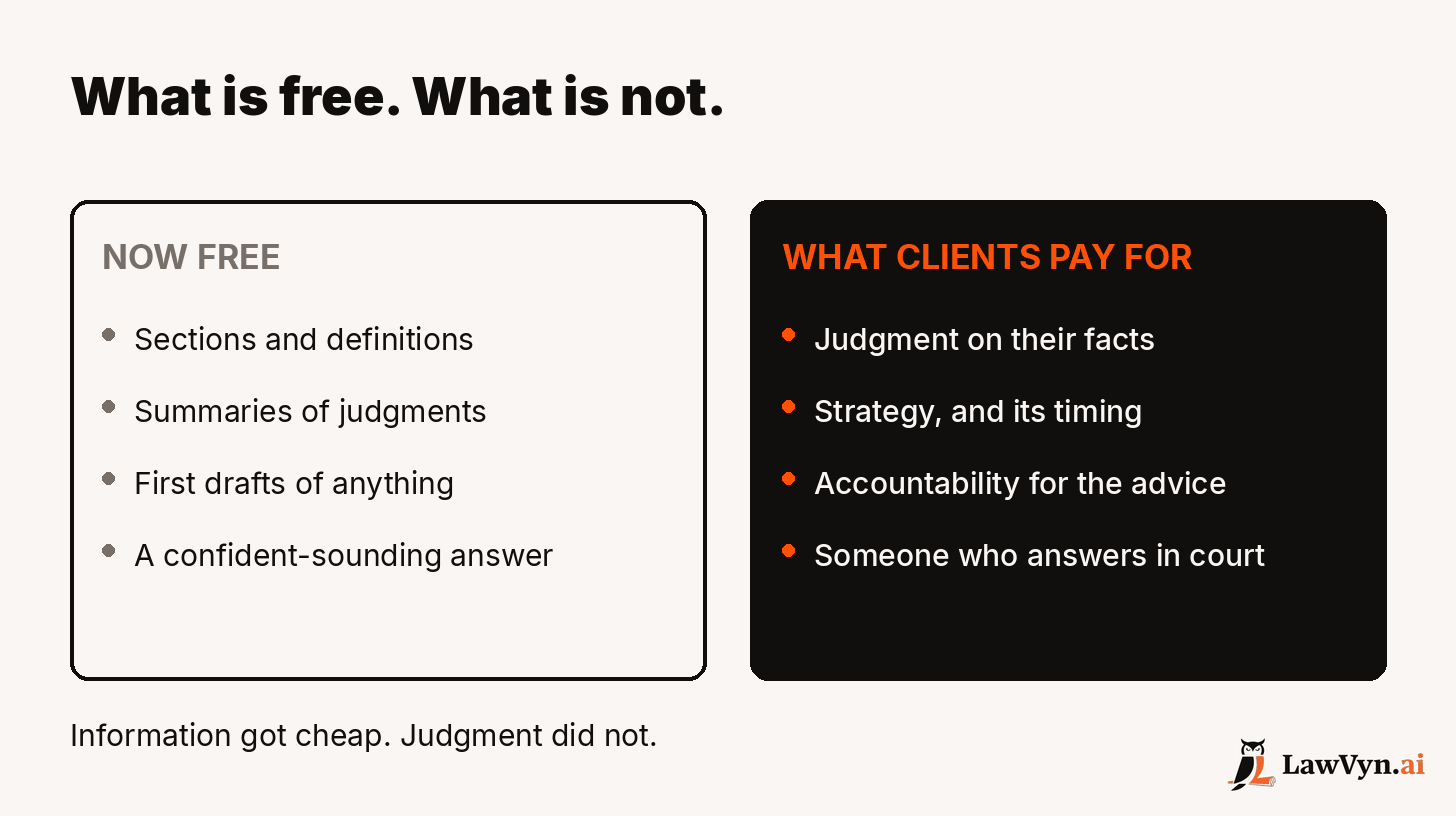
If you are mid-career, the fee conversation just became easier to have, not harder. When information is free, what remains priced is judgment, strategy and accountability. Say that plainly. A chatbot offers no appeal when its advice fails. It carries no liability, attends no hearing, signs nothing. You do. That signature is the fee.
If you are senior, you have watched another profession live through this. Doctors spent a decade meeting patients who had diagnosed themselves online. The doctors who thrived did not argue with the search engine. They became the ones who correct it, calmly, with authority. Patients still needed doctors. They needed them differently, and they valued them more, not less.
First opinions are cheap. Final opinions are not.
Take the second seat seriously
In medicine, the second opinion is not the lesser one. It is the one people seek before surgery, the one trusted with irreversible decisions. That is the seat the client is offering the profession, and it is a better seat than the first one.
But a second opinion only matters while the decision is still open. And here is the truth about that Tuesday client: he is not weighing your law against the machine's law. He already suspects the machine is wrong somewhere. That is why he came to you. What he is actually weighing is your Friday against its thirty seconds.
The contest is not depth versus speed. It is whether depth can arrive at speed.
And the slowness was never the lawyer. It is the file split across three almirahs and two phones. The dates living in a diary. The draft that starts from a blank page at eleven at night. None of that is anyone's failing. It is a practice running on systems built for a slower century.
Closing that gap is the reason LawVyn exists. The matter file answers in seconds. The draft begins from your own papers, not a blank page. The deadline reaches you before the client does. And the judgment, the one part that cannot be built, stays entirely yours.
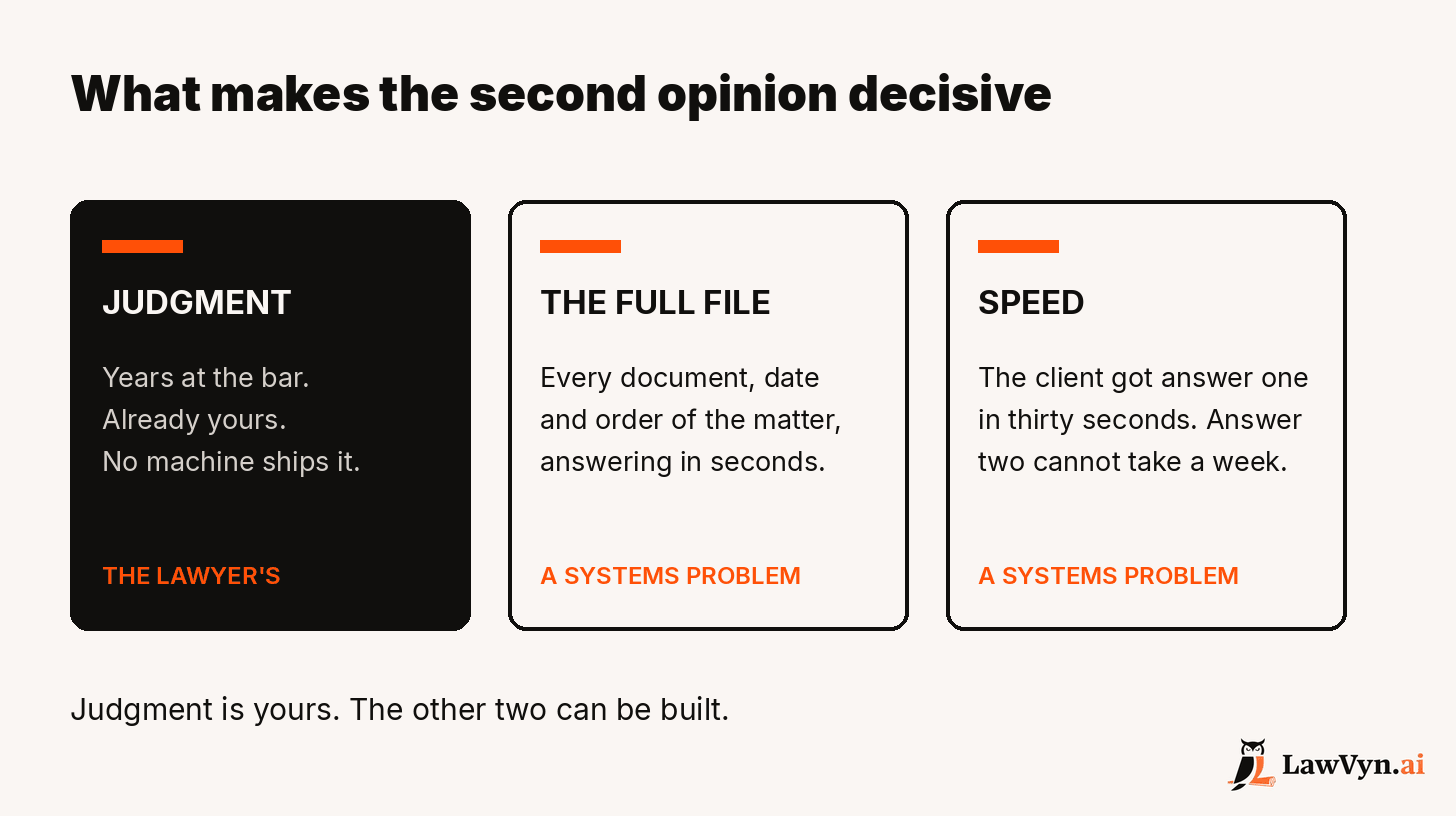
The client will keep asking the machine first. Make sure yours is the opinion that decides.
Ravi Daparthi
CEO of LawVyn
A Practice management software for Indian advocates and law firms.
https://www.ravidaparthi.com/ ·
https://www.linkedin.com/in/ravidaparthi ·
Follow LawVyn on LinkedIn

This essay first appeared on my Substack. New pieces land there first.
Subscribe on Substack
Ravi Daparthi
Entrepreneur, AI product leader, CEO of LawVyn.ai. Co-founder of Signitives and Oorwin.
More from Ravi
Essay
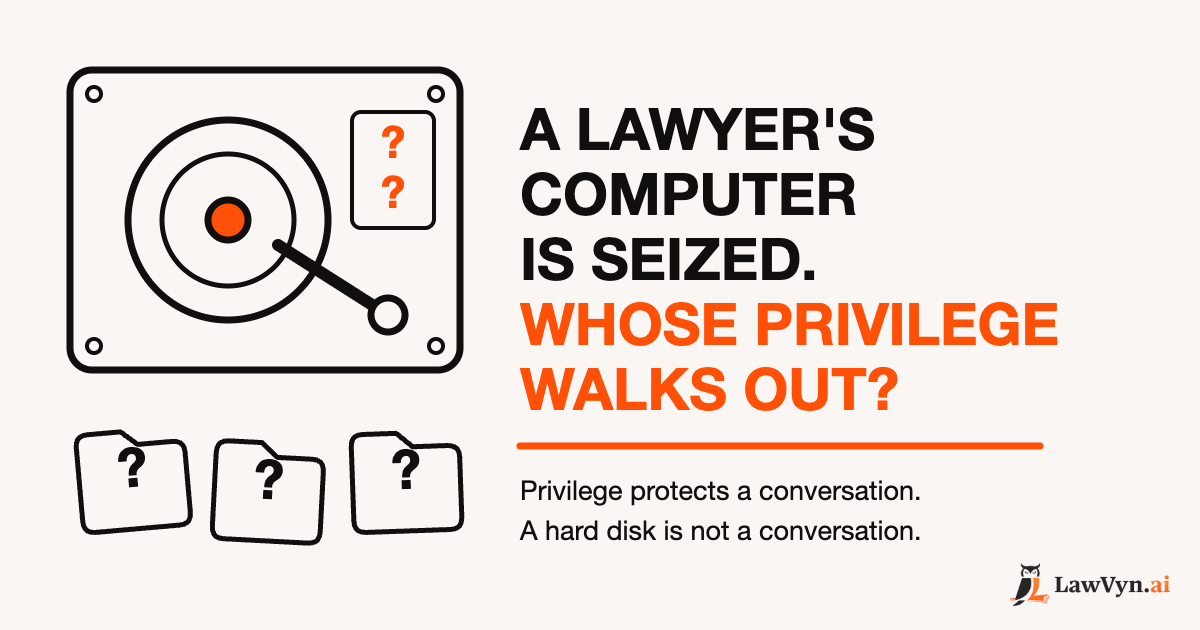
A Lawyer's Computer Is Seized. Whose Privilege Walks Out?
A GST search of a Delhi advocate's office, a Supreme Court stay on Monday, and why Section 132 protects the conversation, not the computer.
30 September 2026 · 5 min read
Essay
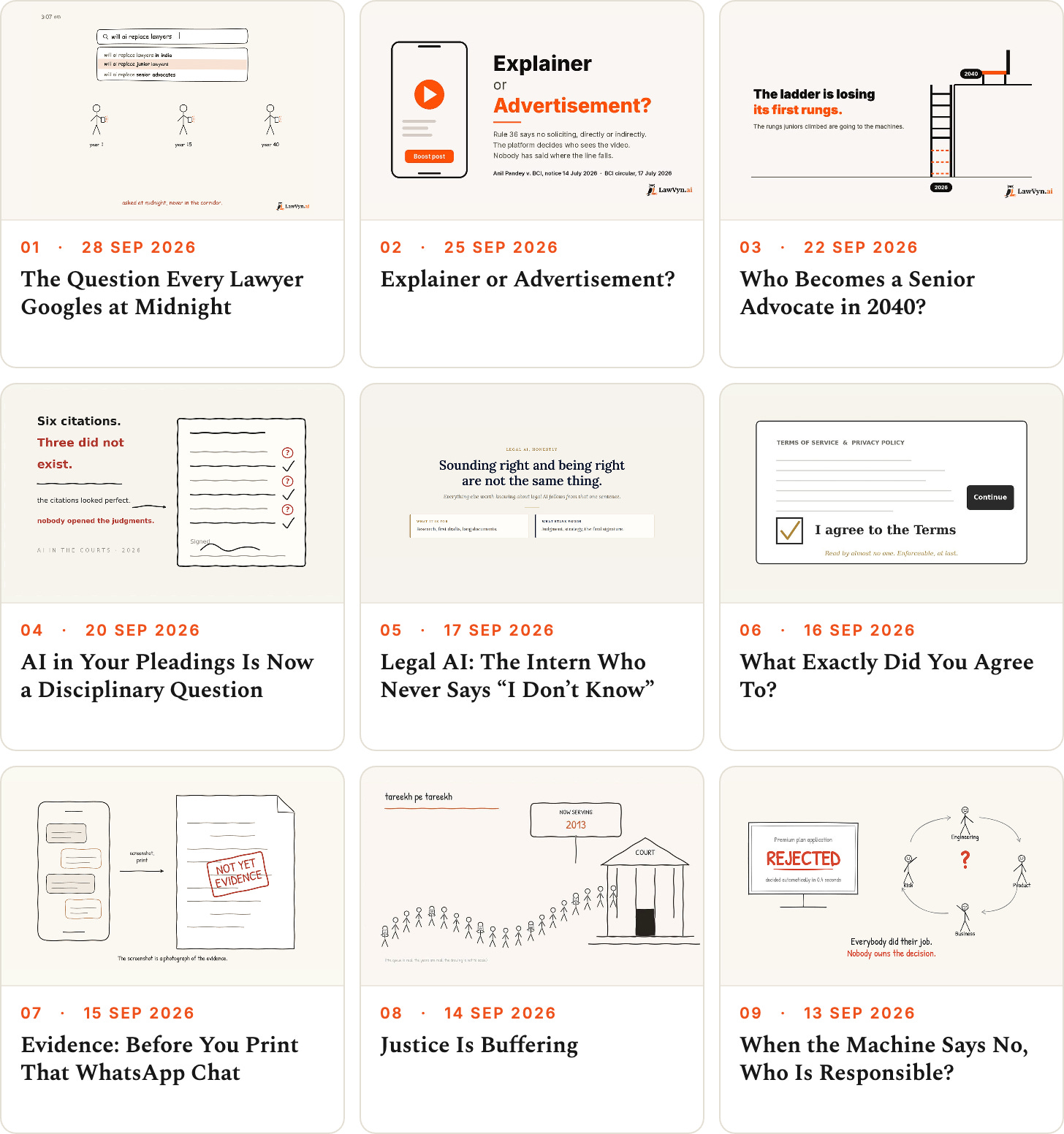
Nine posts, one grid, no scrolling required
The last two weeks, on one screen.
29 September 2026 · 1 min read
Essay
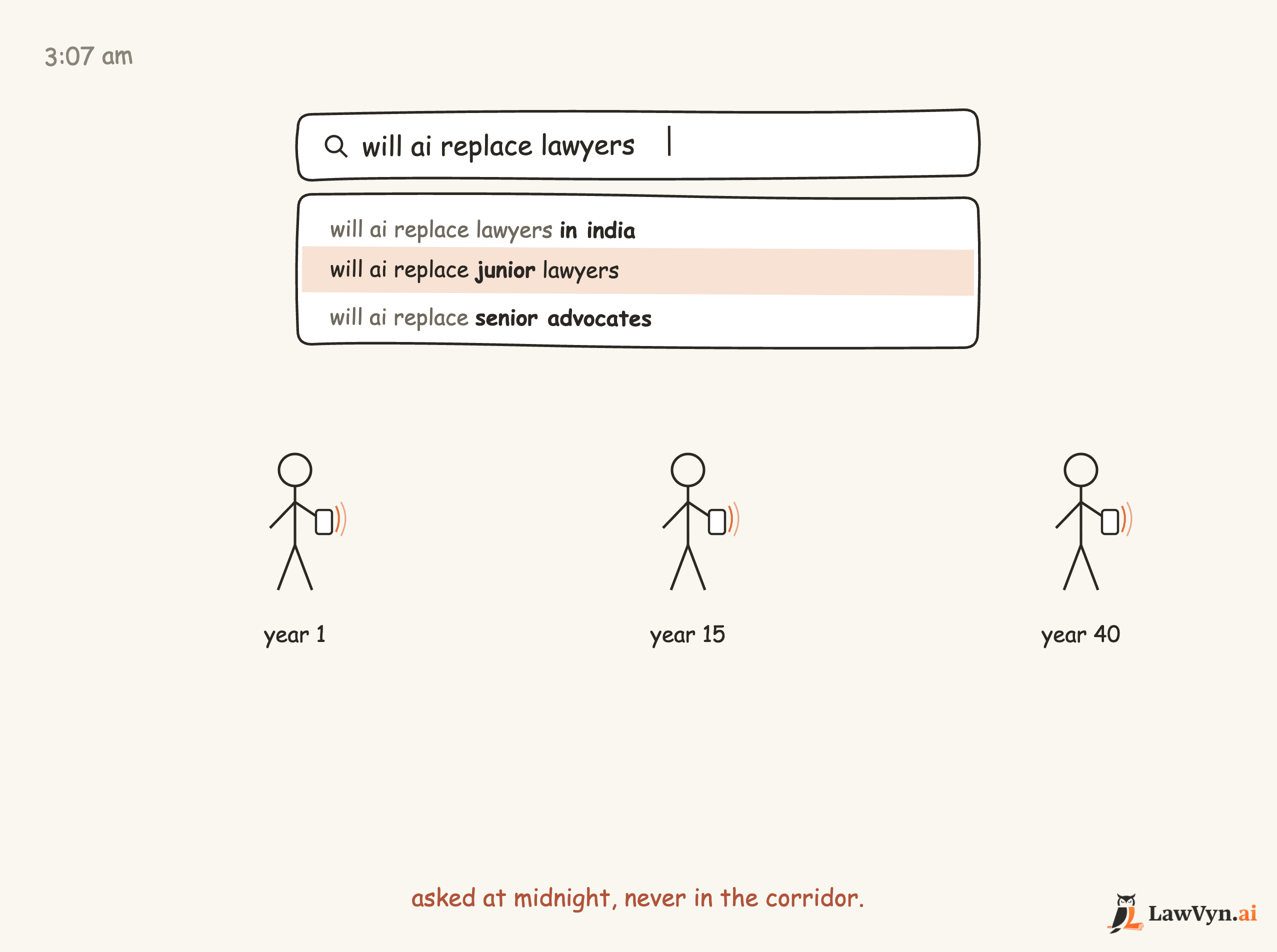
The Question Every Lawyer Googles at Midnight
An honest answer from someone who builds the machines
28 September 2026 · 4 min read