Essay · 15 September 2026 · 6 min read
Evidence: Before You Print That WhatsApp Chat
Two election petitions, one borrowed British rule, and a certificate that now needs a hash value. What every Indian lawyer should know about electronic evidence in 2026.
In 2014, a candidate won the Jalna assembly seat in Maharashtra by 296 votes. The losing side went to the Bombay High Court with an unusual claim: the winner’s nomination papers had been accepted after the 3 pm deadline, and the camera in the Returning Officer’s office had recorded it happening at 3:53 pm.
The footage was copied on to CDs. The Returning Officer came to court and spoke about it. The petitioners wrote to the election authorities three times asking for a certificate under Section 65B(4) of the Evidence Act, the piece of paper that says which machine produced the copy and that it was working properly. It never came. The High Court called the oral evidence “substantial compliance”, admitted the CDs, and set the election aside.
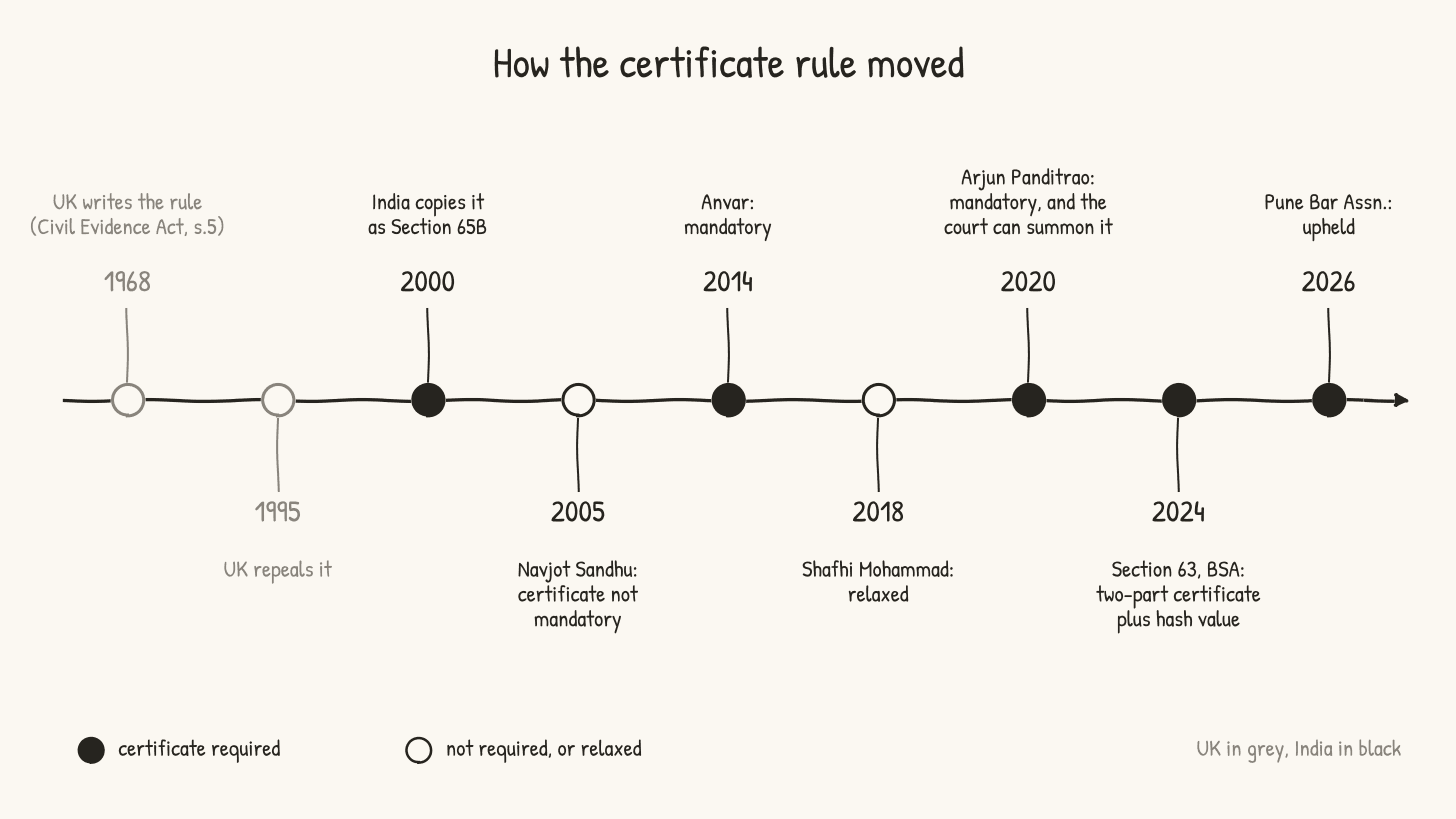
Six years later, in Arjun Panditrao Khotkar v. Kailash Kushanrao Gorantyal (2020), three judges of the Supreme Court threw the CDs out. No certificate, no admissibility. The certificate, in the court’s words, is a condition precedent.
Now the twist. The election still stood set aside, because the Returning Officer and other witnesses had said the same thing under oath. The camera saw everything and counted for nothing. The case was saved by the oldest form of evidence we have.
Two election petitions and a U-turn
Here is a detail I enjoy: India’s two landmark rulings on electronic evidence both came out of election petitions.
Anvar P.V. v. P.K. Basheer (2014) began in Eranad, Kerala, where a losing candidate produced CDs of campaign songs, speeches and announcements to prove corrupt practice. No certificate. The CDs went out, and with them went the older view from the Parliament attack case, State (NCT of Delhi) v. Navjot Sandhu (2005), that electronic material could come in like any other copy of a document.
Then in 2018, a two-judge bench in Shafhi Mohammad v. State of Himachal Pradesh said the certificate was procedural and could be relaxed when the device was not in the party’s hands. For two years, practice softened.
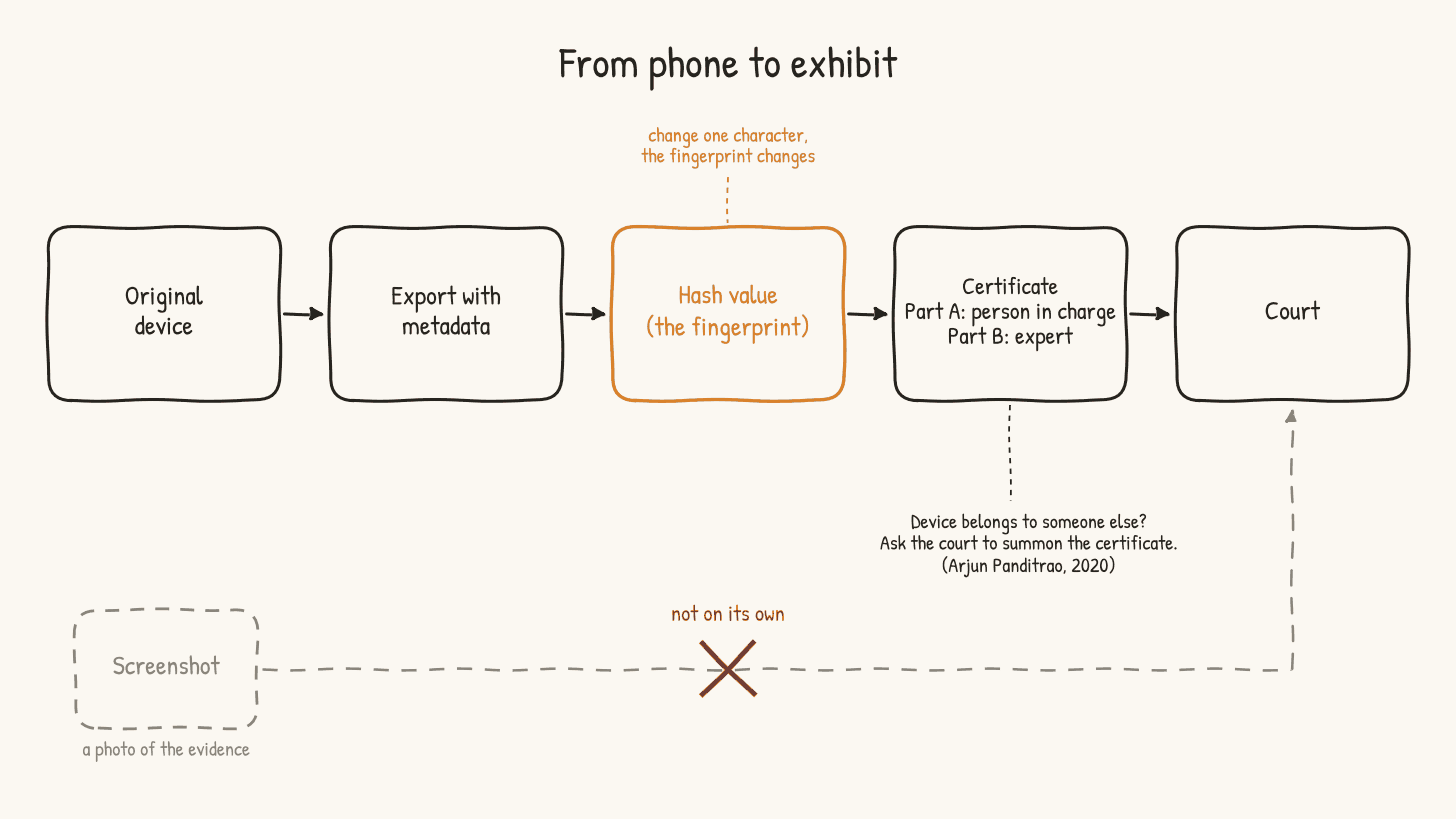
Arjun Panditrao ended that. Shafhi Mohammad is overruled. But the same judgment handed lawyers the tool they had been missing: if the device belongs to someone else, ask the court to summon the certificate from whoever controls it. The law does not punish you for an impossibility, and the judge can direct production at any stage before the trial ends.
A rule we borrowed after its owner threw it away
Section 65B was modelled on Section 5 of the UK’s Civil Evidence Act, 1968. The UK repealed that provision in 1995. India enacted its copy in 2000. The Supreme Court notes this history in Arjun Panditrao itself.
Before anyone laughs at the certificate, look at the country that dropped it. At the end of the 1990s, England replaced the duty to show that a computer was working properly with a presumption that computers work. Over the next fifteen years, the Post Office prosecuted more than 900 subpostmasters for theft and false accounting on the strength of shortfalls reported by Horizon, a Fujitsu accounting system. The shortfalls came from faults in the software. About 236 people went to prison. In 2024, Parliament passed a special Act to quash the convictions in bulk.
That is the whole case for the certificate in one line. A computer’s output is only as honest as the computer, and someone has to put their name to saying so.
What changed on 1 July 2024
Section 65B is now Section 63 of the Bharatiya Sakshya Adhiniyam, 2023. Most of it reads the same. Three things do not.
The section now names semiconductor memory and any communication device, so a phone, a shop’s DVR or a cloud account sits in the text rather than being argued into it.
The certificate has a prescribed form in the Schedule, in two parts. Part A is signed by the person in charge of the device or the relevant activity. Part B is signed by an expert.
And both parts ask for the hash value of the record, along with the algorithm used.
The Pune Bar Association took this to the Supreme Court as an undue hardship on ordinary litigants. In May 2026, a bench led by Chief Justice Surya Kant dismissed the challenge in Pune Bar Association v. Union of India. The court called the hash value an “electronic fingerprint”, and clarified that the Part B expert is not confined to examiners notified under Section 79A of the IT Act. Anyone with special skill in computer science and cyber forensics may sign, if the court is satisfied about their competence.
The technology, in plain words
A hash is what you get when you feed a file into a mathematical function and receive back a fixed string of letters and numbers. Change one pixel of a screenshot or one character of a chat export, and the string changes completely. A hash does not tell you a file is true. It tells you the file is the same file that was hashed. Which is exactly the question the certificate exists to answer.
The Americans made a similar move in 2017. Rules 902(13) and 902(14) of the Federal Rules of Evidence let a qualified person certify electronic records, and copies verified by hash, so nobody has to be called to the witness box just to say “yes, this is the file”. Our Part B expert is a cousin of that rule.
So what does a practitioner do differently?
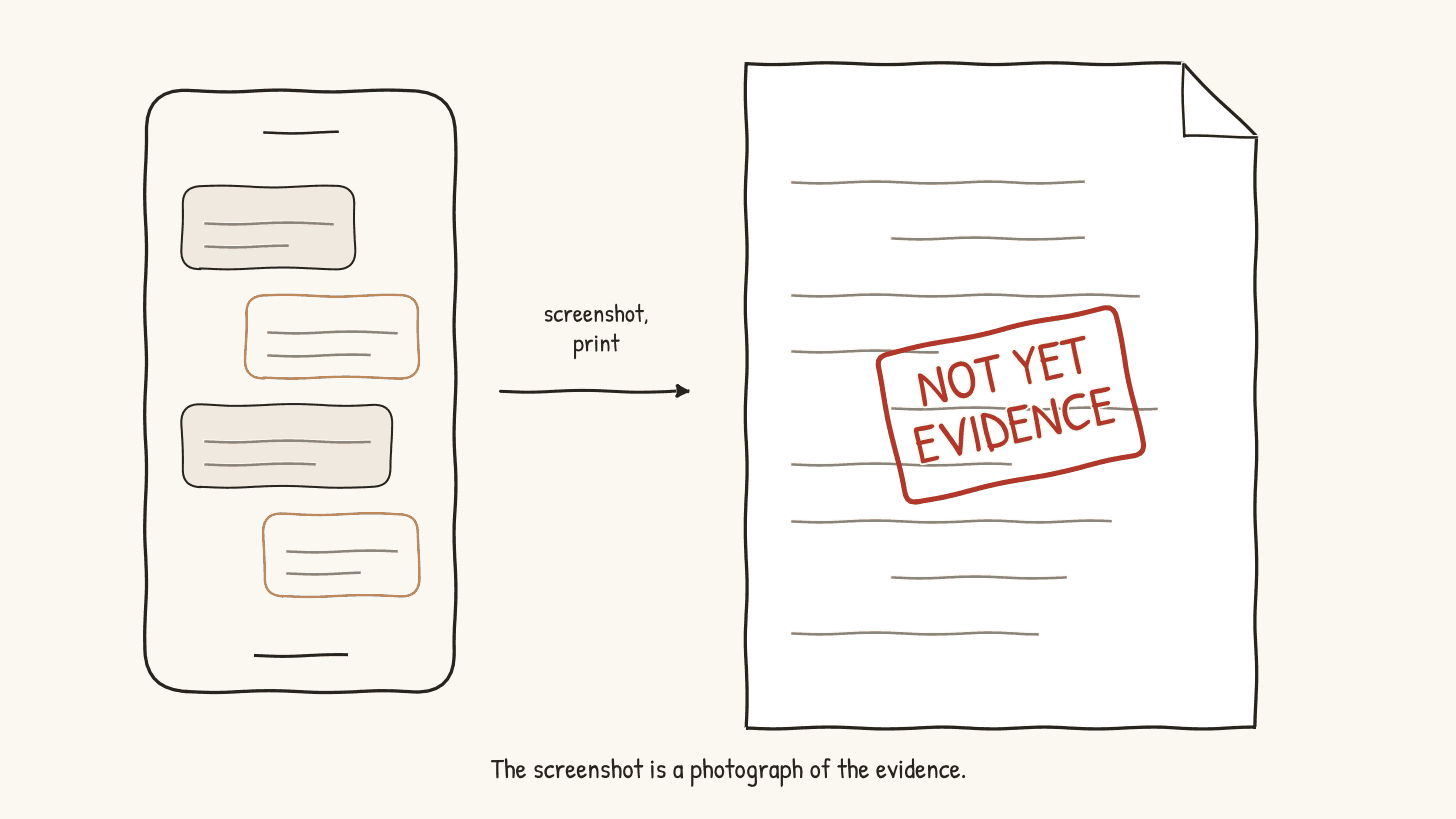
Stop treating the screenshot as the evidence. The screenshot is a photograph of the evidence. The evidence is the record on the device. Where you can, preserve and produce the device itself; a device produced by its owner needs no certificate. Where you cannot, export the record with its metadata, compute the hash at export, note who did it and when, and get Part A and Part B signed while both signatories are still reachable. If the device belongs to the other side or a telecom company, apply early to have the certificate summoned. Arjun Panditrao also directed telecom companies and internet providers to preserve call records, which is worth citing when they say the data is gone.
None of this is technology for its own sake. It is the discipline lawyers have always applied to paper, extended to things that can be copied a million times without anyone noticing.
One thought before I go
I have seen versions of this pattern more than once: a strong case built on a phone, and a weak file built around it. The law has now written the technology into the form itself. Hash, algorithm, expert, signature. The lawyer who understands why those four words are on the page will win cases that the lawyer who merely fills them in will lose.
Section 65B was one paragraph most of us skipped for twenty years. Section 63 comes with a Schedule.
Read the Schedule.
I am building LawVyn.ai, practice management software for Indian advocates and law firms. More of my writing lives at ravidaparthi.com, and I am on LinkedIn if you want to collaborate or discuss on anything. Follow our LinkedIn page for interesting insights like these.

This essay first appeared on my Substack. New pieces land there first.
Subscribe on Substack
Ravi Daparthi
Entrepreneur, AI product leader, CEO of LawVyn.ai. Co-founder of Signitives and Oorwin.
More from Ravi
Essay
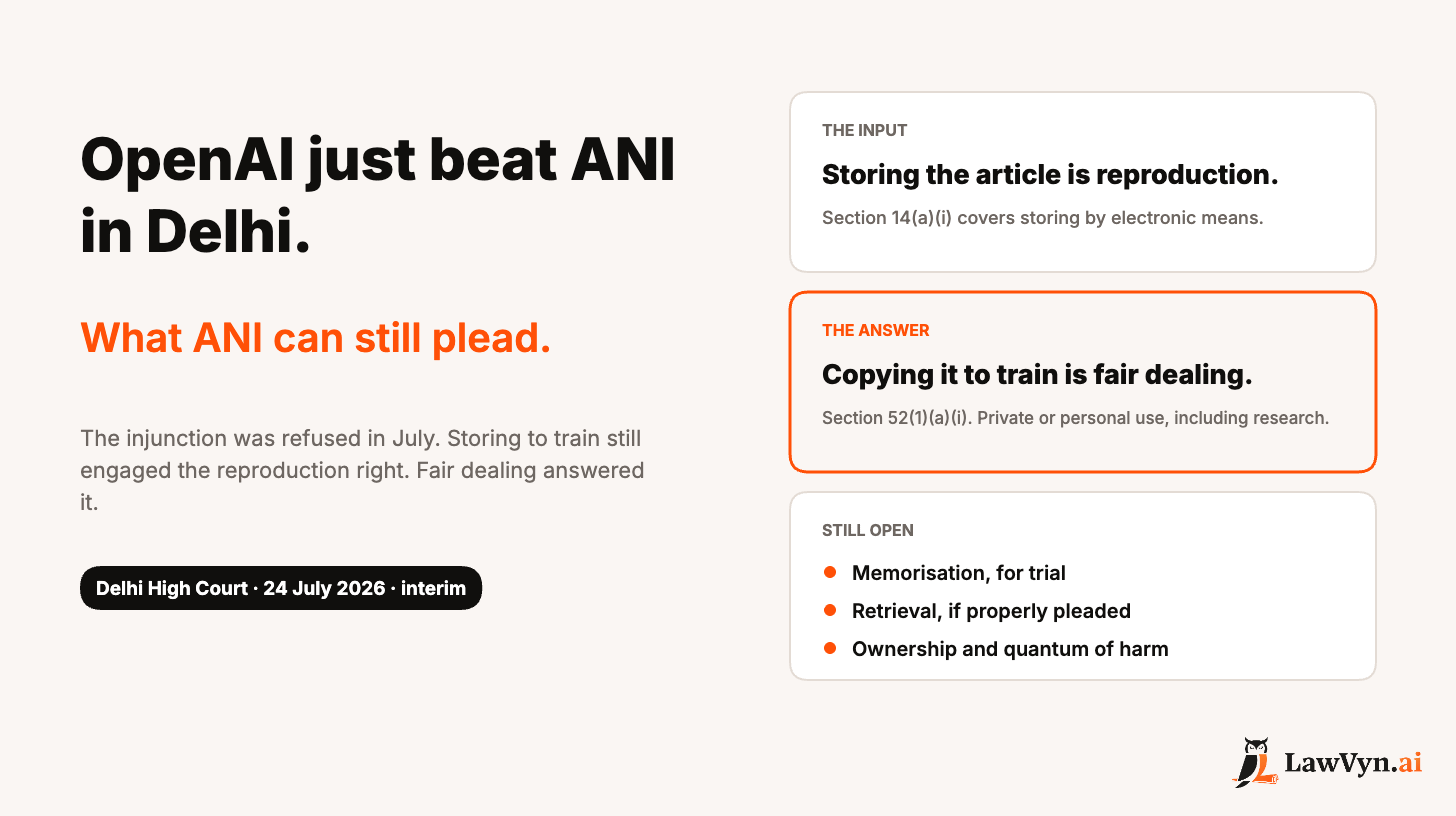
OpenAI (ChatGPT) Just Beat ANI in Delhi. What ANI Can Still Plead.
Interim relief was refused on 24 July 2026. Storing the articles to train still engaged the reproduction right, and fair dealing answered it. The appeal is listed on 8 December.
24 October 2026 · 4 min read
Essay
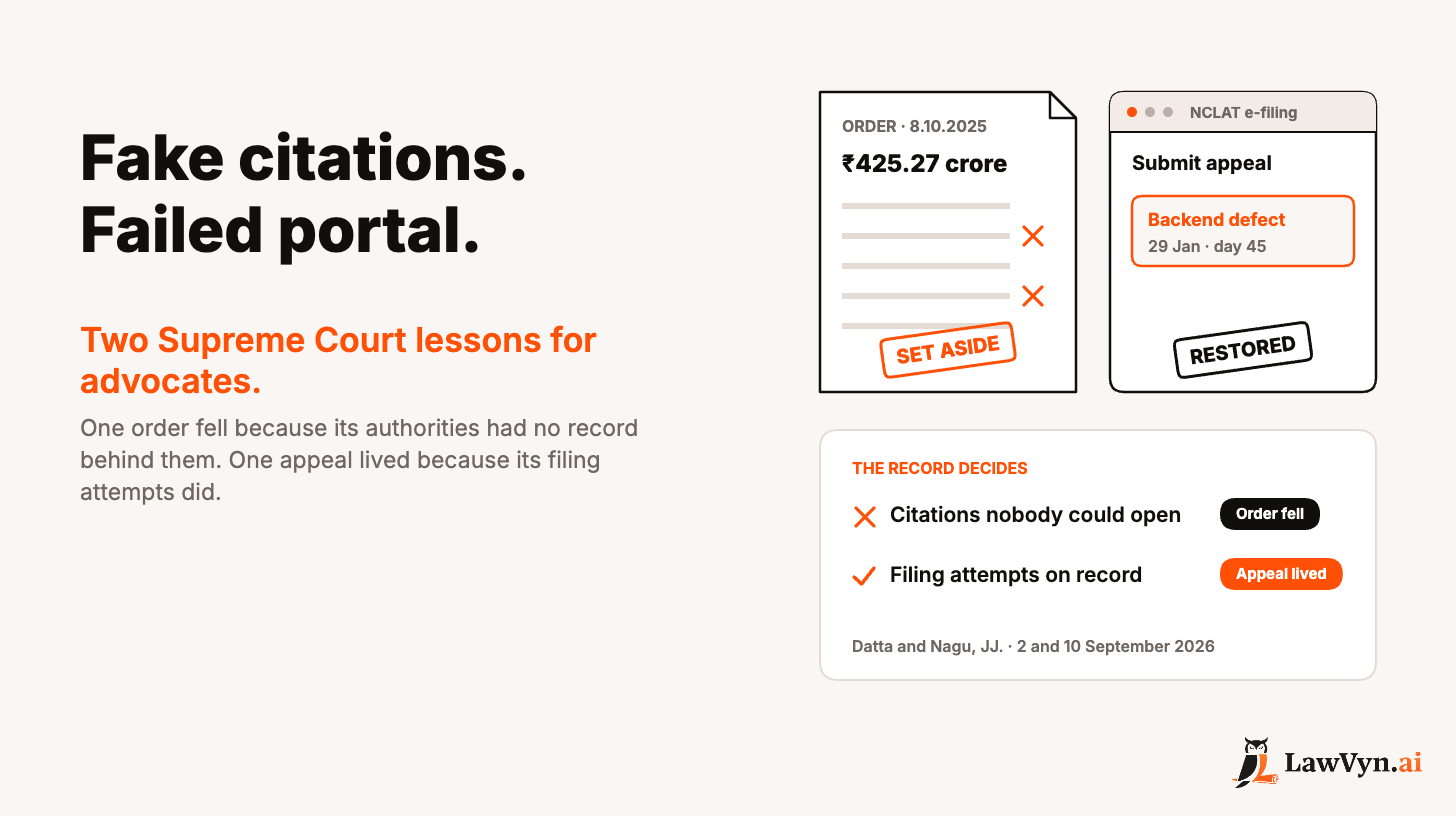
Fake Citations, Failed Portal: Two Supreme Court Lessons for Advocates.
The same bench set aside a 425 crore order built on judgments that did not exist, then restored an appeal filed a day late because the tribunal's portal failed. Read together, they are one rule.
22 October 2026 · 5 min read
Essay
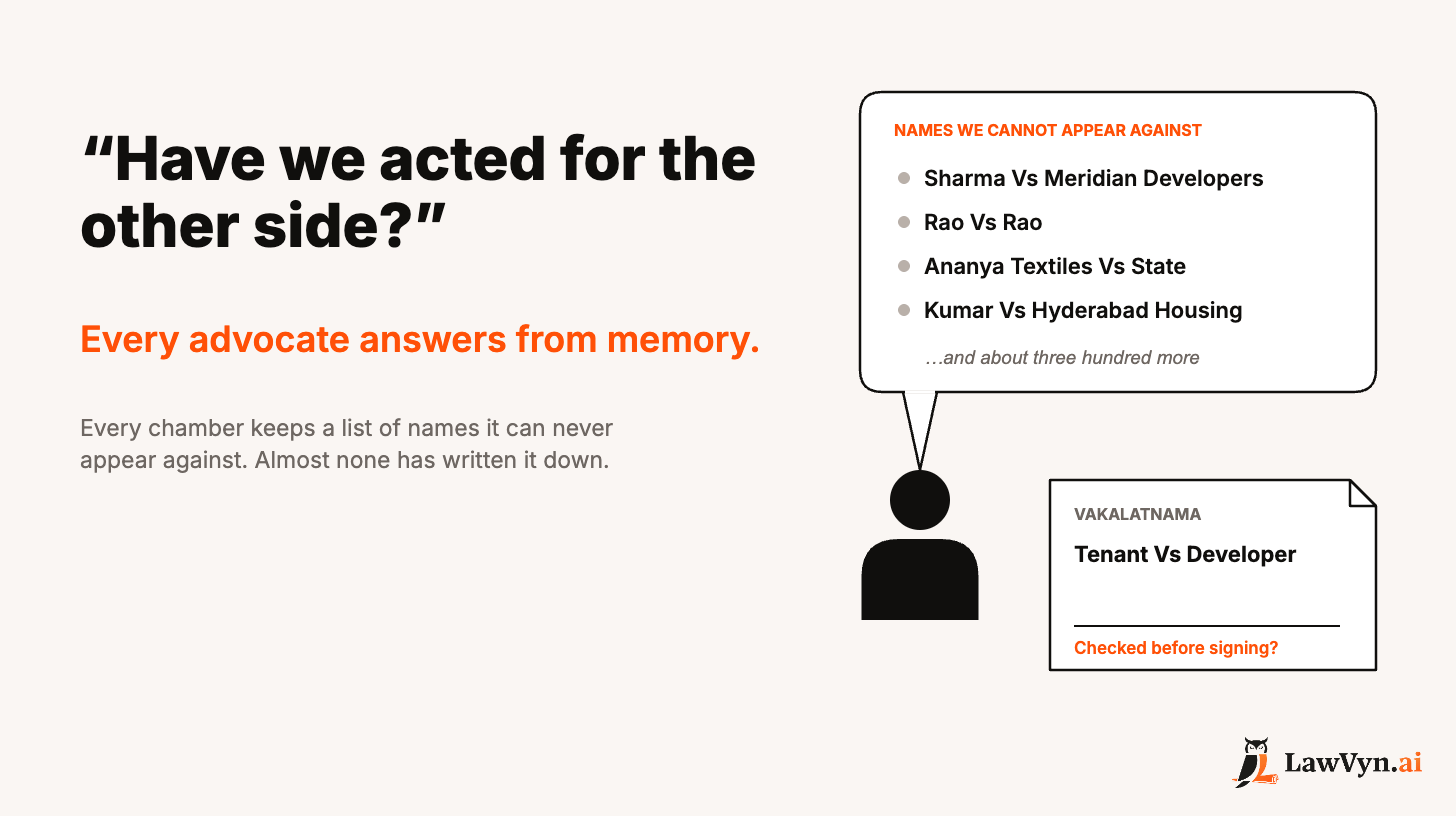
“Have We Acted for the Other Side?” Every Advocate Answers From Memory.
Rule 33, a 1983 suspension and a 2026 Supreme Court judgment say what an advocate owes a former client. The check that enforces it still runs on one person's memory.
20 October 2026 · 5 min read