Essay · 25 September 2026 · 5 min read
Explainer or Advertisement? The Bar Council Read Your Instagram. So Did the Supreme Court.
A rule older than the internet, a 37-page circular, a Supreme Court notice to every State Bar Council, and a line nobody has drawn yet between teaching the law and selling it.
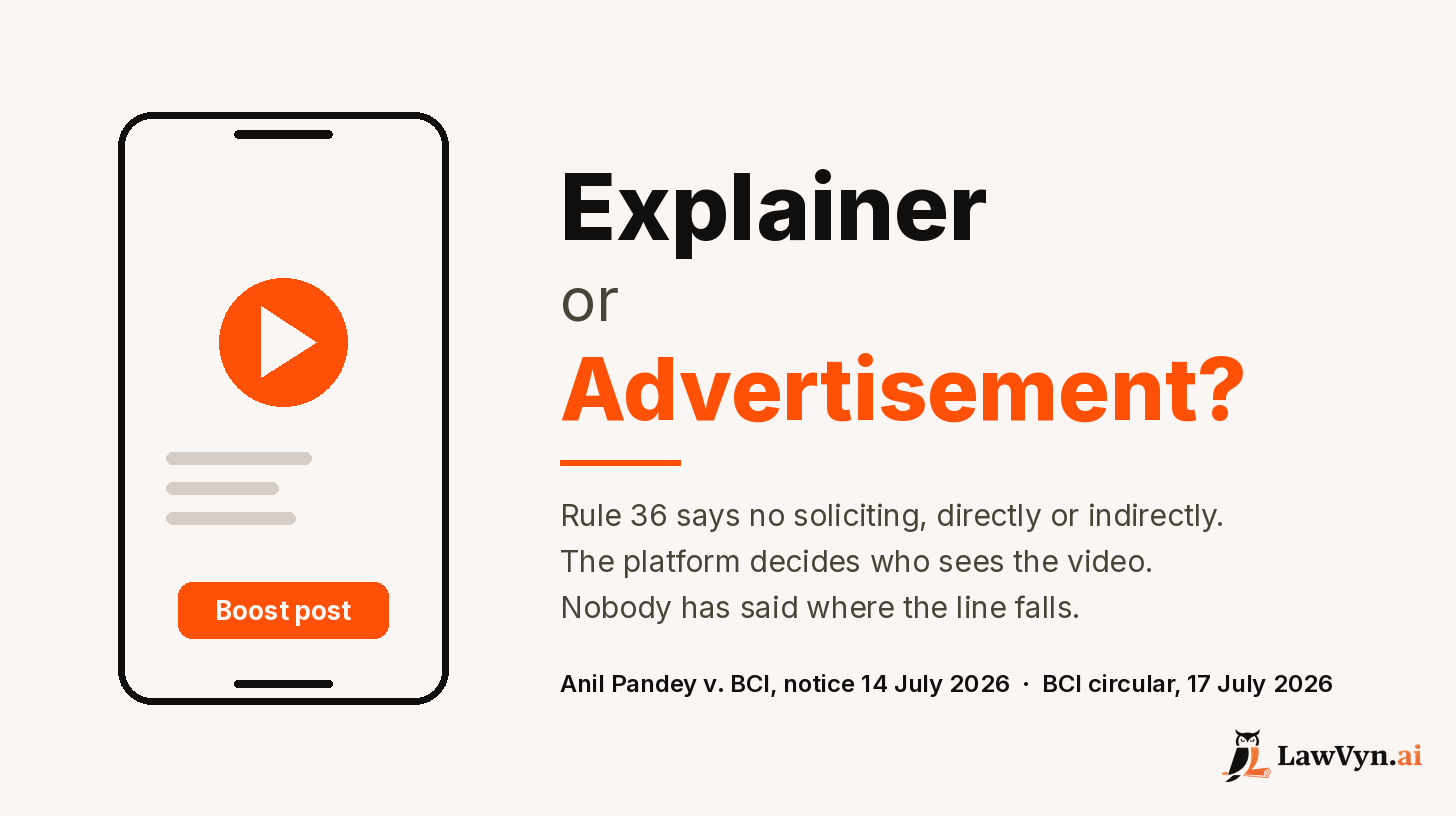
Imagine a lawyer in Hyderabad, four years into practice, who does one thing her seniors never did. Every Sunday evening she records a two-minute video explaining one legal idea in plain Telugu. What a cheque bounce notice actually means. Why a registered will still needs witnesses.
No client names. No court corridor. A phone, a wall and a chair.
By the fourth month the videos are getting thirty thousand views each, and her phone has started ringing. Not because she asked anyone to call. Because the platform noticed which strangers watched to the end, and quietly showed the next video to more people like them.
Was that education, or was it advertising?
She never had to answer. In July this year, two institutions started asking for her.
What happened in July
On 14 July, a Supreme Court bench led by the Chief Justice issued notice in Anil Pandey v. Bar Council of India, a petition about promotional reels, monetised legal content, influencer collaborations and client testimonials by advocates. Every State Bar Council in the country was asked to respond.
Three days later, the Bar Council of India issued a 37-page circular on social media conduct, binding advocates, law students and interns. Reels and promotional photographs shot in courtrooms, corridors, bar rooms and chambers are out. So are guaranteed-outcome pitches (“guaranteed bail”, “divorce in a few days”), invented success stories, purchased followers, and deepfake material that imitates a judge or a court order. Students sign an undertaking before every internship. State Bar Councils open complaint portals.
The circular does not ban legal education. Explaining the law to the public remains permitted, even encouraged.
Back to the Sunday video. Allowed if it is education. Not allowed if it is advertising. And nobody has yet said how to tell the two apart.
A rule older than the internet
Rule 36 of the Bar Council of India Rules says an advocate shall not solicit work or advertise, directly or indirectly. It was written for a world of circulars, touts and newspaper photographs.
The Supreme Court’s first real encounter with it, Bar Council of Maharashtra v. Dabholkar in 1975, was physical: advocates at the gate of the Esplanade court in Bombay competing for litigants as they walked in, sometimes to the point of a scuffle. The Court refused to read the rule narrowly. Soliciting was misconduct, whatever shape it took.
The only update since, in 2008, allowed a website listing name, contact, enrolment, qualifications and areas of practice. A digital visiting card.
So the law stands like this in 2026: a rule built for the court gate, a proviso built for the website, and a profession that lives on Instagram, YouTube and LinkedIn.
The tout nobody hired
Here is the part I keep returning to, as someone who builds software for a living.
Rule 36 assumes advertising is something a person decides to do. You hire the tout. You place the advertisement. The rule polices intention, and in 1975 that was the right thing to police.
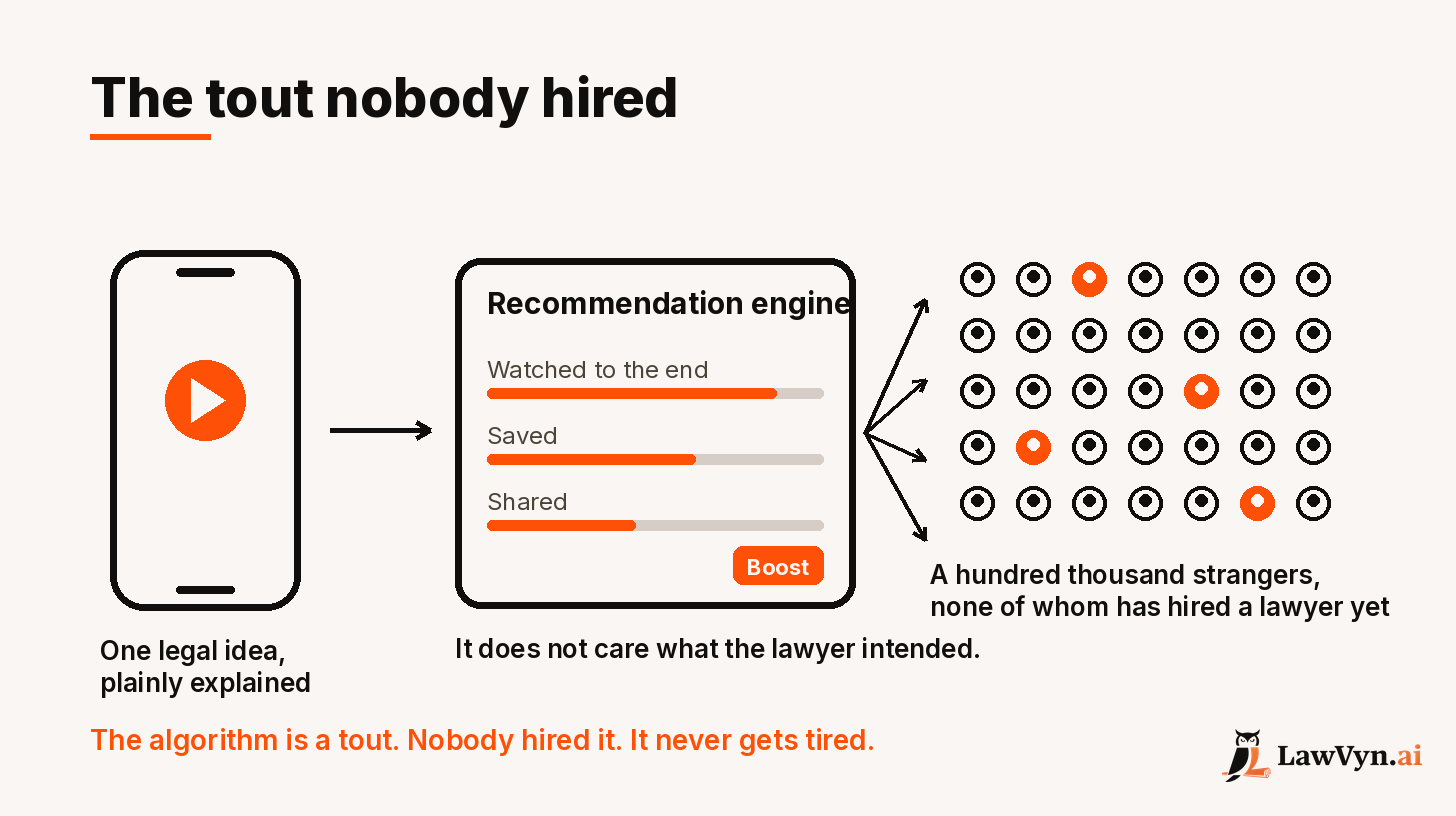
The platforms broke that assumption. A recommendation engine does not care what the lawyer intended. It watches who lingers, who saves, who shares, and then delivers the same video to a hundred thousand strangers who look like them. Every one of those strangers is exactly the person the old solicitation cases worried about: someone who has not yet engaged a lawyer. And the button under the video says Boost.
The algorithm is a tout. Nobody hired it. It works for free and it never gets tired.
This is not a story about lawyers turning into marketers. It is a story about a rule that cannot see the machine.
Where the line may fall
Other countries chose a different frame. In 1977, the US Supreme Court held in Bates v. State Bar of Arizona that truthful advertising of legal services could not be banned outright; the fight moved to what counts as misleading. England went further and now requires firms to publish prices for some services. The question there is not “did you advertise” but “did you mislead”.
India has not chosen yet. The Supreme Court has asked every State Bar Council for its view, and the petition asks for a Digital Ethics Code.
Until then, the circular’s own test is the safest guide: does the content use a court, a client’s matter or a professional reputation for personal gain? Explaining a reported judgment does not. A client testimonial does. A reel shot in a High Court corridor, in a gown, now does, whatever its caption.
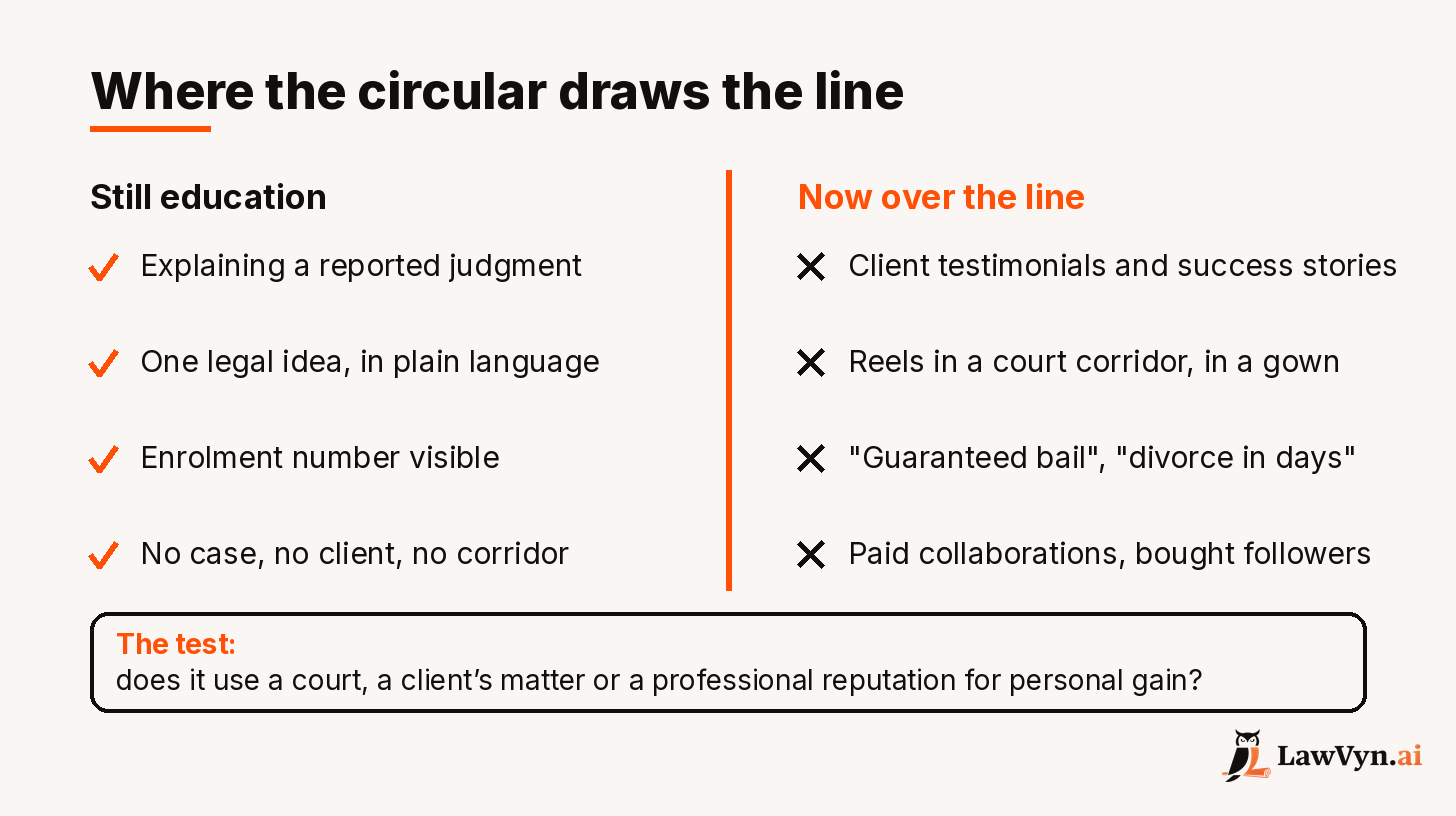
If you are in your first years, the circular reaches you directly. Build the kind of profile it permits: enrolment number visible, one legal idea at a time, no case, no client, no corridor.
If you are mid-career and write about judgments on LinkedIn, most of what you do is education. The risk sits at the edges: results, testimonials, paid collaborations, anything that lets the platform sell you rather than the idea.
If you are senior, you are about to be asked what the code should say. The dignity of the Bar is a real thing. So is the litigant in a small town who cannot tell good advice from a good thumbnail. A line that punishes misleading content rather than visibility may protect both.
The Sunday video is still on the phone. The rule says it depends on what it was for. The algorithm has already decided what it is for.
Someone in the profession now has to decide who wins that argument.
Ravi Daparthi
CEO of LawVyn
A Practice management software for Indian advocates and law firms.
https://www.ravidaparthi.com/ ·
https://www.linkedin.com/in/ravidaparthi ·
Follow LawVyn on LinkedIn

This essay first appeared on my Substack. New pieces land there first.
Subscribe on Substack
Ravi Daparthi
Entrepreneur, AI product leader, CEO of LawVyn.ai. Co-founder of Signitives and Oorwin.
More from Ravi
Essay
Who Becomes a Senior Advocate in 2040?
AI is quietly eating the work that turned freshers into seniors. Everyone in the profession, from first-year junior to designated senior, has a stake in what replaces it.
22 September 2026 · 5 min read
Essay
AI in Your Pleadings Is Now a Disciplinary Question
A draft regulation in June, a Supreme Court judgment in July, and one clause that says you cannot blame the machine. Here is what changed, and what it asks of the advocate who signs.
20 September 2026 · 7 min read
Essay
Legal AI : The Intern Who Never Says “I Don’t Know”
Legal AI drafts fast, reads faster, and will invent a judgment with a straight face. Here is how to pick one you can trust with a client file.
17 September 2026 · 5 min read