Essay · 17 September 2026 · 5 min read
Legal AI : The Intern Who Never Says “I Don’t Know”
Legal AI drafts fast, reads faster, and will invent a judgment with a straight face. Here is how to pick one you can trust with a client file.
It is 11pm. A junior associate pastes a client’s contract clause into a free chatbot and asks it to tighten the language. The answer comes back in seconds, and it reads beautifully. Whether it is actually correct is the one thing she cannot see.
That moment is playing out in law offices across India right now. Lawyers have stopped asking whether to use AI. They are asking which one, and whether it can be trusted with real work.
Here is an honest map.
What these tools actually do
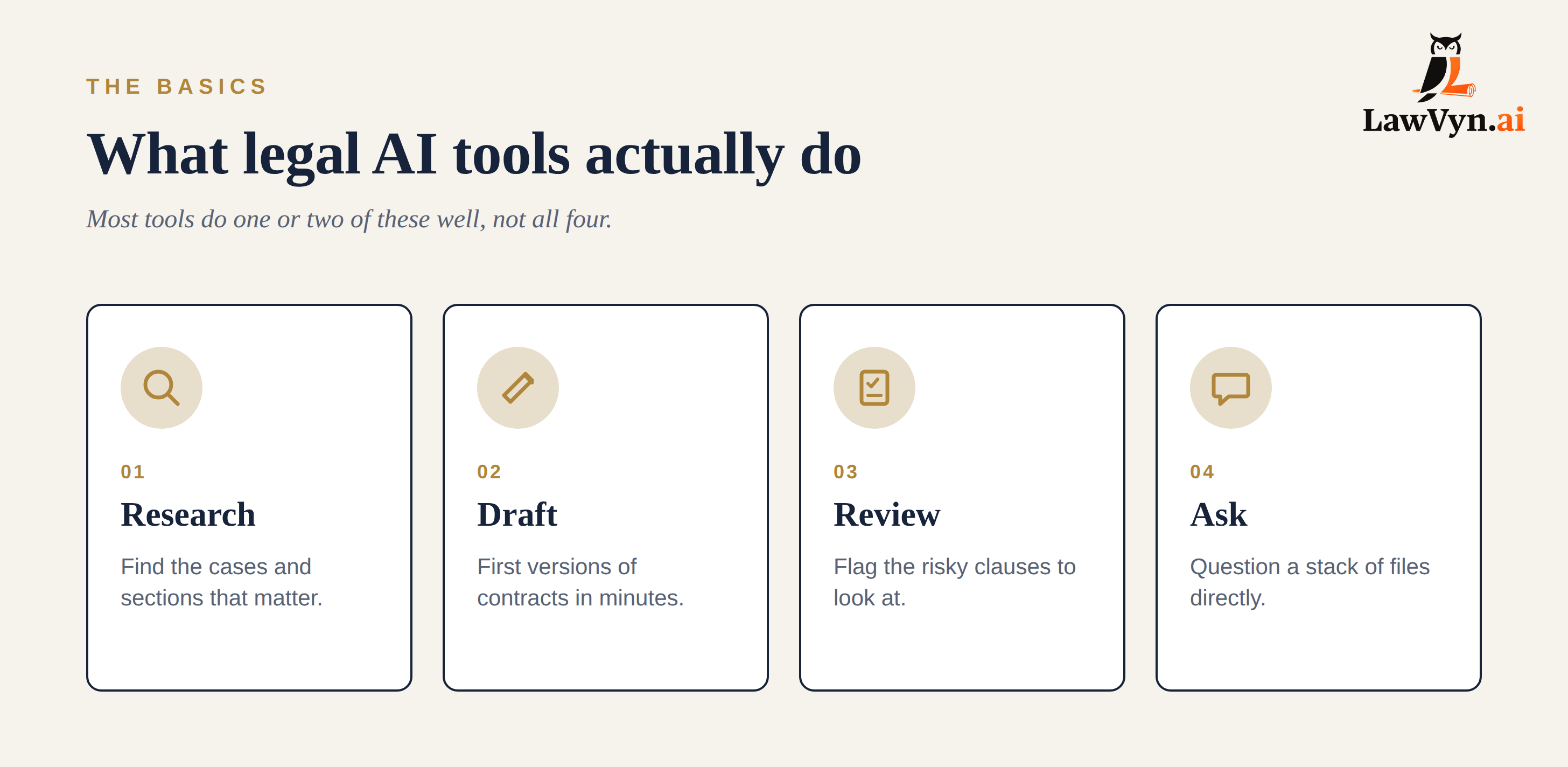
Strip away the marketing and legal AI does four jobs.
Research. Find the judgments and sections that matter.
Draft. Turn a template and a few facts into a first version.
Review. Read someone else’s contract and flag the risky bits.
Ask. Let you question a stack of documents instead of reading every page.
Most tools do one or two of these well. Very few do all four.
One distinction decides everything that follows. A free general chatbot predicts words that sound right. A grounded legal tool searches a real database of statutes and judgments, then shows you where the answer came from. One you can verify. The other you can only hope about.
Most Indian firms meet AI through a free chatbot. It feels like magic for about a week, until it invents a section number.
Where it earns its keep
Three places, today.
First drafts. A standard NDA or lease in minutes instead of an afternoon. You still edit every line, but starting from something always beats starting from nothing.
Long documents. A hundred page agreement summarised in the time it takes to make chai. For due diligence or a fat discovery bundle, that alone changes your week.
Research. The relevant judgments surfaced with links you can open. It does not replace your reading. It gets you to the right page faster.
Now the honest part. AI is weakest exactly where law gets interesting: novel questions, strategy, a court ready argument that needs a feel for the bench. Give it a clear template and clear facts and you get a cleaner draft. Expect it to think for you and you get mush.
The part nobody likes talking about
Every one of these tools can lie to you with complete confidence. The polite word for it is hallucination. Asked for a case on point, a model will sometimes produce one that reads perfectly and does not exist.
This is not theoretical. In 2023, two New York lawyers filed a brief built on cases a chatbot had invented. The judge was not amused, and fined them. They had trusted the output and never opened a single citation.
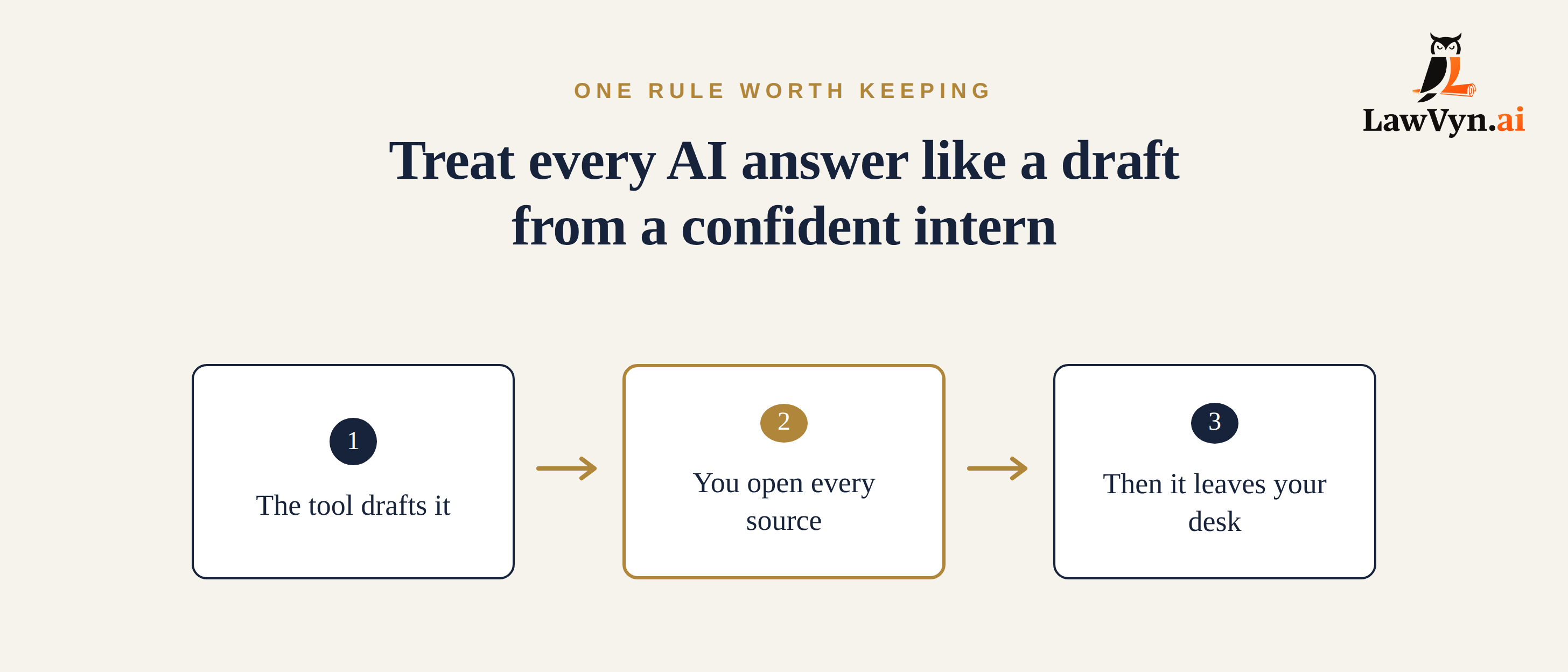
So here is one rule worth taping to your monitor. Treat every AI answer like a draft from a confident intern. It might be excellent. It might be quietly made up. Either way, you open each citation and read the real source before it leaves your desk.
Grounded tools lower this risk because they show their sources. They do not remove your duty to check, because even a sourced answer can misread it.
The stakes sit higher here than any American story suggests. Our law changes fast. When the old criminal codes were replaced in 2024, a tool still working off yesterday’s sections could hand you a confident, outdated answer with a straight face.
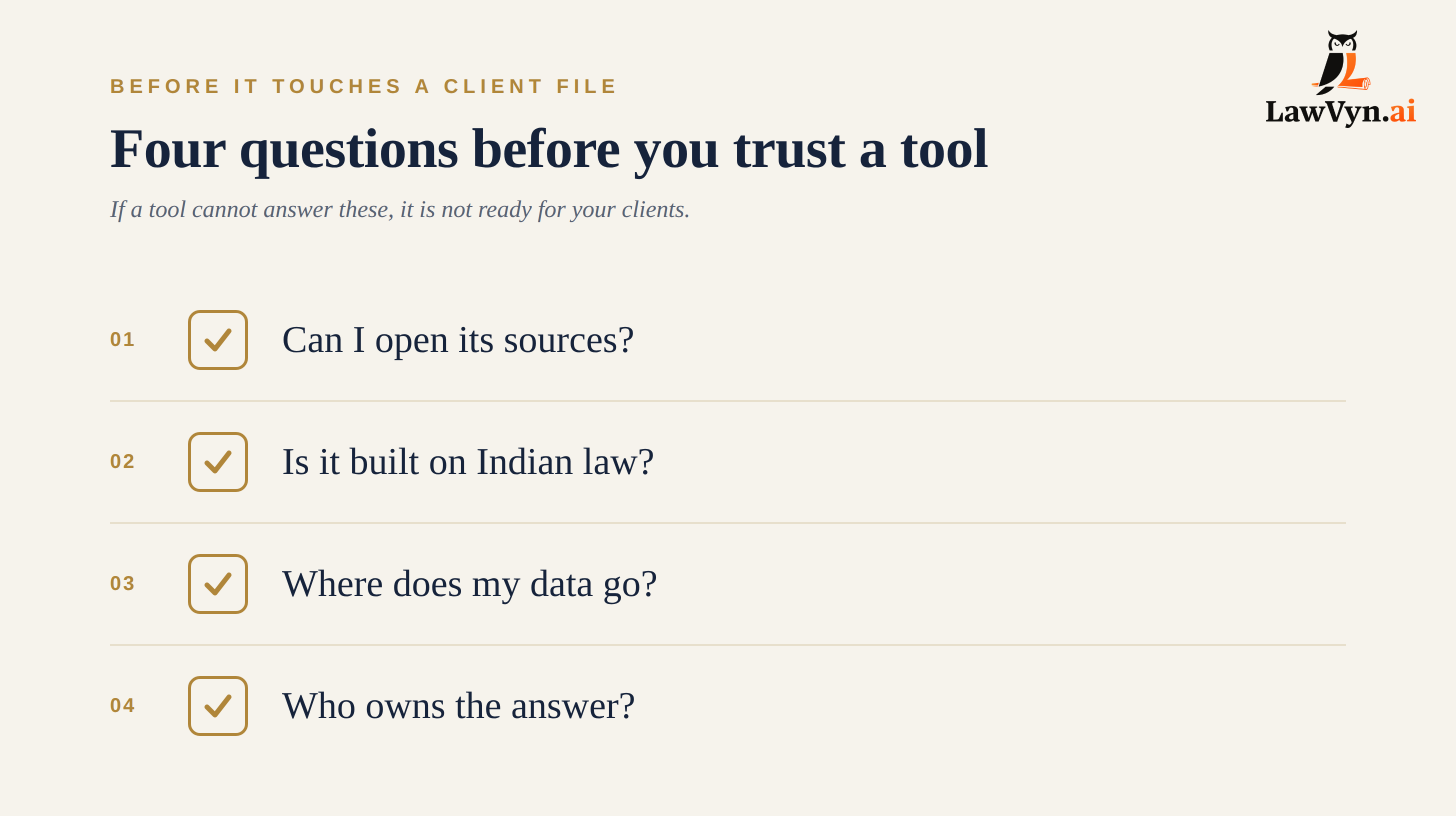
Four questions before it touches a client file
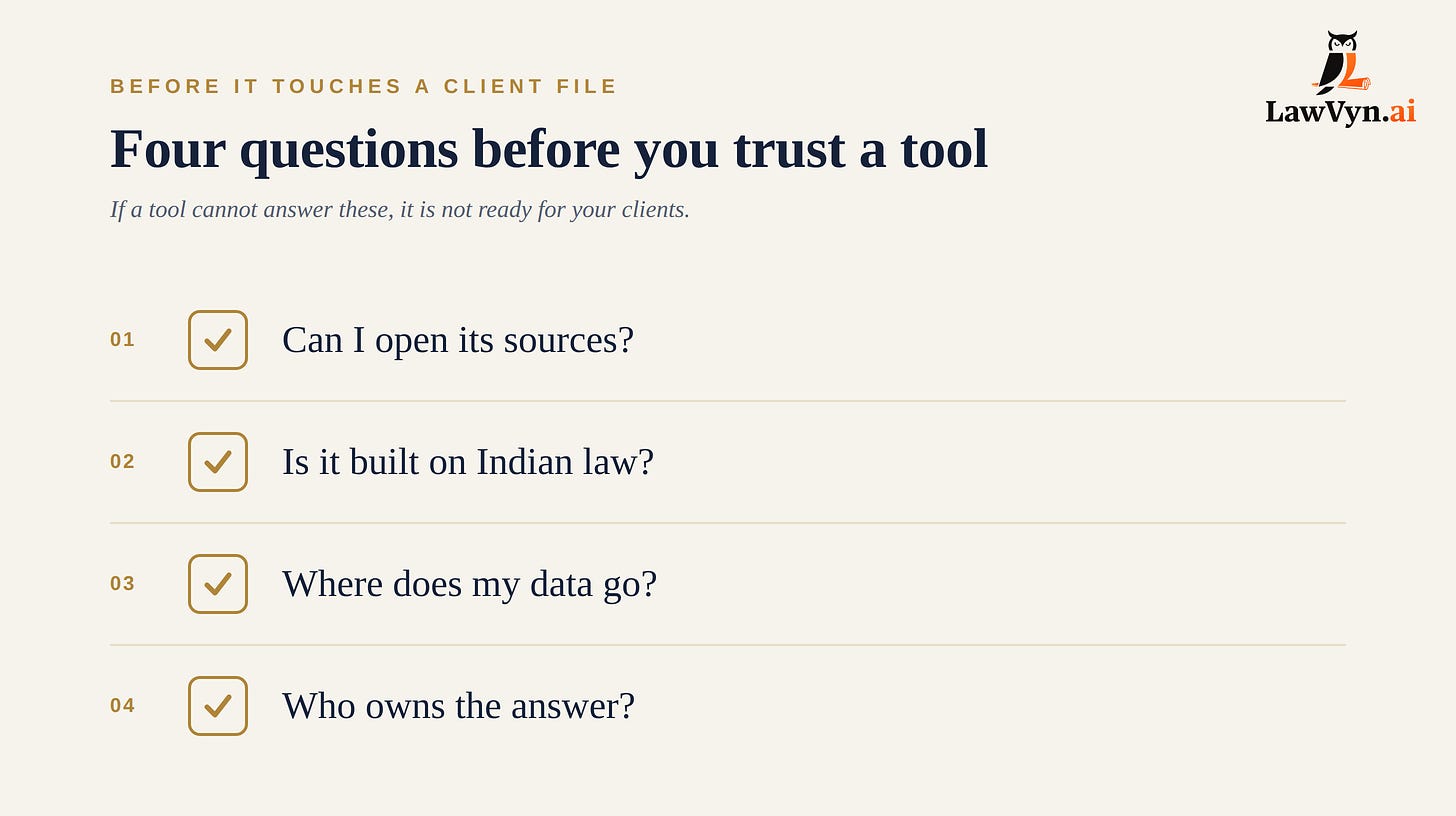
Can I open its sources? A confident paragraph with no link to a real judgment is a starting point, not an authority.
Is it built on Indian law? A brilliant tool trained on American cases will still let you down before an Indian bench. That, and not the loudest homepage, is what best should mean here.
Where does my data go? Read the fine print on whether your uploads are used to train the model. Free consumer tools often reserve that right.
Who owns the answer? No software has ever been hauled up before a bar council. A person has.
There is a quiet confidentiality trap inside the third one. Paste a client’s contract into a public chatbot and you may have handed privileged material to a stranger. India’s Digital Personal Data Protection Act has made firms far more careful about where client data travels. Serious legal tools wall your data off. Free ones often do not.
Start small, then measure it
A grand AI strategy is not where you begin. One task and one month is.
Pick something high volume and low drama. First draft NDAs are perfect. Run the tool and a human side by side for a few weeks, then compare what comes out. You will learn more in that month than in a year of vendor demos.
Write down one rule everybody follows: AI drafts, a lawyer decides. And spell out what may be pasted into a tool and what may not, so the associate at 11pm knows where the line is before she crosses it.
Where India is heading
The rules are moving faster than most people expect. Europe has set a tone that others are studying. Closer to home, in 2025 the Kerala High Court issued AI guidelines for its district judiciary: do not feed case data into public AI tools, and verify every output before relying on it. That instinct, use it but check it and guard the data, will travel from courts to firms.
On the technology side, tools grounded in Indian statutes and Indian judgments, priced for Indian practices, are becoming ordinary rather than exotic. Which means owning AI stops being an advantage. Everyone will have it soon enough.
The tool is only as sharp as the lawyer
None of this is really about the software being clever. It is about the lawyer staying sharp. Legal AI can draft faster, read quicker and search deeper than any junior in the office. What it cannot do, and never will, is take responsibility.
Ravi Daparthi
CEO of LawVyn
A Practice management software for Indian advocates and law firms.
https://www.ravidaparthi.com/ ·
https://www.linkedin.com/in/ravidaparthi ·
Follow LawVyn on LinkedIn

This essay first appeared on my Substack. New pieces land there first.
Subscribe on Substack
Ravi Daparthi
Entrepreneur, AI product leader, CEO of LawVyn.ai. Co-founder of Signitives and Oorwin.
More from Ravi
Essay
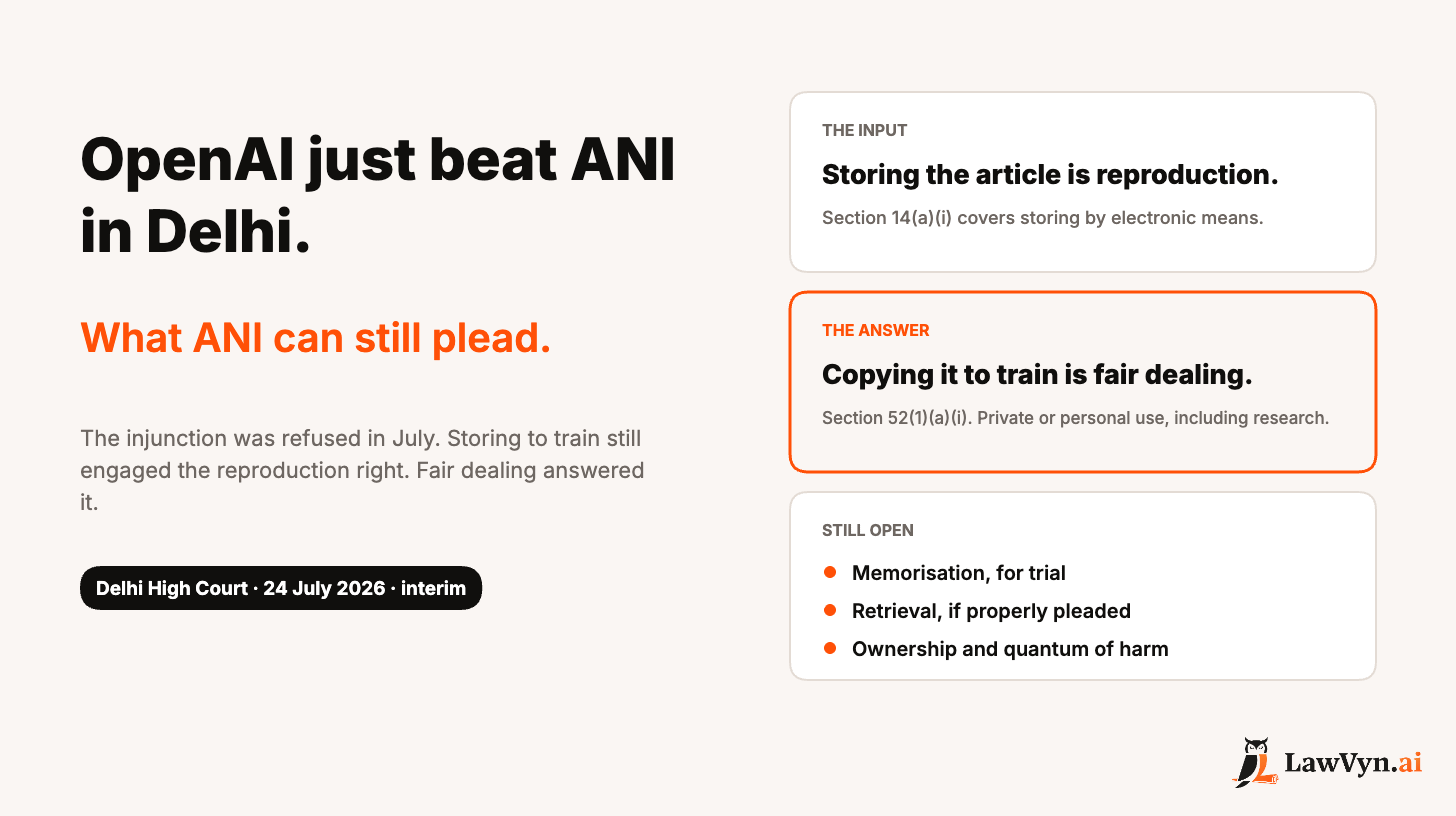
OpenAI (ChatGPT) Just Beat ANI in Delhi. What ANI Can Still Plead.
Interim relief was refused on 24 July 2026. Storing the articles to train still engaged the reproduction right, and fair dealing answered it. The appeal is listed on 8 December.
24 October 2026 · 4 min read
Essay
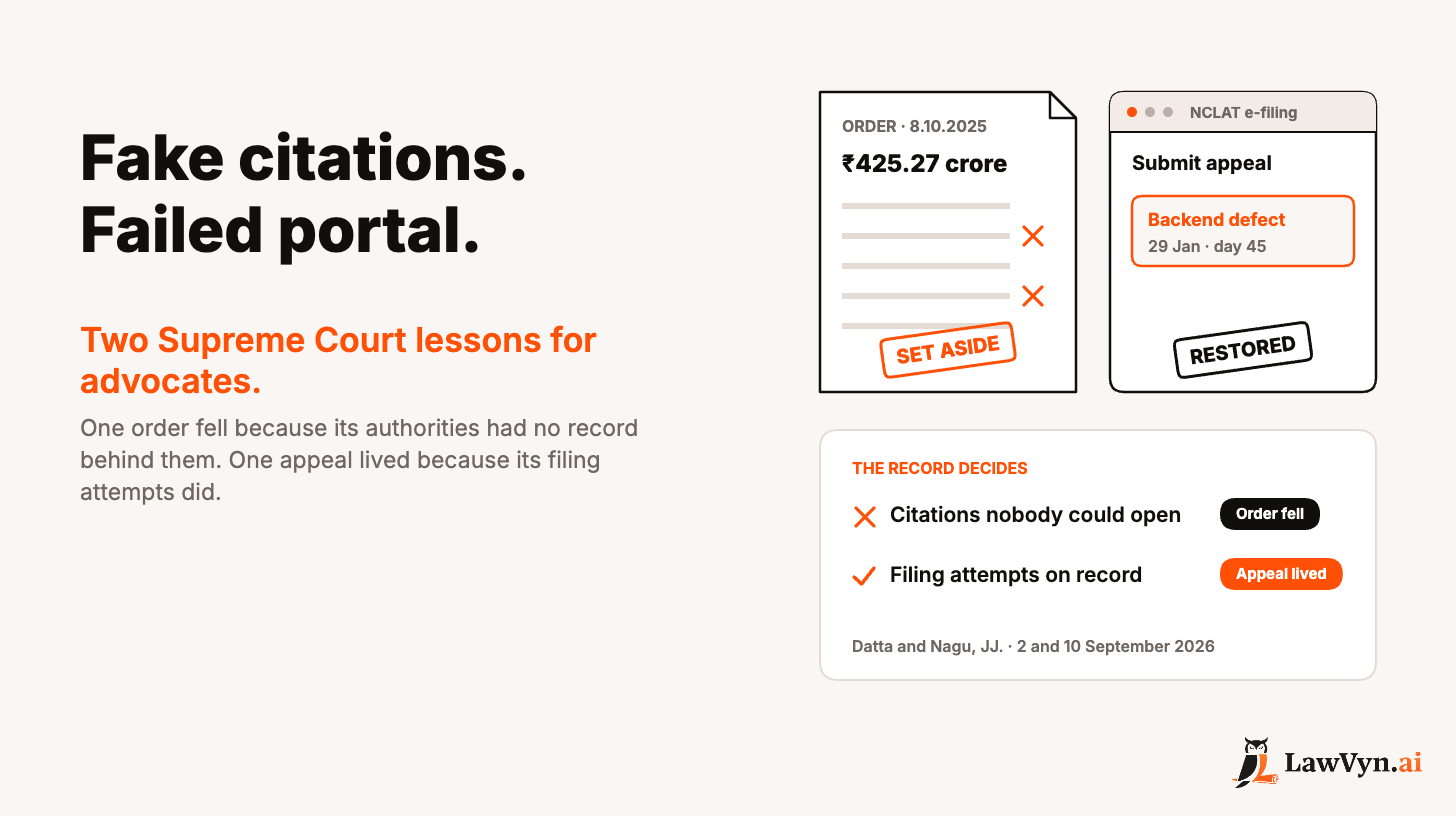
Fake Citations, Failed Portal: Two Supreme Court Lessons for Advocates.
The same bench set aside a 425 crore order built on judgments that did not exist, then restored an appeal filed a day late because the tribunal's portal failed. Read together, they are one rule.
22 October 2026 · 5 min read
Essay
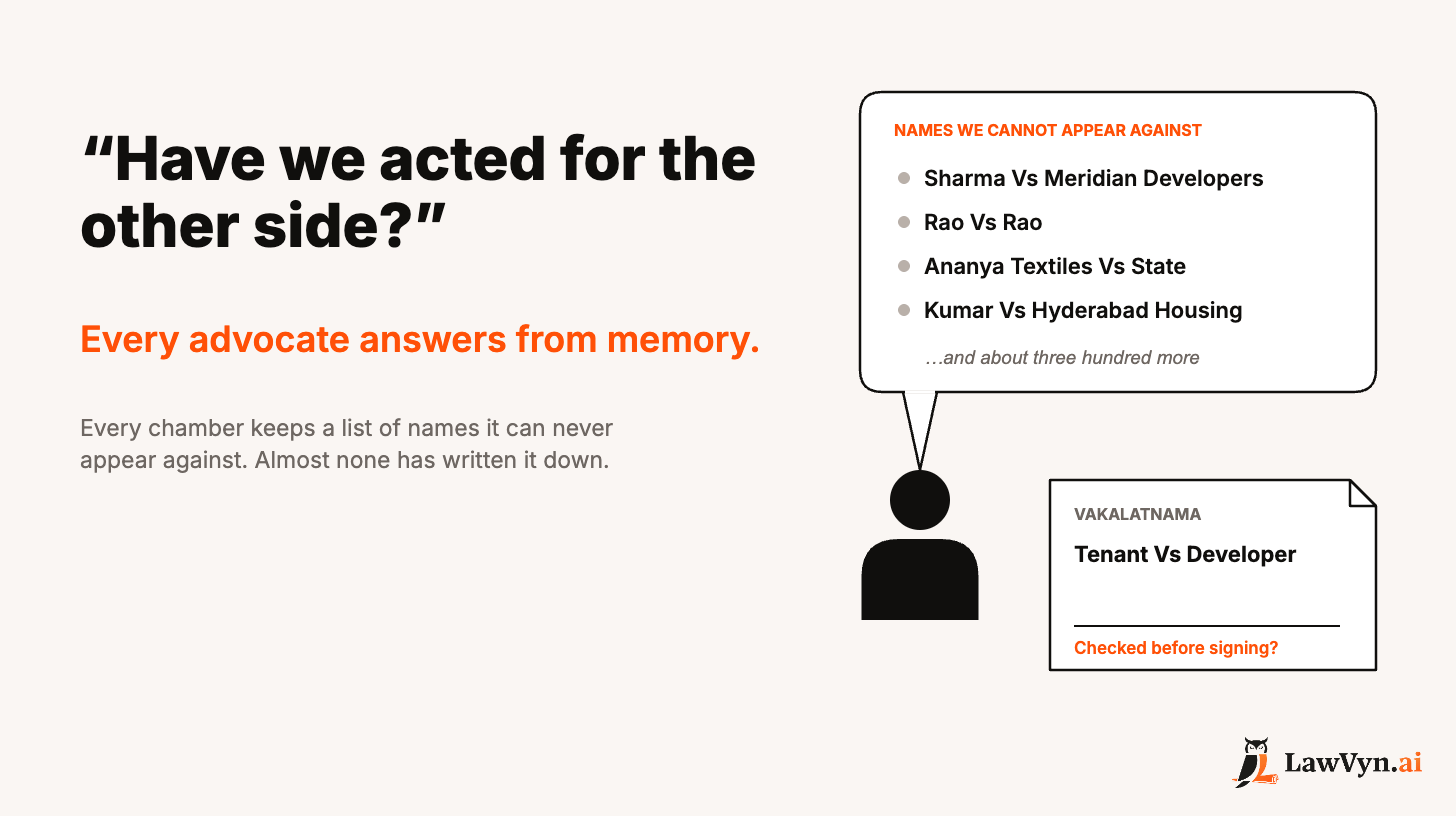
“Have We Acted for the Other Side?” Every Advocate Answers From Memory.
Rule 33, a 1983 suspension and a 2026 Supreme Court judgment say what an advocate owes a former client. The check that enforces it still runs on one person's memory.
20 October 2026 · 5 min read