Essay · 12 October 2026 · 5 min read
Two Things Every Lawyer Checks Before Sleeping: the Date and the File.
The court moved its calendar and its records online. The advocate’s evening still runs on a paper diary and an almirah. On the two questions that decide tomorrow.
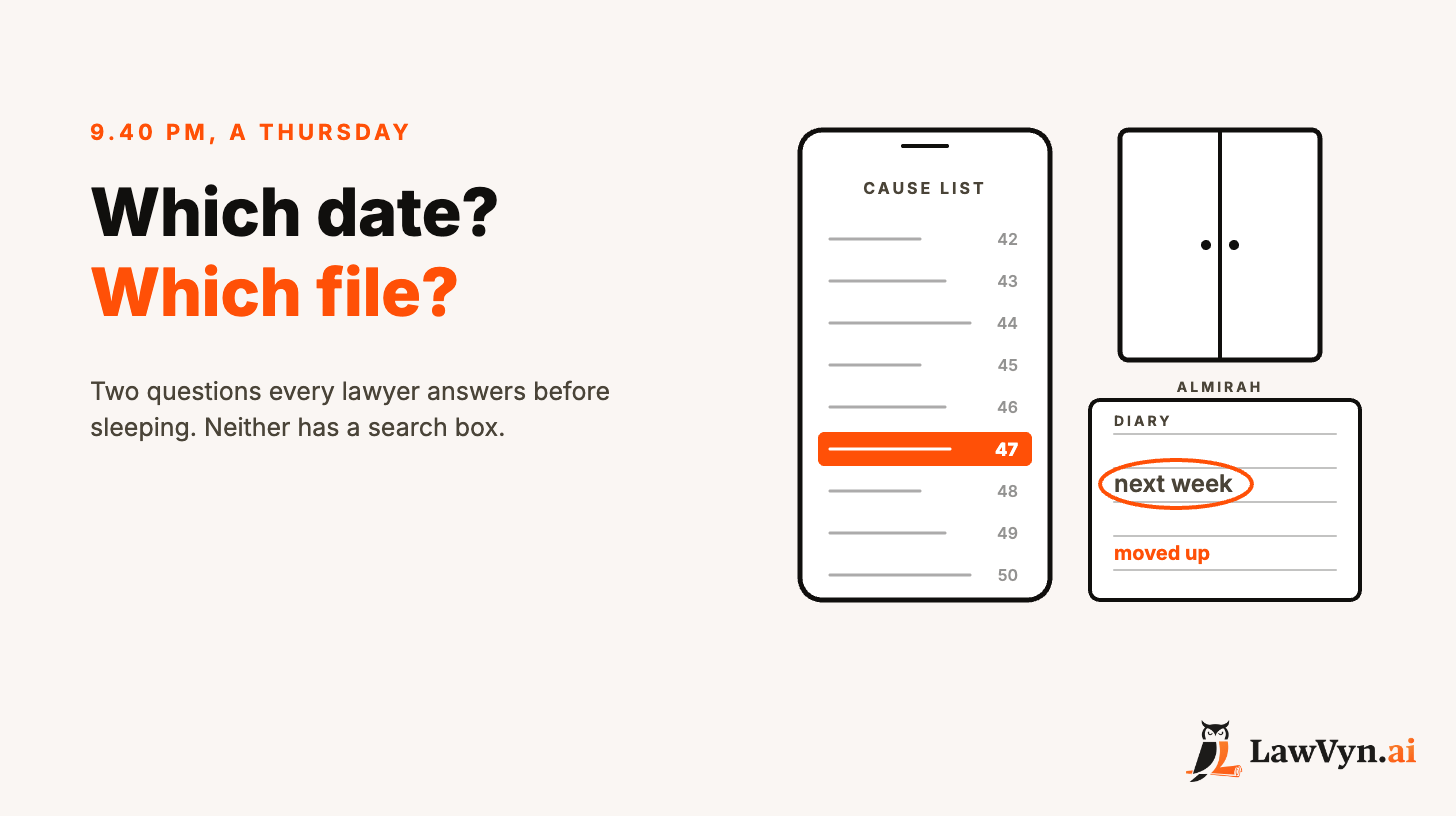
Imagine a Thursday night in a chamber in Hyderabad. It is 9.40 pm. The bar association’s WhatsApp group has just forwarded tomorrow’s cause list, eighty pages of PDF, and three lawyers in three different homes are pinching the screen, searching for their own name.
She finds it on page 52. Item 47, before a bench she was not expecting. The diary on her desk says next week. A supplementary list has moved it up, as supplementary lists do.
So the second question begins. The brief is in the almirah at the office. The rejoinder came from the client as an email attachment. The annexures are photographs on the clerk’s phone. The last order is on the court website.
By 11 she has the date right and most of the file, and she is reading. Tomorrow she will argue well, because she always does.
The two questions
Every lawyer’s day, from the first year to the fortieth, is organised around two questions. When is it listed. Where is the paper.
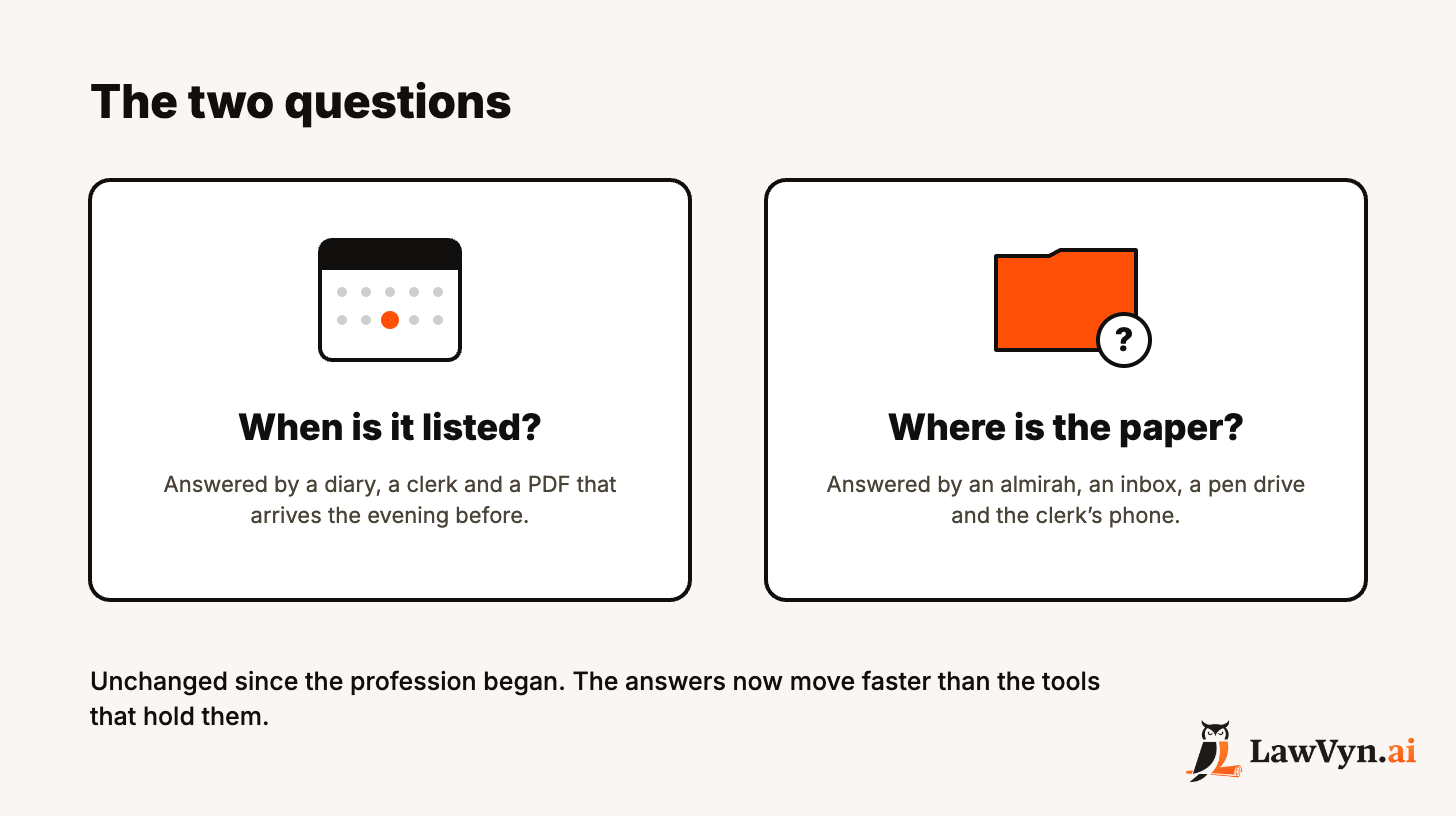
The questions have not changed. The answers now move faster than the tools that hold them. The date lives in a diary. The file lives in an almirah. Both were built for a court that listed matters once, in one place, and kept its records in a room.
That court no longer exists.
How a date travels
A date is pronounced in court and written on the back of the file. The clerk copies it into the diary. Weeks later the registry publishes the cause list, in the evening of the previous working day, and the date is confirmed, or quietly replaced by a supplementary list or a bench change.
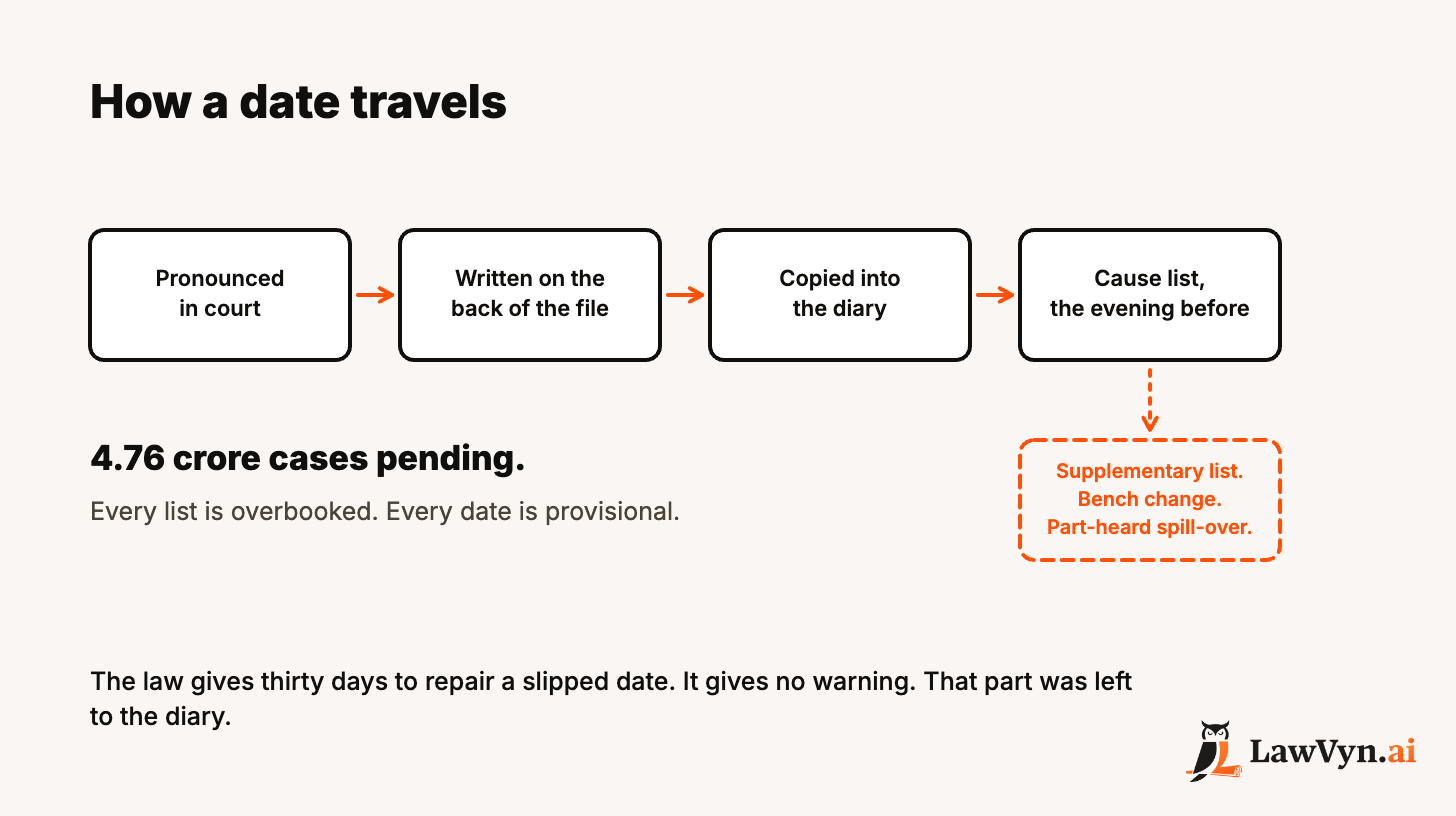
With 4.76 crore cases pending, the figure the government gave Parliament in February 2026, every list is overbooked and every date is provisional. That is nobody’s doing. It is arithmetic.
Order IX of the Civil Procedure Code deals with a party’s absence, and the Limitation Act allows thirty days to seek restoration of a suit dismissed in default. The law provides a repair. It provides no warning. That part was always left to the diary.
How a file scatters
The date moves. The file multiplies.
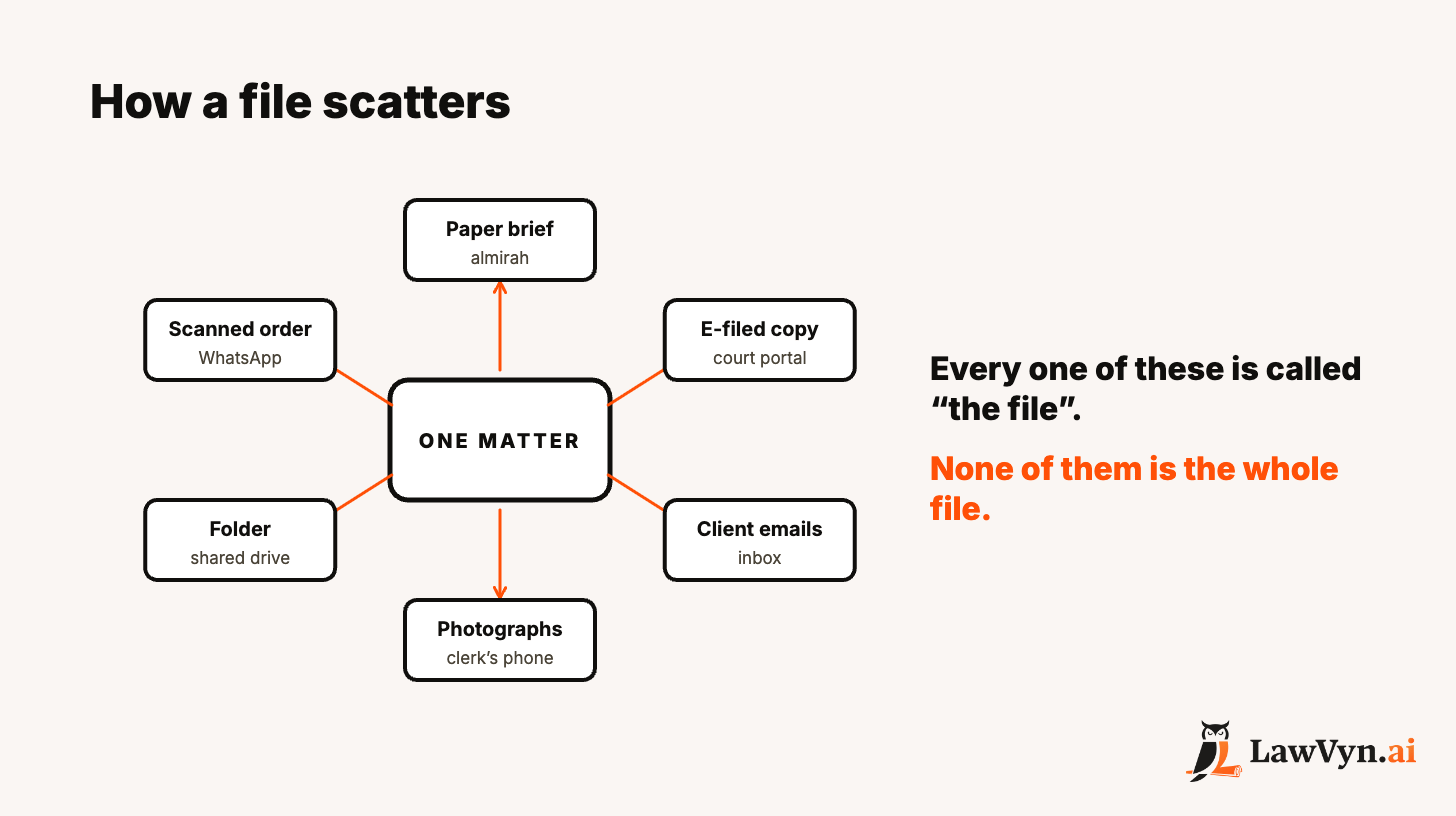
A single matter today has a paper brief, an e-filed copy on the court portal, the client’s emails, the clerk’s photographs, and the scanned order someone forwarded on WhatsApp. Every one of these is called “the file”. None of them is the whole file.
E-filing was meant to simplify this, and inside the registry it did. For the lawyer it created a second file, the digital one, that now has to be kept in step with the first.
The court solved its half
Here is what is easy to miss at 9.40 pm. The court has already done its share.
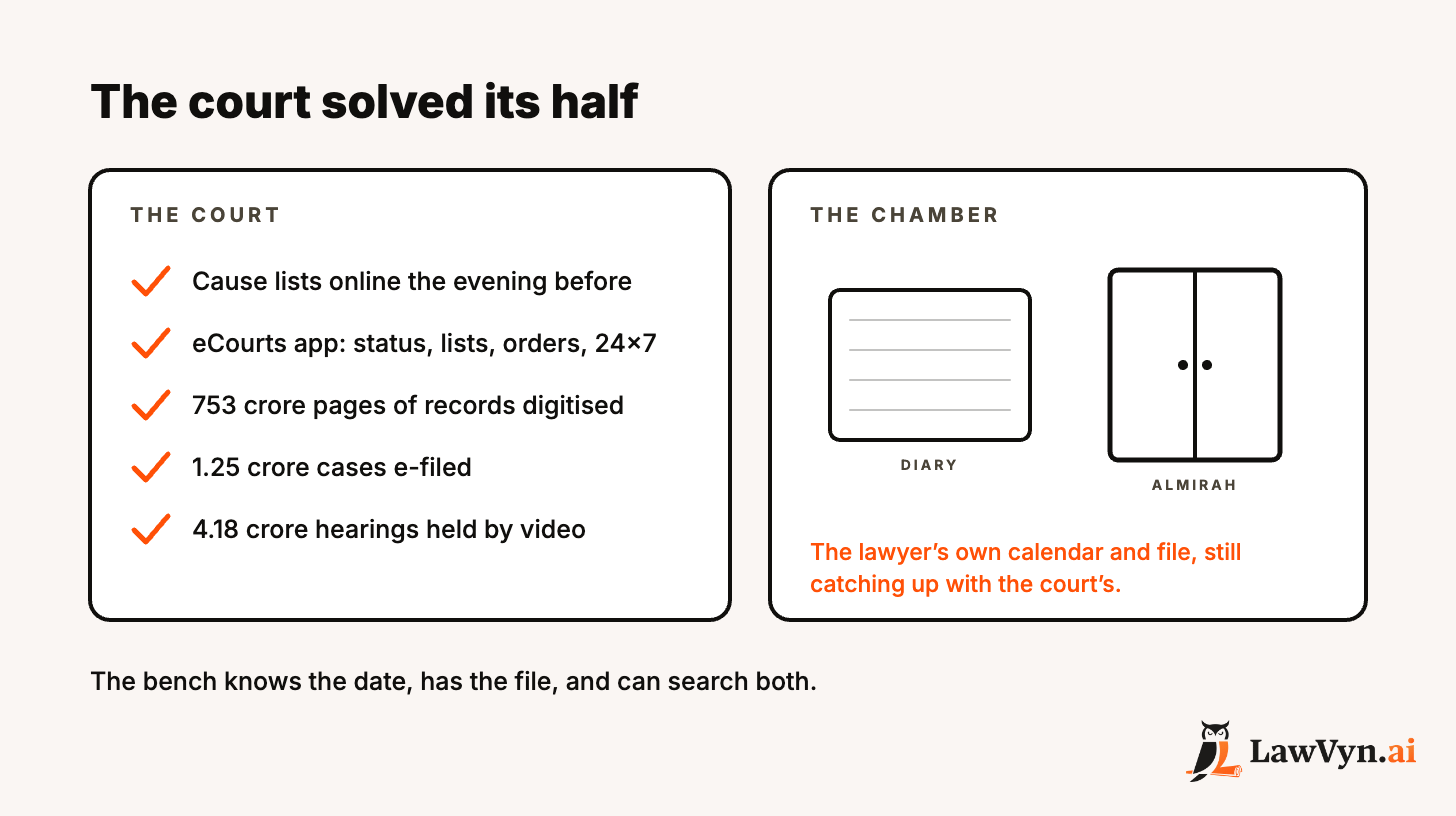
Cause lists go online the evening before. The eCourts Services app shows case status, cause lists and orders. Under the e-Courts project, 753 crore pages of records have been digitised, 1.25 crore cases have been e-filed, and courts have held 4.18 crore hearings by video. In the US federal courts, every filing emails every lawyer on the matter a link to the document.
So the bench knows the date, has the file, and can search both. What has not happened yet, for most chambers in India, is the other half: the lawyer’s own calendar and the lawyer’s own file catching up with the court’s.
What a chamber can do about it
It is not complicated, which is probably why it has waited so long. Three moves, in the order I would make them.
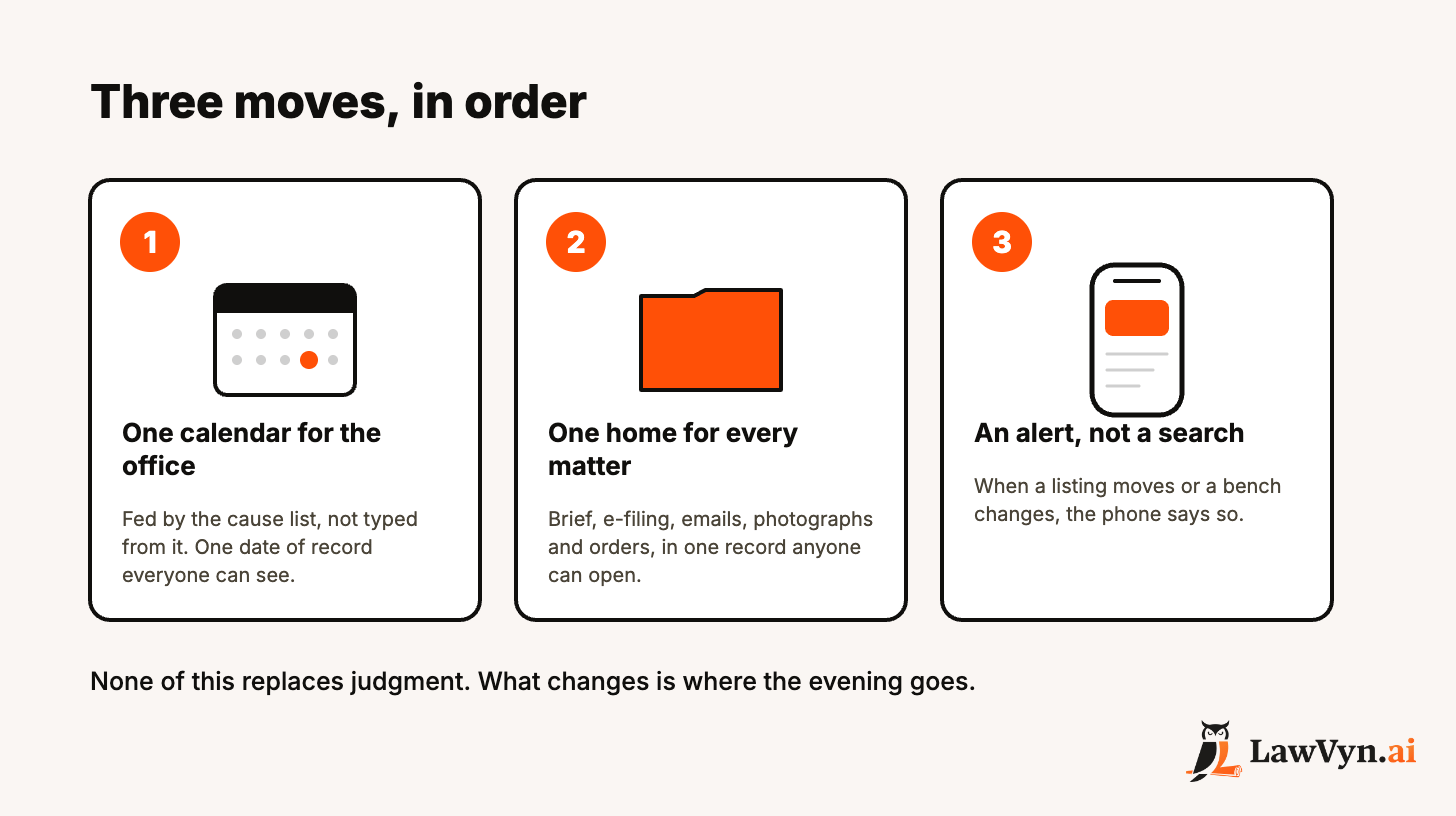
One calendar for the whole office, fed by the cause list rather than typed from it. The date of record lives in one place everyone in the chamber can see, updated from tomorrow’s list before anyone has to search eighty pages for a name.
One home for every matter. A matter record that holds the brief, the e-filing, the client’s emails, the clerk’s photographs and each order as it is uploaded, so that “the file” means one thing and anyone in the office can open it in a minute.
An alert instead of a search. When a listing moves or a bench changes, the phone should say so. The bar association group that forwards the PDF is the fraternity’s own prototype of this. The senior who can recite every date in the chamber from memory is a database, and a remarkable one. It is also a lot to ask of one person.
None of this replaces judgment. The argument tomorrow morning is still the lawyer’s. What changes is where the evening goes.
I will say it plainly, since the signature below says it anyway: this is the problem LawVyn is built around. Whichever tool a chamber picks, the test is the same. At 9.40 pm, does the office already know the date and have the file, or does the lawyer have to go and find out?
Before sleeping
The best lawyers I know still check before sleeping. That habit is not the problem. It is part of what makes them good.
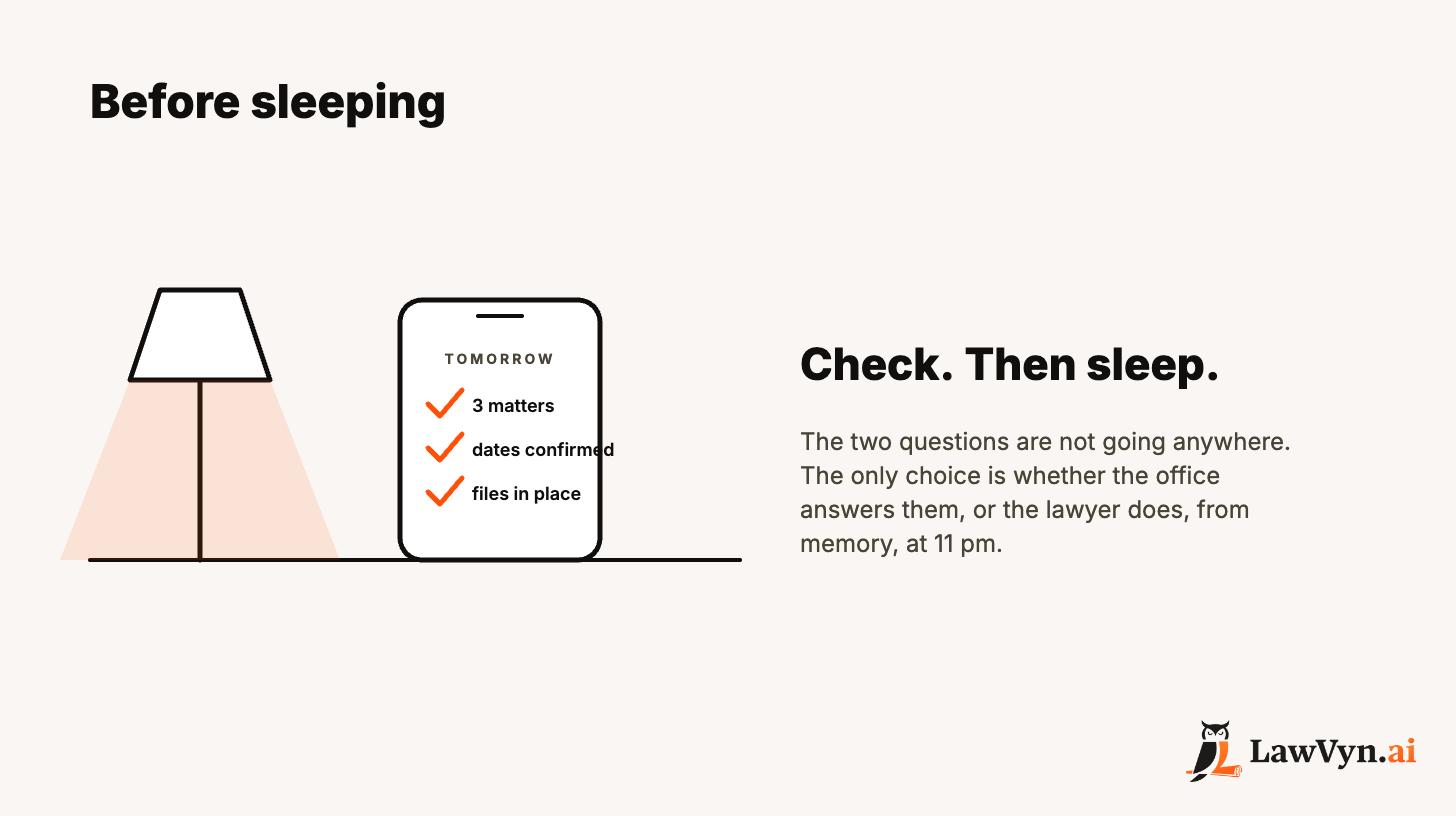
The problem is what they have to check against. A diary that cannot know the list changed at 7 pm. An almirah that cannot hold an email.
The two questions are not going anywhere. The only choice is whether the office answers them, or the lawyer does, from memory, at 11 pm.
Tomorrow’s list is already out. Somebody, or something, should be reading it for you.
Ravi Daparthi
CEO of LawVyn
A Practice management software for Indian advocates and law firms.
https://www.ravidaparthi.com/ ·
https://www.linkedin.com/in/ravidaparthi ·
Follow LawVyn on LinkedIn

This essay first appeared on my Substack. New pieces land there first.
Subscribe on Substack
Ravi Daparthi
Entrepreneur, AI product leader, CEO of LawVyn.ai. Co-founder of Signitives and Oorwin.
More from Ravi
Essay
A Law Firm’s Memory Has a Notice Period
Every chamber and law firm owns an asset that never appears on a balance sheet. It lives in people, and people move.
7 October 2026 · 6 min read
Essay
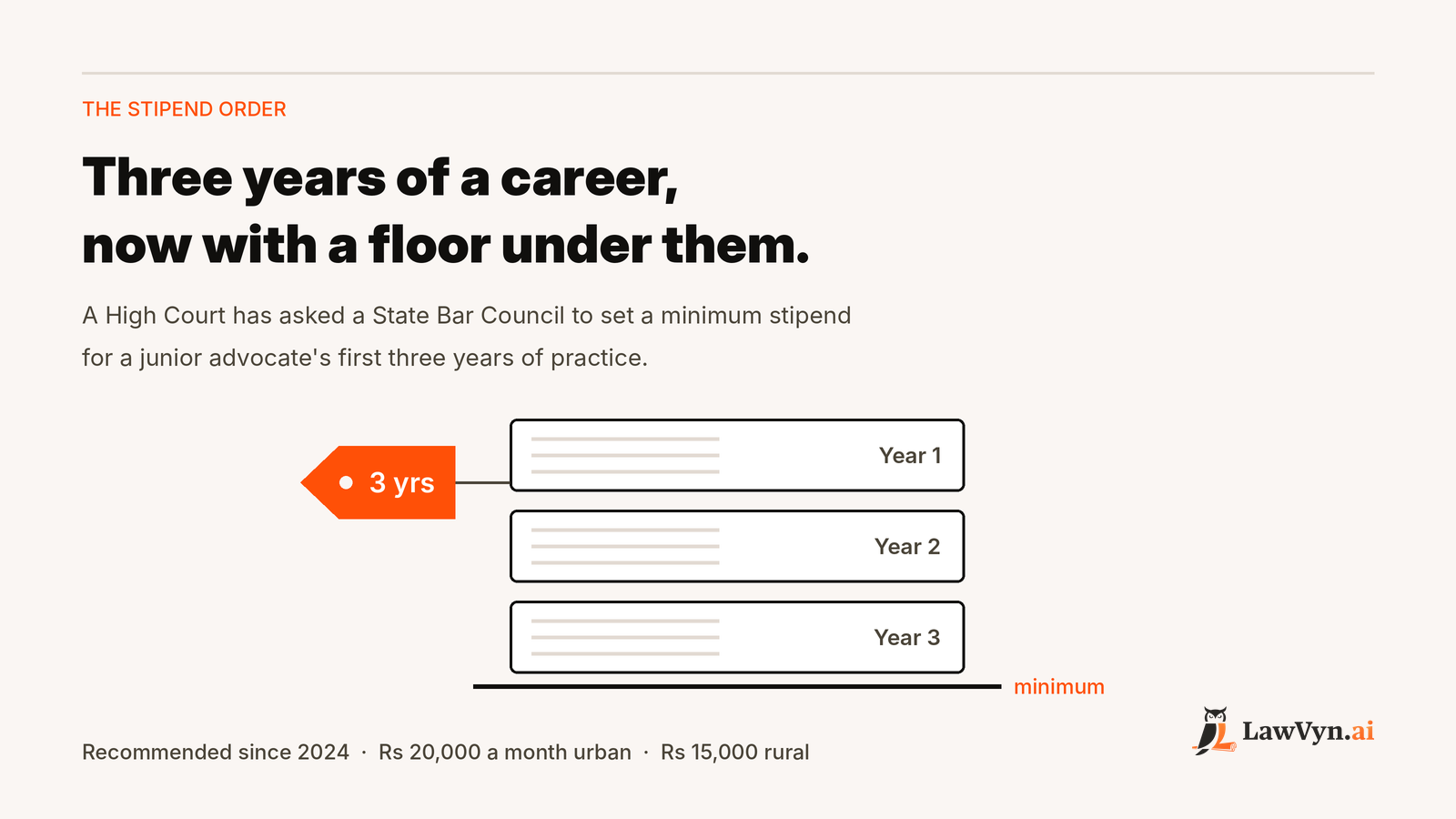
A Junior Advocate's First Three Years Now Have a Price
A High Court has given a State Bar Council six months to set a minimum stipend. The money question hides a harder one about what those three years are actually made of.
4 October 2026 · 4 min read
Essay
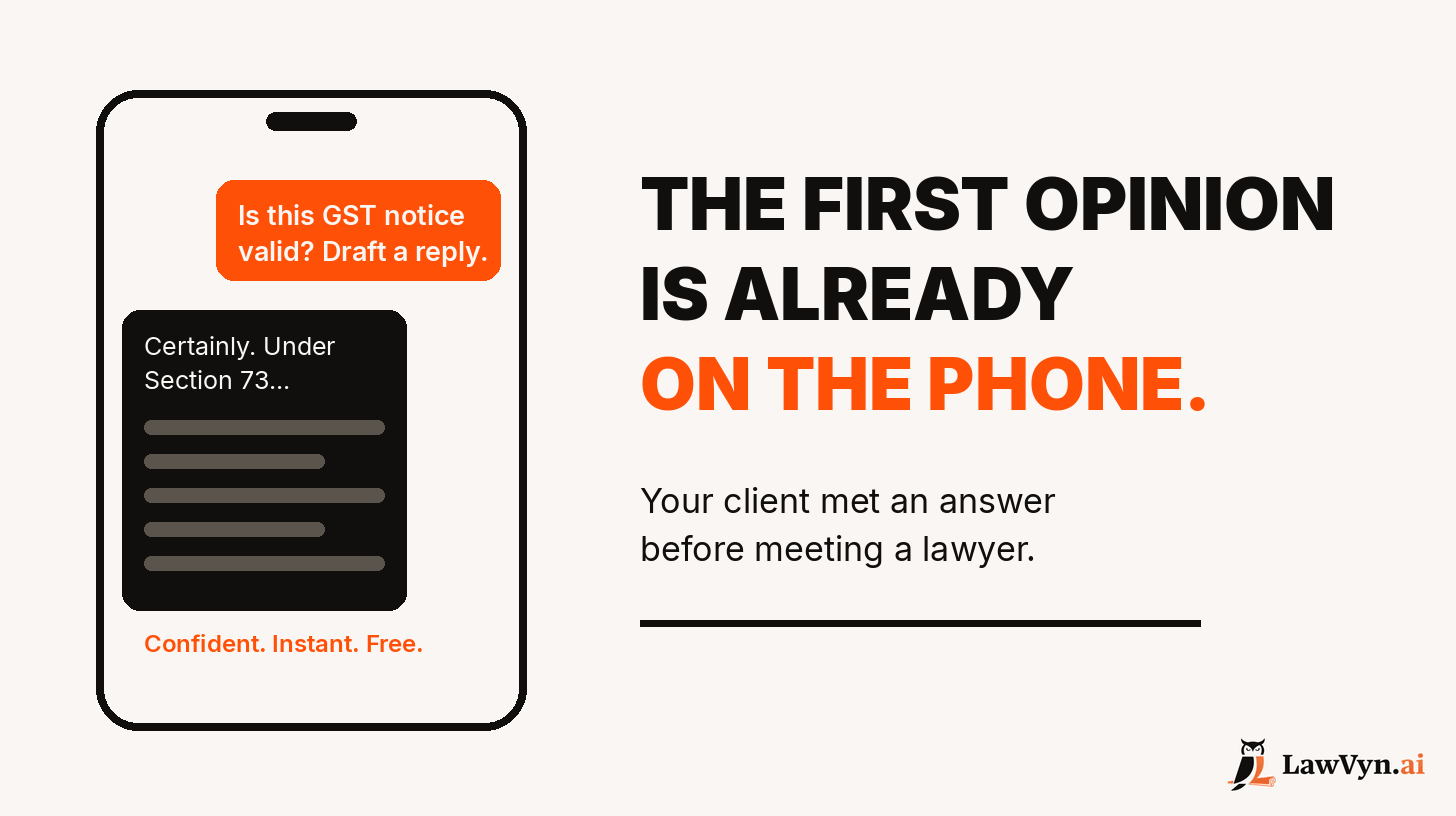
Your Client Asked ChatGPT First. The Lawyer Is the Second Opinion.
Clients now arrive with an answer in hand. What that changes about trust, fees and what an advocate is really paid for.
1 October 2026 · 4 min read