Essay · 14 October 2026 · 5 min read
What Happened in Court Today? Only the Advocate Knows.
The court writes down its half of every hearing, by rule. The advocate's half, what the bench said and what comes next, still travels home in one person's head.
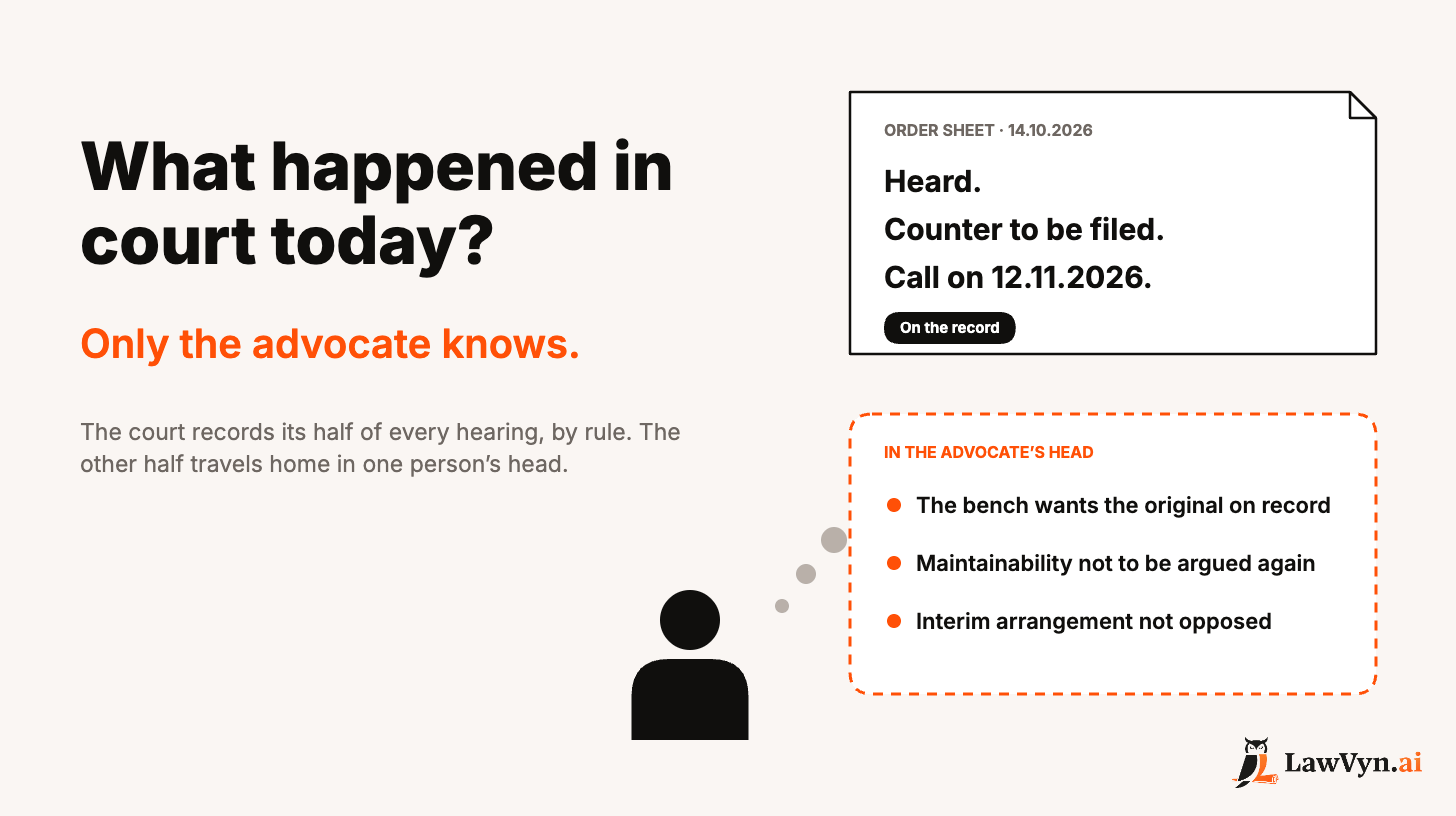
Imagine a Wednesday afternoon in Hyderabad. It is 4.20 pm and a senior advocate walks out of a court hall, a junior one step behind.
The matter went well. The bench spent twelve minutes on the 2019 agreement, asked for the original to be placed on record, and said in passing that maintainability need not be argued again. The other side agreed to file its counter in four weeks and did not oppose the interim arrangement.
The clerk is waiting at the gate, which is no place for detail. What happened, sir? Adjourned, four weeks, counter to be filed.
The client calls at 5, between two other calls. Adjourned, four weeks, we are on track.
That night the order is uploaded. Heard. Counter to be filed. Call on 12 November.
Everything that will decide the next hearing, the original, the concession, the bench's interest in the agreement, is in one place. The senior's head, on the drive back.
Two records of one hearing
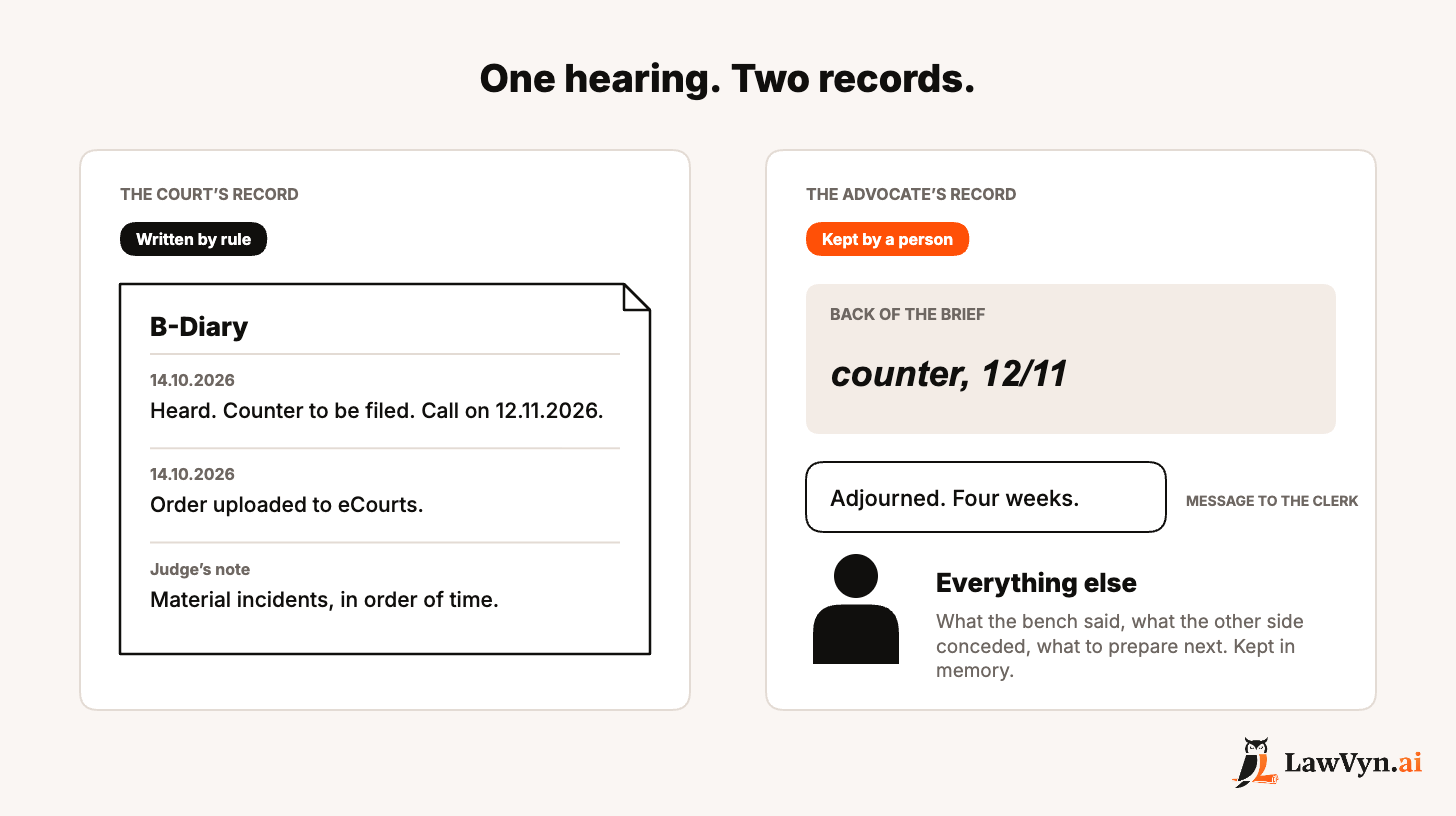
The court's record is written by rule. In Telangana and Andhra Pradesh, the Civil Rules of Practice require the court to keep a B-Diary of every step in a contested suit, and the judge to note every material incident in the order it happened. Across the country the order goes on to eCourts, where the case history lists every hearing and every order uploaded.
No rule asks for the advocate's record, so it takes whatever shape the day allows: a note on the back of the brief, a message to the clerk, a line in the diary that says counter, 12/11. Most of it is memory, and in a good chamber the memory is remarkable.
The court's half of the hearing is kept by the system. The advocate's half is kept by a person.
Where the record goes at 6 pm
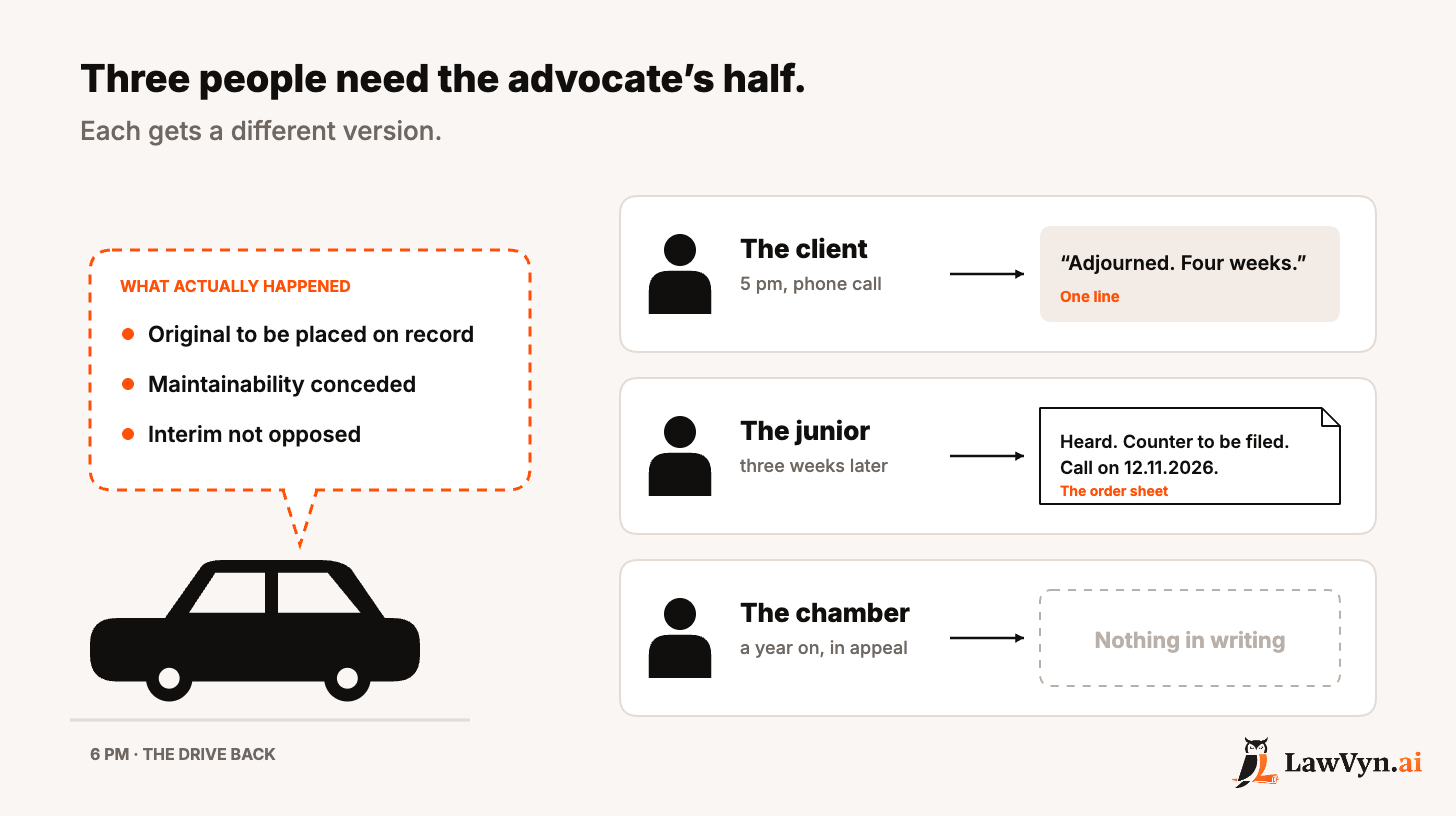
Three people need the advocate's half. Each gets a different version.
The client gets one line, which is what a 5 pm phone call allows. The junior preparing the next date gets the order sheet, and the senior's recollection three weeks later, with twenty other hearings in between. The chamber, a year on, when the matter is in appeal and somebody asks what the trial judge said about the agreement, has the order sheet and nothing else in writing.
Now multiply. When I checked, the eCourts dashboard showed over fourteen lakh matters listed in district courts and about forty eight thousand in the High Courts. Each produced a few minutes of what the bench said and what the other side conceded, kept almost entirely in the heads of the advocates who were there.
This is not a failing of the profession. It is the shape of the day. The hearing ends, the next matter is called, and the one person who knows what happened has another court hall to reach.
How other systems chose to remember
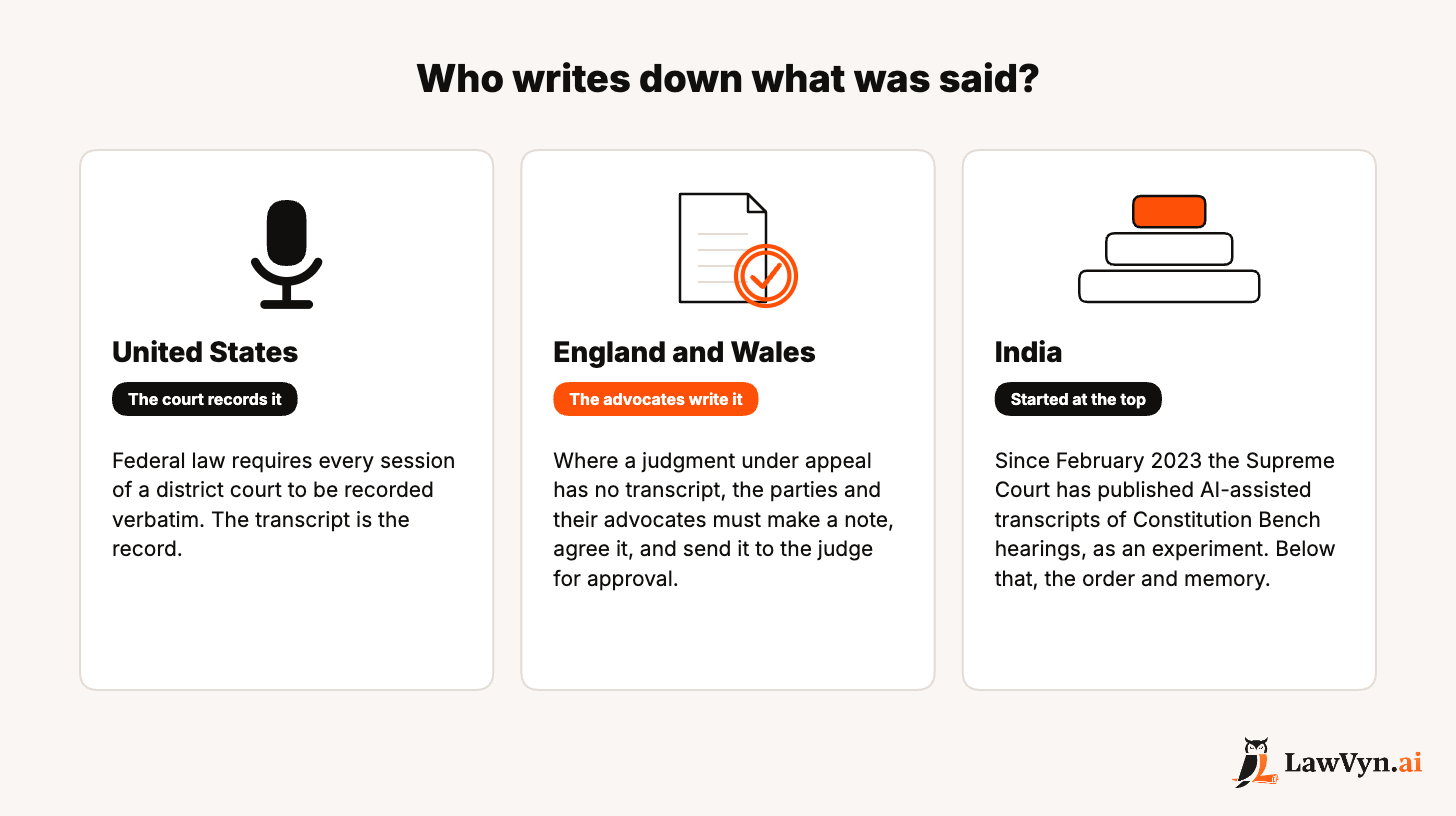
In the United States, federal law requires every session of a district court to be recorded verbatim. The transcript is the record. The lawyer's note is a convenience.
England and Wales went the other way. Where a judgment under appeal has no transcript, the rules require the parties and their advocates to make a note of it, agree it, and send it to the judge for approval. The advocate's note is the record.
India has started at the top. In February 2023 the Supreme Court began publishing AI-assisted transcripts of Constitution Bench hearings, as an experiment, with lawyers checking the text first. For the fourteen lakh matters a day below that, the record is the order, and whatever the advocate carries home.
What a chamber can do about it
The court will keep uploading orders faster. The question is the chamber's own half. Three moves, in order.
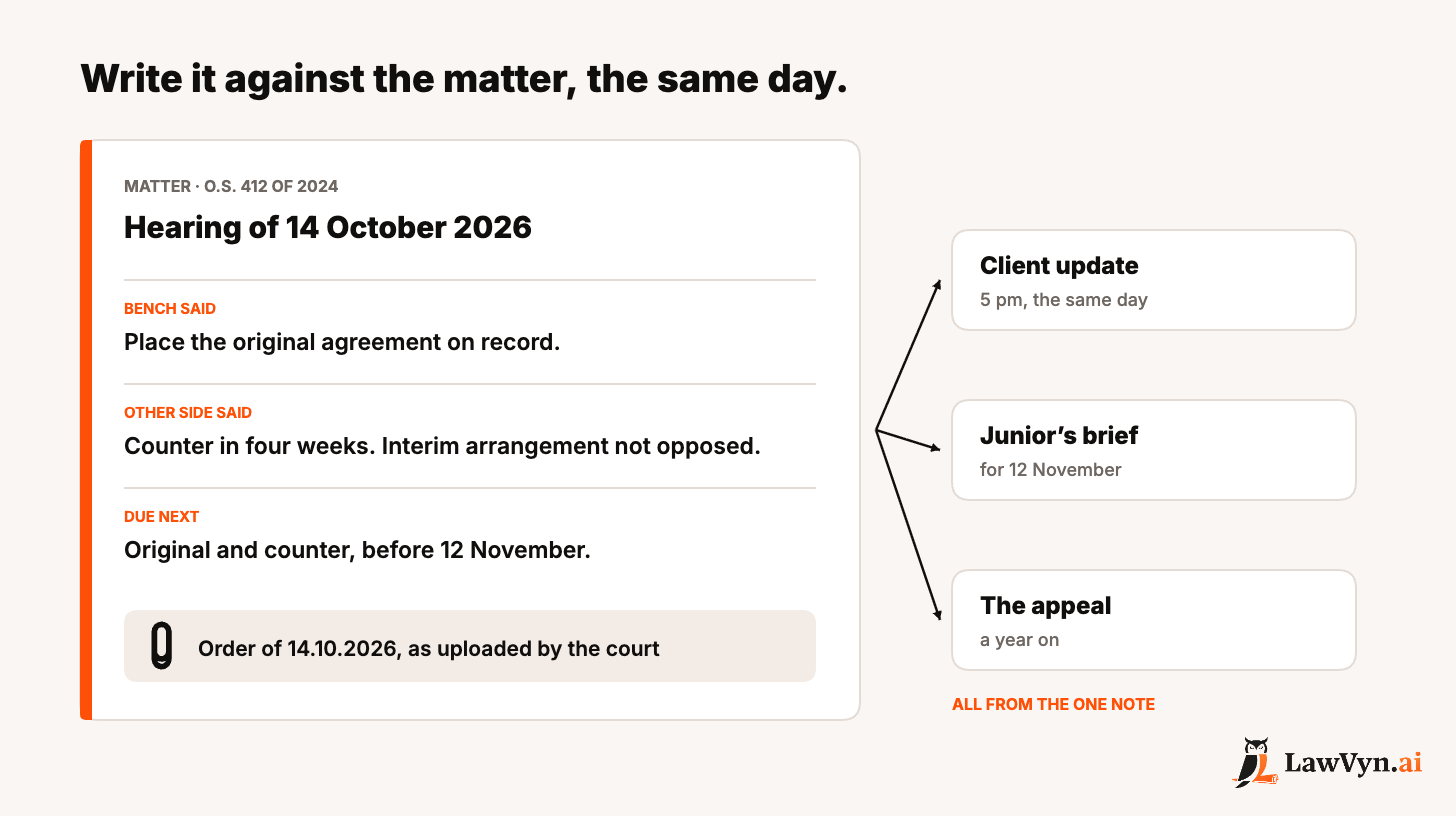
Write the hearing against the matter, the same day. Three lines are enough, and the junior who was there can write them: what the bench said, what the other side said, what is due next. Against the case, where the whole office can read it, not in one person's diary.
Put the court's order next to the note. When it is uploaded it should land in the same place, the next date on the office calendar, so the chamber's note and the court's order read as one story.
Let the note do the talking. The client update at 5 pm is drafted from it, the junior's brief for 12 November built on it, the question in appeal a year later answered from it. The senior is then free to remember what matters, which is the argument.
None of this replaces judgment. What to say to the bench on 12 November is still the advocate's call. What changes is where the memory of 14 October lives.
The signature below makes my interest obvious, so I will say it: LawVyn is built to do exactly this, keep every hearing against its matter, order attached and next date tracked, and draft the update from it. Whichever tool a chamber uses, the test is simple. When the clerk asks what happened, is the answer already written down, or does somebody have to remember it?
Before the drive back
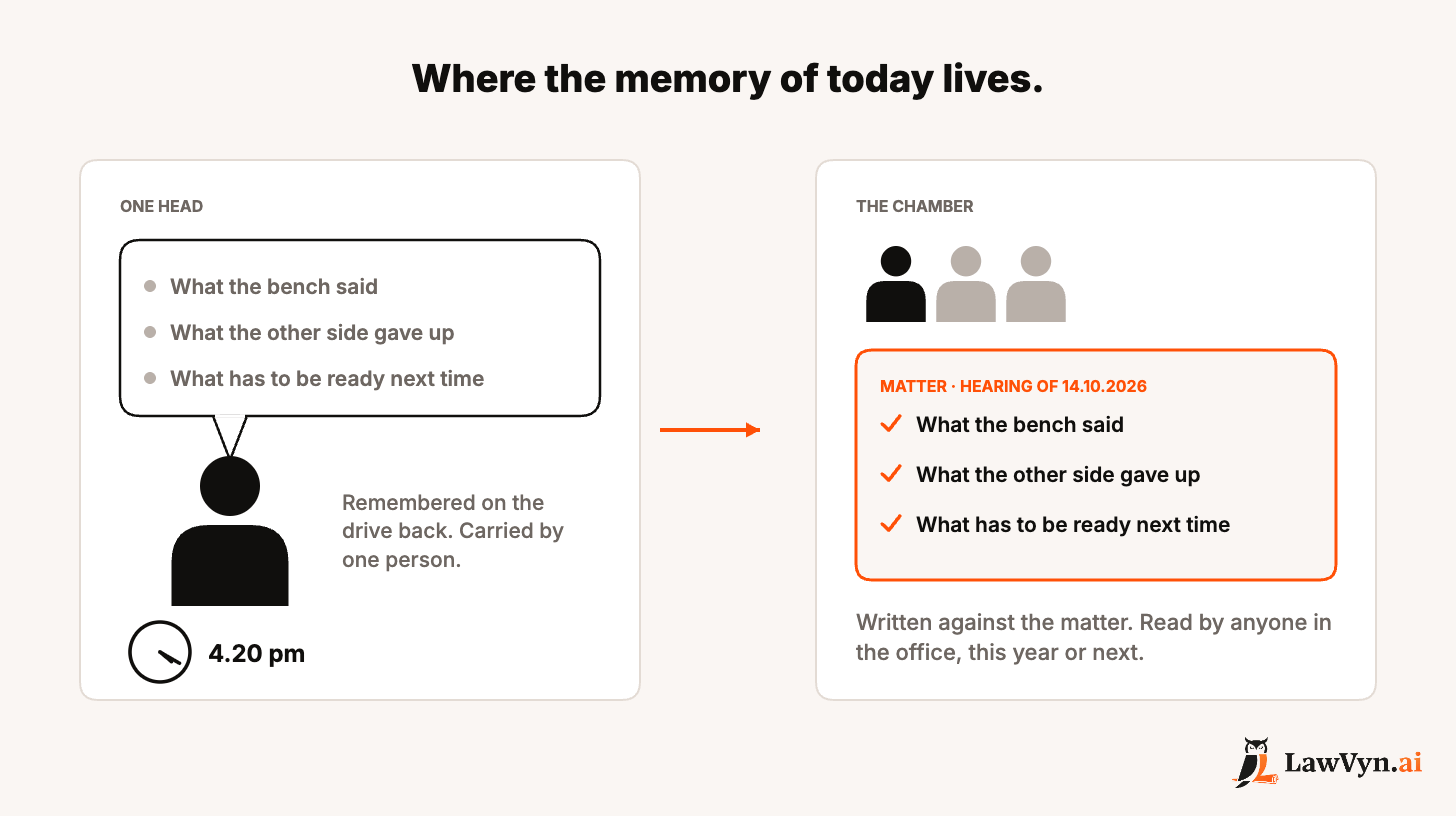
The order sheet will always say heard and adjourned. It was never meant to say more.
What the bench said, what the other side gave up, and what has to be ready next time have always been the advocate's to keep. The only choice is where: one head, or the chamber.
The next matter is already being called. Somebody, or something, should be writing this one down.
Ravi Daparthi
CEO of LawVyn
A Practice management software for Indian advocates and law firms.
https://www.ravidaparthi.com/ ·
https://www.linkedin.com/in/ravidaparthi ·
Follow LawVyn on LinkedIn

This essay first appeared on my Substack. New pieces land there first.
Subscribe on Substack
Ravi Daparthi
Entrepreneur, AI product leader, CEO of LawVyn.ai. Co-founder of Signitives and Oorwin.
More from Ravi
Essay
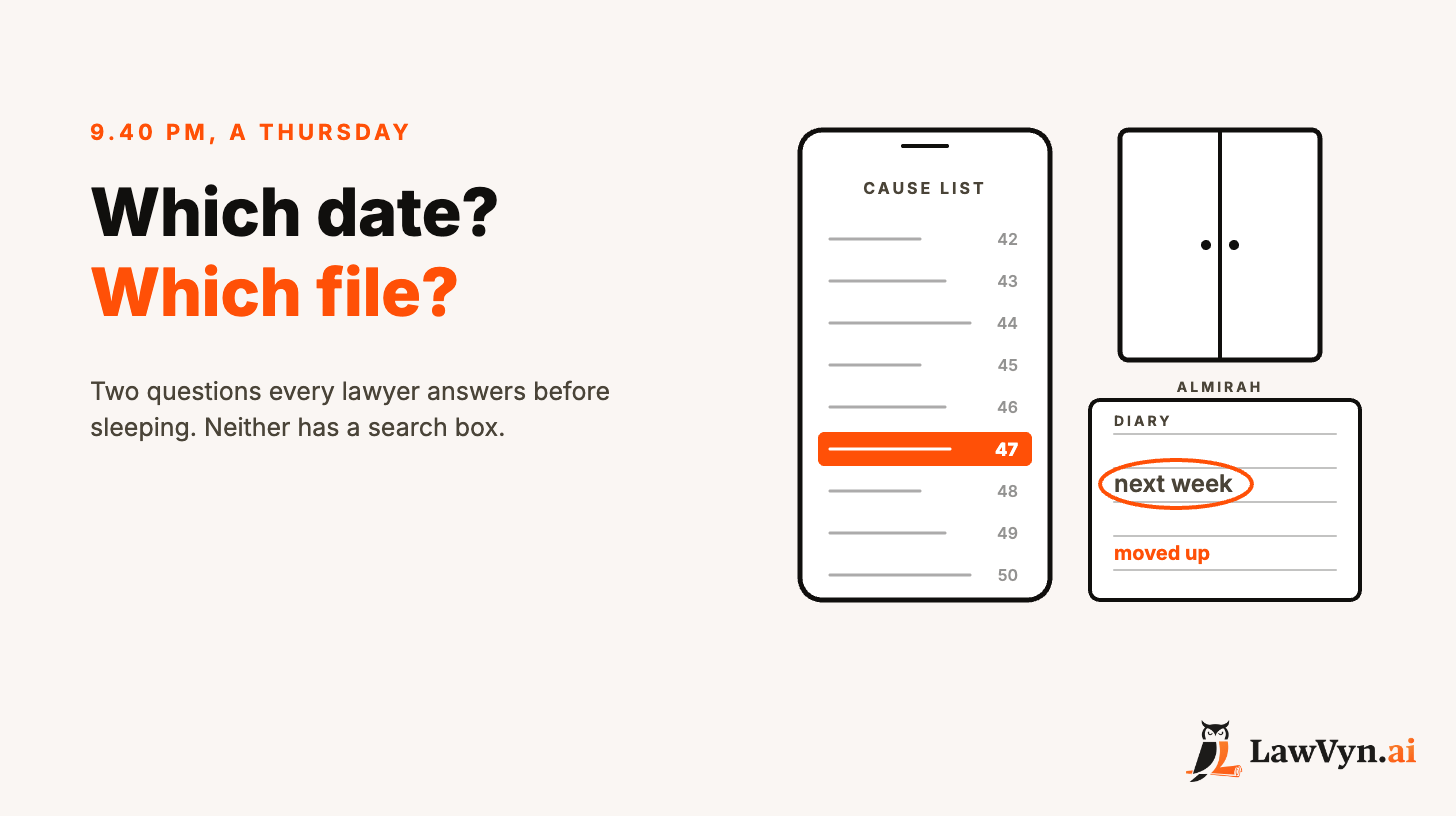
Two Things Every Lawyer Checks Before Sleeping: the Date and the File.
The court moved its calendar and its records online. The advocate’s evening still runs on a paper diary and an almirah. On the two questions that decide tomorrow.
12 October 2026 · 5 min read
Essay
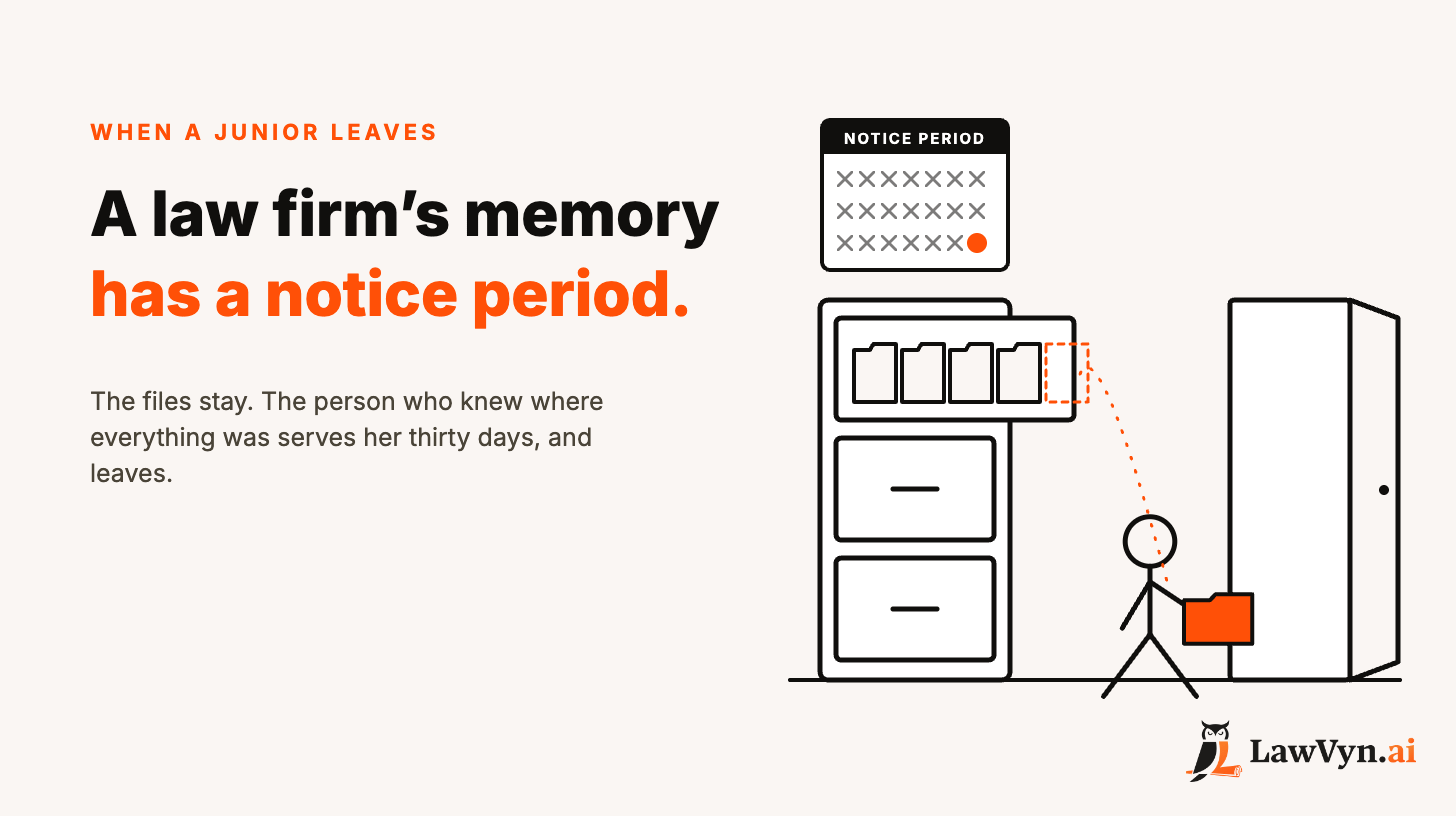
A Law Firm’s Memory Has a Notice Period
Every chamber and law firm owns an asset that never appears on a balance sheet. It lives in people, and people move.
7 October 2026 · 6 min read
Essay
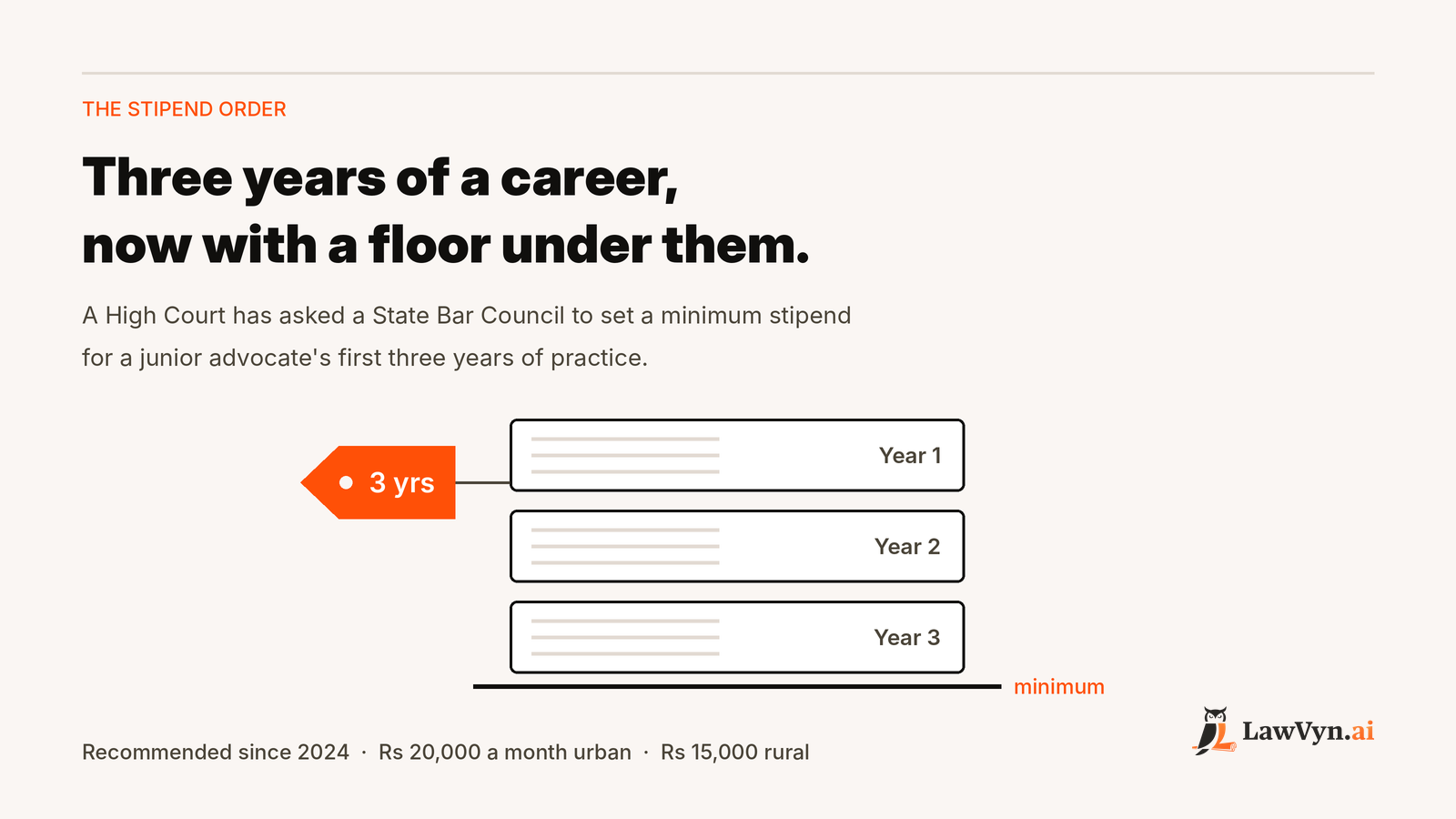
A Junior Advocate's First Three Years Now Have a Price
A High Court has given a State Bar Council six months to set a minimum stipend. The money question hides a harder one about what those three years are actually made of.
4 October 2026 · 4 min read